«Ha una sua solitudine lo spazio» – Emily Dickinson

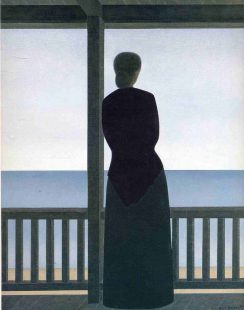
Will Barnet, Woman by the Sea

1695

Ha una sua solitudine lo spazio,
solitudine il mare
e solitudine la morte – eppure
tutte queste son folla
in confronto a quel punto più profondo,
segretezza polare,
che è un’anima a cospetto di se stessa –
infinità finita.

Emily Dickinson

(Traduzione di Margherita Guidacci)

da “Tutte le poesie”, “I Meridiani” Mondadori, 1997

∗∗∗

1695

There is a solitude of space
A solitude of sea
A solitude of death, but these
Society shall be
Compared with that profounder site
That polar privacy
A soul admitted to itself –
Finite infinity.

Emily Dickinson

da “The Single Hound: Poems of a Lifetime”, a cura di Martha Dickinson Bianchi, Boston, Little, Brown & Co, 1914

Il nuovo manuale di poesia – Mark Strand

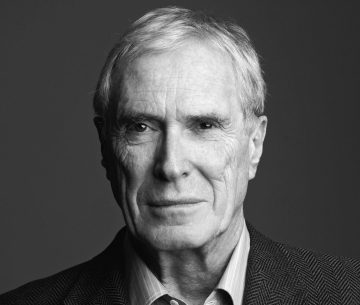
Foto di Timothy Greenfield

per Greg Orr e Greg Simon 

  1    Se un uomo capisce una poesia,
                  avrà dei problemi.

  2    Se un uomo vive insieme a una poesia,
                  morirà solo.

  3    Se un uomo vive insieme a due poesie,
                  ne tradirà una.

  4     Se un uomo concepisce una poesia,
                  avrà un figlio in meno.

 5   Se un uomo concepisce due poesie,
                 avrà due figli in meno.

 6   Se un uomo si mette in testa una corona quando scrive,
                verrà smascherato.

7   Se un uomo non si mette in testa una corona quando scrive,
               non ingannerà nessuno tranne se stesso.

8    Se un uomo si arrabbia con una poesia,
                verrà deriso dagli uomini.

 9    Se un uomo persiste nell’arrabbiarsi con una poesia,
                 verrà deriso dalle donne.

10    Se un uomo condanna pubblicamente la poesia,
                  le scarpe gli si riempiranno di urina.

11    Se un uomo rinuncia alla poesia per il potere,
                 avrà molto potere.

12    Se un uomo si vanta delle sue poesie,
                  verrà amato dai cretini.

13    Se un uomo si vanta delle sue poesie e ama i cretini,
                  non scriverà più.

14  Se un uomo nega piacere alle proprie poesie,
                 la sua arguzia porterà gli stivali.

15    Se un uomo desidera con ardore che le sue poesie ricevano attenzione 
                  sarà come un somaro al chiaro di luna.

16    Se un uomo scrive una poesia e loda una poesia di un collega,
                   avrà un’amante bellissima.

17    Se un uomo scrive una poesia e loda all’eccesso una poesia di un collega,
                   allontanerà da sé l’amante.

18   Se un uomo rivendica la poesia di un altro,
                 il suo cuore diverrà grande il doppio.

19    Se un uomo lascia che le sue poesie vadano in giro nude
                  avrà paura della morte.

20    Se un uomo ha paura della morte,
                 verrà salvato dalle sue poesie.

21   Se un uomo non ha paura della morte,
                 le sue poesie forse lo salveranno forse no.

22    Se un uomo finisce una poesia,
                 si immergerà nella scia bianca della propria passione
                 e verrà baciato dalla pagina bianca.

Mark Strand

(Traduzione di Damiano Abeni con Moira Egan)

da “Più buio”, (Rinunciare a me stesso), in “Mark Strand, Tutte le poesie”, Mondadori, 2019

∗∗∗

THE NEW POETRY HANDBOOK
for Greg Orr and Greg Simon

1     If a man understands a poem,
               he shall have troubles.
 

   If a man lives with a poem,
               he shall die lonely.

3    If a man lives with two poems,
               he shall be unfaithful to one.

   If a man conceives of a poem,
               he shall have one less child.

5    If a man conceives of two poems,
               he shall have two children less.

6    If a man wears a crown on his head as he writes,
               he shall be found out.

7    If a man wears no crown on his head as he writes,
               he shall deceive no one but himself.

   If a man gets angry at a poem,
               he shall be scorned by men.

9    If a man continues to be angry at a poem,
               he shall be scorned by women.

10    If a man publicly denounces poetry,
               his shoes will fill with urine.

11    If a man gives up poetry for power,
               he shall have lots of power.

12    If a man brags about his poems,
               he shall be loved by fools.

13    If a man brags about his poems and loves fools,
               he shall write no more.

14    If a man denies his poems pleasure,
               his wit shall wear boots.

15    If a man craves attention because of his poems,
               he shall be like a jackass in moonlight.

16    If a man writes a poem and praises the poem of a fellow,
               he shall have a beautiful mistress.

17    If a man writes a poem and praises the poem of a fellow overly,
               he shall drive his mistress away.

18    If a man claims the poem of another,
               his heart shall double in size.

19    If a man lets his poems go naked,
               he shall fear death.

20    If a man fears death,
               he shall be saved by his poems.

21    If a man does not fear death,
               he may or may not be saved by his poems.

22    If a man finishes a poem,
               he shall bathe in the blank wake of his passion and be kissed by white                                                                                                                                 [ paper.

Mark Strand

da “Darker: poems“, (Giving Myself Up), Atheneum, 1970
Mappe nere – Mark Strand


Non la platea di pietre
né il vento che applaude
ti faranno capire
che sei arrivato,

non il mare che celebra
solo le partenze,
non le montagne,
né le città morenti.

Niente ti dirà
dove sei.
Ogni attimo è un posto
dove non sei mai stato.

Puoi camminare
e credere che emani
la luce attorno a te.
Ma come farai a saperlo?

Il presente è sempre buio.
Le sue mappe sono nere,
escono dal nulla,
descrivono,

nella loro lenta ascesa
dentro se stesse,
il proprio viaggio,
il proprio vuoto,

la fosca, sobria
necessità del completarlo.
Nel venire in essere
sono come il respiro.

E se pure le si studia
è solo per scoprire,
troppo tardi, che quelli che
ritenevi fatti tuoi

non esistono.
La tua casa non c’è
su nessuna di quelle mappe,
né ci sono gli amici,

che aspettano che ti faccia vivo,
né i tuoi nemici,
che elencano le tue mancanze.
Ci sei solo tu,

e saluti
ciò che sarai,
e l’erba nera
sostiene stelle nere.

Mark Strand

(Traduzione di Damiano Abeni)

da “Più buio”, 1970, in “L’uomo che cammina un passo avanti al buio”, Mondadori, Milano, 2011

∗∗∗

Black maps

Not the attendance of stones,
nor the applauding wind,
shall let you know
you have arrived,

nor the sea that celebrates
only departures,
nor the mountains,
nor the dying cities.

Nothing will tell you
where you are.
Each moment is a place
you’ve never been.

You can walk
believing you cast
a light around you.
But how will you know?

The present is always dark.
Its maps are black,
rising from nothing,
describing,

in their slow ascent
into themselves,
their own voyage,
its emptiness,

the bleak, temperate
necessity of its completion.
As they rise into being
they are like breath.

And if they are studied at all
it is only to find,
too late, what you thought
were concerns of yours

do not exist.
Your house is not marked
on any of them,
nor are your friends,

waiting for you to appear,
nor are your enemies,
listing your faults.
Only you are there,

saying hello
to what you will be,
and the black grass
is holding up the black stars.

Mark Strand

da “Darker: poems”, Atheneum, 1970

Ragazzo prodigio – Charles Simic


Sono cresciuto chino
su una scacchiera.

Amavo la parola scaccomatto.

Il che sembrava impensierire i miei cugini.

Era piccola la casa,
accanto a un cimitero romano.
I suoi vetri tremavano
per via dei carri armati e caccia.

Fu un professore di astronomia in pensione
che m’insegnò a giocare.

L’anno, probabilmente, il ’44.

Lo smalto dei pezzi che usavamo,
quelli neri,
era quasi del tutto scrostato.

Il Re bianco andò perduto,
dovemmo sostituirlo.

Mi hanno detto, non credo sia vero,
che quell’estate vidi
gente impiccata ai pali del telefono.

Ricordo che mia madre
spesso mi bendava gli occhi.
Con quel suo modo spiccio d’infilarmi
la testa sotto la falda del soprabito.

Anche negli scacchi, mi disse il professore,
i maestri giocano bendati,
i campioni, poi, su diverse scacchiere
contemporaneamente.

Charles Simic

(Traduzione di Andrea Molesini)

da “Hotel Insonnia”, Adelphi, 2002

∗∗∗

Prodigy

I grew up bent over
A chessboard.

I loved the word endgame.

All my cousins looked worried.

It was a small house
Near a Roman graveyard.
Planes and tanks
Shook its windowpanes.

A retired professor of astronomy
Taught me how to play.

That must have been in 1944.

In the set we were using,
The paint had almost chipped off
The black pieces.

The white King was missing
And had to be substituted for.

I’m told but do not believe
That that summer I witnessed
Men hung from telephone poles.

I remember my mother
Blindfolding me a lot.
She had a way of tucking my head
Suddenly under her overcoat.

In chess, too, the professor told me,
The masters play blindfolded,
The great ones on several boards
At the same time.

Charles Simic

da “Classic Ballroom Dances”, New York: George Braziller, 1980

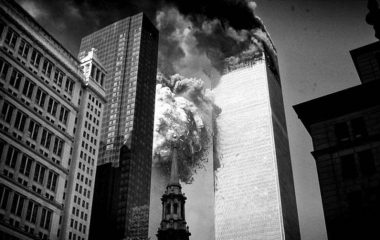
Esattamente un anno fa… – Philip Schultz

Foto di Phil Penman

UNO
6

Esattamente un anno fa,
l’11 settembre scorso,
uno scroscio scintillante
di scariche di elettroshock
sibilò attraverso
l’etere sorpreso
della rosea elasticità del mio cervello.
Mi svegliai fluttuando
nel reparto psichiatrico del Saint Vincent,
su un fondale roccioso,
una ghianda inerte, sotto
una tenda di lenzuolo, qualcuno
all’altro capo del tempo
cantava l’aria
di Madama Butterfly
come andava cantata.

È così che
ci si sente da morti,
mi chiesi,
un falso alleluia,
un turbinare, guizzare
e traboccare,
non cercare più
di essere qualcosa
di più o di meno di
un inizio,
un centro, o una fine?

Poi, quasi
subito dopo,
mi buttarono fuori
sulla strada.
Ci servono i letti,
dissero i dottori.
C’è una grande emergenza.

Philip Schultz

(Traduzione di Maria Adelaide Basile, Fiorenza Mormile, Anna Maria Rava, Anna Maria Robustelli e Paola Splendore)

da “Erranti senza ali”, a cura di Paola Splendore, Donzelli Poesia, 2016

∗∗∗

ONE
6

Exactly one year ago
last September 11,
a brilliant burst
of electroshock waves
zinged through
the surprised ether
of my brain’s pink elasticity.
I awoke floating
in Saint Vincent’s psych ward,
on a rocky seabed,
an inert acorn, under
a sheet-tent, someone
at the far end of time
singing the aria
from Madame Butterfly
the way it was meant to be sung.

Is this what it
feels like to be dead,
I wondered,
a false hallelujah,
to swirl, flicker,
and overflow,
never again contrive
to be anything
more or less than
a beginning,
middle, or end?

Then, almost
immediately afterwards,
I was put out
on the street.
We need the beds,
the doctors said.
There’s a great emergency.

Philip Schultz

da “The Wandering Wingless”, in “Failure”, Harcourt Books, 2007