Specchio – Mark Strand

Robert Hutinski, The Mirror


Un salone bianco nel vivo di una festa
e io stavo con amici
sotto un grande specchio dalla cornice dorata
leggermente inclinato in avanti
sopra al caminetto.
Bevevamo whisky
e alcuni tra noi, non provando dolore,
disquisivano
su quale fosse l’esatta sfumatura di giallo
che il sole cadente conferiva ai nostri bicchieri.
Chiusi gli occhi solo per un poco
poi alzai lo sguardo allo specchio:
una donna vestita di verde stava
appoggiata alla parete più lontana.
Pareva assente,
le dita di una mano
giocavano nervose con la collana,
e lei guardava fisso nello specchio
non me, ma oltre di me, uno spazio
che poteva essere colmato da qualcuno
che ancora doveva arrivare, che in quell’istante
forse iniziava il viaggio
che l’avrebbe condotto da lei.
Poi, d’improvviso, gli amici
dissero che era ora di muoversi.
Sono passati anni,
e anche se ho scordato
dove andammo e chi fossimo,
ricordo ancora l’istante in cui alzai lo sguardo
e vidi la donna guardare fisso oltre di me
un luogo che potevo solo immaginare
e ogni volta provo una pena acuta,
come se in quel momento uscissi
dalle profondità dello specchio
ed entrassi nel salone bianco, ansimante e ardente,
soltanto per scoprire troppo tardi
che lei lì non c’è.

Mark Strand

(Traduzione di Damiano Abeni)

da “Uomo e cammello”, “Lo Specchio” Mondadori, 2007

***

Mirror

A white room and a party going on
and I was standing with some friends
under a large gilt-framed mirror
that tilted slightly forward
over the fireplace.
We were drinking whiskey
and some of us, feeling no pain,
were trying to decide
what precise shade of yellow
the setting sun turned our drinks.
I closed my eyes briefly,
then looked up into the mirror:
a woman in a green dress leaned
against the far wall.
She seemed distracted,
the fingers of one hand
fidgeted with her necklace,
and she was staring into the mirror,
not at me, but past me, into a space
that might be filled by someone
yet to arrive, who at that moment
could be starting the journey
which would lead eventually to her.
Then, suddenly, my friends
said it was time to move on.
This was years ago,
and though I have forgotten
where we went and who we all were,
I still recall that moment of looking up
and seeing the woman stare past me
into a place I could only imagine,
and each time it is with a pang,
as if just then I were stepping
from the depths of the mirror
into that white room, breathless and eager,
only to discover too late
that she is not there.

Mark Strand

da “Man and Camel”, Alfred A. Knopf, 2006

miti mi guardano i tuoi occhi… – John Berryman

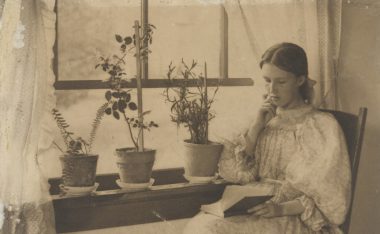
Clarence H. White, Julia McCune reading by window, 1896

3.

miti mi guardano i tuoi occhi. Di grano ed aria
è fatto il tuo corpo, muove. Lo evoco, vedi,
d’oltre i secoli.
Penso non resterai. Come indugiamo,
sminuiti, nell’aria fra chi ci ama, implausibilmente
visibili, per chi, un anno, anni, ad intervalli
di tempo: o no; per uno
a lungo estraneo: o no; baluginiamo, e scompariamo.

John Berryman

(Traduzione di Sergio Perosa)

da “Omaggio a Mistress Bradstreet”, Einaudi, Torino, 1969

∗∗∗

3.

thy eyes look to me mild. Out of maize & air
your body’s made, and moves: I summon, see,
from the centuries it.
I think you won’t stay. How do we
linger, diminished, in our lover’s air,
implausibly visible, to whom, a year, years, over interims; or not;
to a long stranger; or not; shimmer & disappear.

John Berryman

da “Homage to Mistress Bradstreet”, New York: Farrar, Straus & Giroux, 1956

Lo scorso settembre… – Philip Schultz

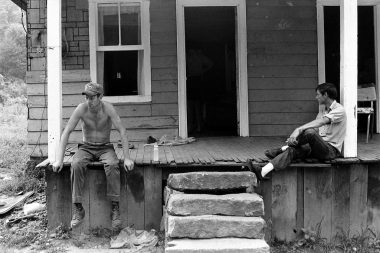
Foto di William Gedney

QUATTRO
11.

Lo scorso settembre
il dott. O. mi chiese se
non sarebbe meglio essere
un po’ meno fissato
a contemplare l’esodo
di formiche idiote che attraversano
lente il voluttuoso
deserto della
mia coscienza…
a non essere invitato
così spesso allo spettacolo
di Dio da sempre in scena,
Erranti senza ali.
Non so come andare avanti,
dissi, non l’ho mai saputo
perché
fa molto male.
Sì, rispose, lo so,
sì, è così.

Philip Schultz

(Traduzione di Maria Adelaide Basile, Fiorenza Mormile, Anna Maria Rava, Anna Maria Robustelli e Paola Splendore)

da “Erranti senza ali”, a cura di Paola Splendore, Donzelli Poesia, 2016

∗∗∗

FOUR
11.

Last September
Dr. O. asked if I
wouldn’t prefer to be
a tad less obsessed
with watching an exodus
of imbecile ants inch
across the voluptuous
wilderness of
my consciousness…
with not being called
quite so often to God’s
longest-running spectacle,
The Wandering Wingless?
I don’t know how to proceed,
I said, I never knew
because
it hurts so bad.
Yes, it does, he said,
Yes, indeed.

Philip Schultz

da “The Wandering Wingless”, in “Failure”, Harcourt Books, 2007

Visita – Ted Hughes

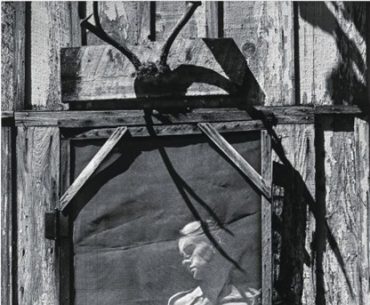
Wynn Bullock, Woman behind screen door, ca.1970 (particolare)


Lucas, il mio amico, uno
di quei tre o quattro che restano immutati
come un io separato,
pietra nel letto del fiume
sotto ogni mutamento, diventò tuo amico.
Lo seppi, messo in guardia. Consumavo
la giovinezza sulla sedia di un ufficio vicino a Slough,
mattina e sera tra Slough e Holborn,
accumulando la paga per finanziare un balzo verso la libertà
all’altro capo della terra − una caduta libera
per strapparmi di dosso la crisalide nella scia.
Nei fine settimana, recidivo, tornavo
all’Alma Mater. La mia ragazza
condivideva supervisore e incontri settimanali
con la tua rivale americana e con te.
Ti detestava. Alimentò di tue foto,
e non sapeva di quale celluloide
infiammabile, il mio silenzioso
e insaziabile futuro, la torcia interna
della mia ricerca a moscacieca. Con l’amico,
dopo mezzanotte, eccomi in un giardino,
a lanciar zolle a una finestra buia.

Lui, ubriaco, era sicuro che fosse la tua.
Io, ubriaco la metà, non sapevo che si sbagliava.
Né sapevo che stavo sostenendo l’audizione
per il ruolo di primo attore nel tuo dramma,
mimando i primi facili movimenti
come a occhi chiusi, cercando a tentoni il personaggio.
Come una marionetta azionata per prova,
o le zampe di una rana morta toccate dagli elettrodi.
Eseguivo quei gesti a scatti − osservato e giudicato
solo dall’oscurità stellata e da un’ombra.
A te ignoto e di te nulla sapendo.
Miravo a trovarti e mancavo il bersaglio e lo mancavo ancora.
Lanciavo terra contro un vetro che non poteva proteggerti
perché non eri lì.

Dieci anni dopo la tua morte
incontro su una pagina del tuo diario, come mai prima,
lo shock della tua gioia
quando ti fu detto. Poi lo shock
delle tue preghiere. E sotto le preghiere il panico
che le preghiere potessero non creare il miracolo,
poi, sotto il panico, l’incubo
che ti arrivava addosso per schiacciarti:
la tua alternativa − l’impensabile
antica disperazione e la nuova angoscia
che si fondevano in un unico ben noto inferno.

D’un tratto leggo tutto questo −
le tue parole, nell’atto di sgorgarti
dalla gola e dalla lingua e di posarsi sulla pagina −
proprio come quando tua figlia, anni fa ormai,
entrando piano e guardandomi fisso,
disorientata,
dove io lavoravo solo
nella casa silenziosa, chiese a un tratto:
«Papà, dov’è la mamma?». La terra gelata
del giardino, mentre la raspavo.
Tutt’intorno a me l’enorme orologio di gelo
di quella mezzanotte. E in un punto
al suo interno, desideroso di non sentire nulla,
un pulsare di febbre. In un punto
di quell’intorpidimento della terra
il nostro futuro che cercava di essere.
Alzo gli occhi − come per incontrare la tua voce
con tutto il suo incalzante futuro
che mi è esploso addosso. Poi torno a guardare
il libro delle parole stampate.
Sei morta da dieci anni. È solo una storia.
La tua storia. La mia storia.

Ted Hughes

(Traduzione di Anna Ravano)

da “Lettere di compleanno”, Mondadori, Milano, 1999

∗∗∗

Visit

Lucas, my friend, one
Among those three or four who stay unchanged
Like a separate self,
A stone in the bed of the river
Under every change, became your friend.
I heard of it, alerted. I was sitting
Youth away in an office near Slough,
Morning and evening between Slough and Holborn,
Hoarding wage to fund a leap to freedom
And the other side of the earth – a free-fall
To strip my chrysalis off me in the slipstream.
Weekends I recidived
Into Alma Mater. Girl-friend
Shared a supervisor and weekly session
With your American rival and you.
She detested you. She fed snapshots
Of you and she did not know what
Inflammable celluloid into my silent
Insatiable future, my blind-man’s-buff
Internal torch of search. With my friend,
After midnight, I stood in a garden
Lobbing soil-clods up at a dark window.

Drunk, he was certain it was yours.
Half as drunk, I did not know he was wrong.
Nor did I know I was being auditioned
For the male lead in your drama,
Miming through the first easy movements
As if with eyes closed, feeling for the role.
As if a puppet were being tried on its strings,
Or a dead frog’s legs touched by electrodes.
I jigged through those gestures – watched and judged
Only by starry darkness and a shadow.
Unknown to you and not knowing you.
Aiming to find you, and missing, and again missing.
Flinging earth at a glass that could not protect you
Because you were not there.

Ten years after your death
I meet on a page of your journal, as never before,
The shock of your joy
When you heard of that. Then the shock
Of your prayers. And under those prayers your panic
That prayers might not create the miracle,
Then, under the panic, the nightmare
That came rolling to crush you:
Your alternative – the unthinkable
Old despair and the new agony
Melting into one familiar hell.

Suddenly I read all this –
Your actual words, as they floated
Out through your throat and tongue and onto your page –
Just as when your daughter, years ago now,
Drifting in, gazing up into my face,
Mystified,
Where I worked alone
In the silent house, asked, suddenly:
‘Daddy, where’s Mummy?’ The freezing soil
Of the garden, as I clawed it.
All round me that midnight’s
Giant clock of frost. And somewhere
Inside it, wanting to feel nothing,
A pulse of fever. Somewhere
Inside that numbness of the earth
Our future trying to happen.
I look up – as if to meet your voice
With all its urgent future
That has burst in on me. Then look back
At the book of the printed words.
You are ten years dead. It is only a story.
Your story. My story.

Ted Hughes

da “Birthday Letters”, London: Faber and Faber, 1998

Poesia – Mark Strand


Si intrufola dalla porta di servizio,
di soppiatto oltrepassa la cucina,
il salotto, l’ingresso,
sale le scale ed entra
in camera. Si china
sul mio letto e dice che è venuto
a uccidermi. Il lavoro
lo svolgerà a stadi.

Prima verranno spuntate 
le unghie, poi le dita
dei piedi eccetera fino a che
nulla resti di me.
Stacca un minuscolo attrezzo
dal portachiavi, e attacca.
Sento Il lago dei cigni dallo stereo
di un vicino e canticchio.

Quanto tempo trascorra,
non so dire. Ma quando torno in me
lo sento dire che è arrivato al collo
e che non è in grado di continuare
perché è stanco. Gli dico
che ha fatto abbastanza,
che dovrebbe rincasare, riposare.
Mi ringrazia e se ne va.

Resto sempre stupefatto
come si accontenta facilmente
certa gente.

Mark Strand

(Traduzione di Damiano Abeni)

da “Dormendo con un occhio aperto”, 1964, in “Il futuro non è più quello di una volta”, minimum fax, Roma, 2006

∗∗∗

Poem

He sneaks in the back door,
tiptoes through the kitchen,
the living room, the hall,
climbs the stairs, and enters
the bedroom. He leans
over my bed and says he has come
to kill me. The job
will be done in stages.

First, my toenails
will be clipped, then my toes,
and so on until
nothing is left of me.
He takes a small instrument
from his keychain and begins.
I hear Swan Lake being played
on a neighbor’s hi-fi and start to hum.

How much time passes,
I cannot tell. But when I come to
I hear him say he has reached my neck
and will not be able to continue
because he is tired. I tell him
that he has done enough,
that he should go home and rest.
He thanks me and leaves.

It shall never cease to amaze me
how easily satisfied
some people are.

Mark Strand

da “Sleeping with One Eye Open” (1964), in “Collected Poems”, New York, Alfred A. Knopf/ Random House, 2014