Sheherazade – John Ashbery

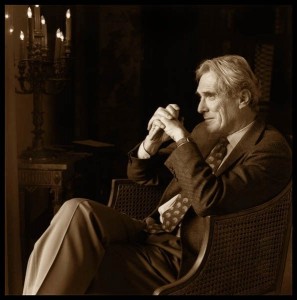
Foto di Roberto Nespola


Non sorretta dall’enigma della ragione
l’acqua si raccoglie in bacini quadrati di pietra.
La terra è arida. Sotto si muove
l’acqua. Pesci abitano i pozzi. Le foglie,
d’un verde in apprensione, sono sgorbiate sulla luce. Il cattivo
convolvolo e l’ambrosia infestante chissà come si scordano di prosperare qui.
Un guardaroba inesauribile è stato messo a disposizione
di ogni nuova evenienza. Può essere se stesso adesso.
Il giorno è quasi riluttante a declinare
e rallentando schiude nuovi viali
che non usurpano lo spazio ma abitano qui con noi.
Altri sogni andavano e venivano mentre il banco nuvoloso
di verbi e aggettivi multicolori si ritraeva dalla luce
per allevare nell’ombra la loro mancanza di metodo
ma sopra a tutto lei prediligeva le particelle
che trasformavano oggetti della stessa categoria
in cose individuali, ciascuna distinta
da, ed entro, la propria classe.
In tutto questo germogliare non c’era indizio
di marea, solo un piacevole ondeggiare dell’aria
in cui tutte le cose parevano presenti, fossero
appena trascorse o prossime a venire. Tutto era invito.

Così tanto i fiori si stagliavano lungo i vicoli
della notte quando pochi erano visibili, eppure
il loro racconto era più rumoroso del ronzio
d’insetto e battere di bastone che facevano procedere la retroguardia,
trainandolo in un nuovo fatto del giorno.
Dovevano esser letti come un qualsiasi
discorso introduttivo prima di passare ai fatti,
ma loro restarono sulle barricate, e tanta
fu la loro ostinazione nell’integrarsi al resto
(come lunghi lampi di uccelli bianchi che rifiutano di morire
al morir del giorno) che nessuno conosceva l’ordito
che presentava questo movimento maggiore come una risoluta
digressione, una pianura che piano piano diventa monte.
Così ciascuno si trovò preso in una rete
come una moda, e ogni sforzo per districarsene
lo avviluppava di più, inesorabilmente, visto che tutto
là esisteva per essere raccontato, sparato
da confine a confine. Qui c’erano pietre
che si leggevano come chiazze di sole, c’era il racconto
dei nonni, del giovane campione vigoroso
(le battute un tempo assegnate a un altro, adesso
restituite al nuovo oratore), cene e riunioni,
la luce nella vecchia casa, il modo segreto
delle stanze di sfociare l’una nell’altra, ma tutto
era circospezione del tempo che contemplava se stesso
poiché nulla nell’intricato racconto si espandeva di fuori:
la grandiosità nell’istante del narrare restava irrisolta
finché la sua sovrabbondanza di eventi, dolore commisto a piacere,
non sbiadì nell’attimo esatto dell’esplodere
in fioritura, la sua crescita statico lamento.

Alcuni racconti sopravvissero alla dinastia dei costruttori
ma perfino la loro eco fu messa sotto chiave, divenne
un pregustare che dopotutto era mero ricordo,
perché le possibilità sono limitate. Si vede
alla fine che i buoni e i bravi sono ricompensati,
che l’ingiusto è dannato a bruciare in eterno
attorno al proprio errore, a ogni modo più triste e più saggio.
Tra questi estremi gli altri si arrabattano
come noi, insicuri ma indossando candidamente
la loro funzione di personaggi secondari che si deve
tenere a mente. Siamo noi a creare questa
giungla e a chiamarla spazio, dando nome a ogni radice,
ogni serpente, per come suona il nome
quando tinnisce ottuso contro il nostro piacere,
indifferenza che è piacere. E cosa sarebbero loro
senza un pubblico a restringere gli innumerevoli
tentativi e batoste, il cui buonumore è ripristinato mentre esce
nell’impervia aria vespertina? Così in qualche modo
anche se il calcolo non torna
l’equilibrio è ripristinato perché
è in equilibrio, sapendo di prevalere,
e l’uomo che ha commesso due volte lo stesso errore viene prosciolto.

John Ashbery

(Traduzione di Damiano Abeni)

da “Autoritratto entro uno specchio convesso”, Bompiani, 2019

∗∗∗

Scheherade

Unsupported by reason’s enigma
Water collects in squared stone catch basins.
The land is dry. Under it moves
The water. Fish live in the wells. The leaves,
A concerned green, are scrawled on the light. Bad
Bindweed and rank ragweed somehow forget to flourish here.
An inexhaustible wardrobe has been placed at the disposal
Of each new occurrence. It can be itself now.
Day is almost reluctant to decline
And slowing down opens out new avenues
That don’t infringe on space but are living here with us.
Other dreams came and left while the bank
Of colored verbs and adjectives was shrinking from the light
To nurse in shade their want of a method
But most of all she loved the particles
That transform objects of the same category
Into particular ones, each distinct
Within and apart from its own class.
In all this springing up was no hint
Of a tide, only a pleasant wavering of the air
In which all things seemed present, whether
Just past or soon to come. It was all invitation.
So much the flowers outlined along the night
Alleys when few were visible, yet
Their story sounded louder than the hum
Of bug and stick noises that brought up the rear,
Trundling it along into a new fact of day.
These were meant to be read as any
Salutation before getting down to business,
But they stuck to their guns, and so much
Was their obstinacy in keeping with the rest
(Like long flashes of white birds that refuse to die
When day does) that none knew the warp
Which presented this major movement as a firm
Digression, a plain that slowly becomes a mountain.

So each found himself caught in a net
As a fashion, and all efforts to wriggle free
Involved him further, inexorably, since all
Existed there to be told, shot through
From border to border. Here were stones
That read as patches of sunlight, there was the story
Of the grandparents, of the vigorous young champion
(The lines once given to another, now
Restored to the new speaker), dinners and assemblies,
The light in the old home, the secret way
The rooms fed into each other, but all
Was wariness of time watching itself
For nothing in the complex story grew outside:
The greatness in the moment of telling stayed unresolved
Until its wealth of incident, pain mixed with pleasure,
Faded in the precise moment of bursting
Into bloom, its growth a static lament.

Some stories survived the dynasty of the builders
But their echo was itself locked in, became
Anticipation that was only memory after all,
For the possibilities are limited. It is seen
At the end that the kind and good are rewarded,
That the unjust one is doomed to burn forever
Around his error, sadder and wiser anyway.
Between these extremes the others muddle through
Like us, uncertain but wearing artlessly
Their function of minor characters who must
Be kept in mind. It is we who make this
Jungle and call it space, naming each root,
Each serpent, for the sound of the name
As it clinks dully against our pleasure,
Indifference that is pleasure. And what would they be
Without an audience to restrict the innumerable
Passes and swipes, restored to good humor as it issues
Into the impervious evening air? So in some way
Although the arithmetic is incorrect
The balance is restored because it
Balances, knowing it prevails,
And the man who made the same mistake twice is exonerated.

John Ashbery

da “Self-Portrait in a Convex Mirror”, Penguin Publishing Group, 1972

La luna e il tasso – Sylvia Plath


Questa è la luce della mente, fredda e planetaria.
Gli alberi della mente sono neri. La luce è azzurra.
Le erbe mi riversano sui piedi le loro angosce come se fossi Dio,
pungendomi le caviglie e mormorando la loro umiltà.
Brume fumose, spiritali, abitano questo luogo
che una fila di lapidi separa dalla mia casa.
Non vedo proprio dove si possa andare.

La luna non è una porta. È una vera faccia,
bianca come una nocca e stravolta.
Si trascina dietro il mare come un delitto oscuro, è silenziosa,
la bocca fissa nell’O della disperazione. Io vivo qui.
La domenica le campane per due volte fanno trasalire il cielo —
otto grandi lingue che affermano la Resurrezione.
Alla fine rintoccano sobriamente i loro nomi.

Il tasso indica l’alto. Ha una forma gotica.
Gli occhi lo seguono e trovano la luna.
La luna è mia madre. Non è dolce come Maria.
Le sue vesti azzurre sprigionano pipistrelli e gufi.
Come vorrei credere nella tenerezza —
Il volto dell’effigie, addolcito dalle candele,
che china, proprio su di me, gli occhi soavi.

Sono caduta lontano. Le nuvole fioriscono
azzurre e mistiche sul volto delle stelle.
Dentro la chiesa, i santi saranno tutti azzurri,
fluttuanti su piedi delicati sopra i banchi freddi,
le mani e i volti rigidi di santità.
La luna non vede nulla di tutto questo. È calva e forsennata.
E il messaggio del tasso è il nero — il nero e il silenzio.

Sylvia Plath

22 ottobre 1961

(Traduzione di Anna Ravano)

da “Ariel”, in “I capolavori di Sylvia Plath”, Mondadori, Milano, 2004

∗∗∗

The Moon and the Yew Tree

This is the light of the mind, cold and planetary.
The trees of the mind are black. The light is blue.
The grasses unload their griefs on my feet as if I were God,
Prickling my ankles and murmuring of their humility.
Fumy, spiritous mists inhabit this place
Separated from my house by a row of headstones.
I simply cannot see where there is to get to.

The moon is no door. It is a face in its own right,
White as a knuckle and terribly upset.
It drags the sea after it like a dark crime; it is quiet
With the O-gape of complete despair. I live here.
Twice on Sunday, the bells startle the sky —
Eight great tongues affirming the Resurrection.
At the end, they soberly bong out their names.

The yew tree points up. It has a Gothic shape.
The eyes lift after it and find the moon.
The moon is my mother. She is not sweet like Mary.
Her blue garments unloose small bats and owls.
How I would like to believe in tenderness —
The face of the effigy, gentled by candles,
Bending, on me in particular, its mild eyes.

I have fallen a long way. Clouds are flowering
Blue and mystical over the face of the stars.
Inside the church, the saints will be all blue,
Floating on their delicate feet over the cold pews,
Their hands and faces stiff with holiness.
The moon sees nothing of this. She is bald and wild.
And the message of the yew tree is blackness — blackness and silence.

Sylvia Plath

22 October 1961

da “Ariel”, London, Faber and Faber, 1965

Narrativa – Mark Strand


Penso alle vite innocenti
delle persone nei romanzi: sanno che morranno
ma non che il romanzo finirà. Come sono diverse
da noi. Qui, la luna osserva ammutolita
tra nubi sparse la città assopita,
e il vento ammonticchia le foglie cadute,
e qualcuno – cioè io – sprofondato in poltrona,
sfoglia le pagine che mancano, sapendo che non c’è
molto tempo per l’uomo e la donna nella camera a ore,
per la luce rossa sopra la porta, per l’iris
che proietta la propria ombra sul muro; non molto tempo
per i soldati sotto gli alberi sul fiume,
per i feriti che vengono trasferiti
in città di retrovia dove resteranno;
la guerra che ha infuriato per anni finirà,
come pure qualsiasi altra cosa, tranne una presenza
difficile da definire, una traccia, come l’odore dell’erba
dopo una notte di pioggia o ciò che resta di una voce
che ci fa sapere senza sillabarlo
di non disperare: se la fine è prossima, anch’essa passerà.

Mark Strand

(Traduzione di Damiano Abeni)

da “La vita ininterrotta”, 1992, in “Mark Strand, L’inizio di una sedia”, Donzelli Poesia, 1999

∗∗∗

Fiction

I think of the innocent lives
Of people in novels who know they’ll die
But not that the novel will end. How different they are
From us. Here, the moon stares dumbly down,
Through scattered clouds, onto the sleeping town,
And the wind rounds up the fallen leaves,
And somebody—namely me—deep in his chair,
Riffles the pages left, knowing there’s not
Much time for the man and woman in the rented room,
For the red light over the door, for the iris
Tossing its shadow against the wall; not much time
For the soldiers under the trees that line
The river, for the wounded being hauled away
To the cities of the interior where they will stay;
The war that raged for years will come to a close,
And so will everything else, except for a presence
Hard to define, a trace, like the scent of grass
After a night of rain or the remains of a voice
That lets us know without spelling it out
Not to despair; if the end is come, it too will pass.

Mark Strand

da “The continuous life”, Alfred A. Knopf, New York, 1990

Un vestito di jersey rosa – Ted Hughes

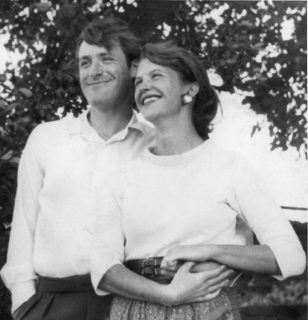
Ted Hughes and Sylvia Plath in Yorkshire, UK, 1956, Ph. Harry Ogden


Nel tuo vestito di jersey rosa
quando nulla era ancora imbrattato
stavi davanti all’altare. Bloomsday.

Pioggia – e così un ombrello appena comprato
fu la sola parte del mio abbigliamento
con meno di tre anni di servizio.
La cravatta – unica, triste, nera, di ex aviere della RAF –
era il simbolo frusto di una cravatta.
La giacca di velluto a coste – tre volte ritinta di nero, stremata,
si teneva in piedi per miracolo.

Ero un genero di austerità, da dopoguerra!
Non proprio il Principe-Ranocchio. Forse il Porcaro
che rubava i sogni di pedigree di questa figlia
da sotto il suo futuro sorvegliato da torrette e riflettori.

Nessuna cerimonia d’arruolamento poteva spogliarmi
dalla mia uniforme. Indossavo tutto il mio guardaroba –
eccetto qualche capo di ricambio, identico.
Le mie nozze, come la Natura, volevano nascondersi.
Comunque, se dovevamo sposarci
era meglio farlo a Westminster Abbey. Perché no?
Il Decano ci spiegò perché no. Fu così
che seppi di avere una Chiesa parrocchiale.

San Giorgio degli Spazzacamini.
E alla fine in qualche modo ci sposammo.
Tua madre, coraggiosa anche in questo
azzardo degli Affari Esteri americani,
fece la parte di tutte le damigelle e di tutti gli invitati,
e persino, magnanima, rappresentò
la mia famiglia che non sapeva nulla.
Avevo invitato solo gli antenati.
Non avevo confidato il mio furto di te
nemmeno a un carissimo amico. Come testimone – scudiero
addetto ai temporanei anelli –
sequestrammo il sacrestano. Colmo dello scandalo:
stava caricando su un bus un gruppo di bambini
per portarli allo zoo – sotto quel diluvio!
Tutti gli animali della prigione dovettero pazientare
che fossimo sposati.
                                      Tu eri trasfigurata.
Così sottile e nuova e nuda,
un ramo oscillante di lillà bagnato.
Tremavi, singhiozzavi di gioia, eri profondità d’oceano
traboccanti di Dio.
Dicesti che vedevi aprirsi i cieli
e mostrare ricchezze, pronte a piovere su noi.
Levitato al tuo fianco, io ero soggetto
a uno strano tempo grammaticale: il futuro incantato.

In quel presbiterio feriale spoglio d’echi,
ti vedo
lottare per contenere le fiamme
nel tuo vestito di jersey rosa
e nelle tue pupille – grandi gemme sfaccettate
che scuotono le loro fiamme di lacrime, davvero come grosse gemme
agitate in una coppa di dadi e offerte a me.

Ted Hughes

(Traduzione di Anna Ravano)

da “Lettere di compleanno”, Mondadori, Milano, 1999

∗∗∗

A Pink Wool Knitted Dress

In your pink wool knitted dress
Before anything had smudged anything
You stood at the altar. Bloomsday.

Rain – so that a just-bought umbrella
Was the only furnishing about me
Newer than three years inured.
My tie – sole, drab, veteran RAF black –
Was the used-up symbol of a tie.
My cord jacket – thrice-dyed black, exhausted,
Just hanging on to itself.

I was a post-war, utility son-in-law!
Not quite the Frog-Prince. Maybe the Swineherd
Stealing this daughter’s pedigree dreams
From under her watchtowered searchlit future.

No ceremony could conscript me
Out of my uniform. I wore my whole wardrobe –
Except for the odd, spare, identical item.
My wedding, like Nature, wanted to hide.
However – if we were going to be married
It had better be Westminster Abbey. Why not?
The Dean told us why not. That is how
I learned that I had a Parish Church.
St George of the Chimney Sweeps.
So we squeezed into marriage finally.
Your mother, brave even in this
US Foreign Affairs gamble,
Acted all bridesmaids and all guests,
Even – magnanimity – represented
My family
Who had heard nothing about it.
I had invited only their ancestors.
I had not even confided my theft of you
To a closest friend. For Best Man – my squire
To hold the meanwhile rings –
We requisitioned the sexton. Twist of the outrage:
He was packing children into a bus,
Taking them to the Zoo – in that downpour!
All the prison animals had to be patient
While we married.
                                   You were transfigured.
So slender and new and naked,
A nodding spray of wet lilac.
You shook, you sobbed with joy, you were ocean depth
Brimming with God.
You said you saw the heavens open
And show riches, ready to drop upon us.
Levitated beside you, I stood subjected
To a strange tense: the spellbound future.

In that echo-gaunt, weekday chancel
I see you
Wrestling to contain your flames
In your pink wool knitted dress
And in your eye-pupils – great cut jewels
Jostling their tear-flames, truly like big jewels
Shaken in a dice-cup and held up to me.

Ted Hughes

da “Birthday Letters”, Faber & Faber Publication, 1998

Blues in memoria – Wystan Hugh Auden

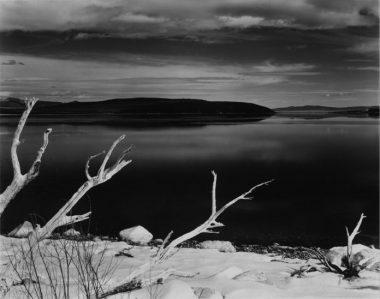
Foto di Brett Weston


Fermate tutti gli orologi, isolate il telefono,
fate tacere il cane con un osso succulento,
chiudete i pianoforte, e tra un rullio smorzato
portate fuori il feretro, si accostino i dolenti.

Incrocino aeroplani lamentosi lassù
e scrivano sul cielo il messaggio Lui È Morto,
allacciate nastri di crespo al collo bianco dei piccioni,
i vigili si mettano guanti di tela nera.

Lui era il mio Nord, il mio Sud, il mio Est ed Ovest,
la mia settimana di lavoro e il mio riposo la domenica,
il mio mezzodì, la mezzanotte, la mia lingua, il mio canto;
pensavo che l’amore fosse eterno: e avevo torto.

Non servon più le stelle: spegnetele anche tutte;
imballate la luna, smontate pure il sole;
svuotatemi l’oceano e sradicate il bosco;
perché ormai più nulla può giovare.

Wystan Hugh Auden

(Traduzione di Gilberto Forti)

da “W. H. Auden, La verità, vi prego, sull’amore”, Adelphi Edizioni, 1994

∗∗∗

Funeral Blues

Stop all the clocks, cut off the telephone,
Prevent the dog from barking with a juicy bone,
Silence the pianos and with muffled drum
Bring out the coffin, let the mourners come.

Let aeroplanes circle moaning overhead
Scribbling on the sky the message He Is Dead,
Put crepe bows round the white necks of the public doves,
Let the traffic policemen wear black cotton gloves.

He was my North, my South, my East and West,
My working week and my Sunday rest,
My noon, my midnight, my talk, my song;
I thought that love would last for ever: I was wrong.

The stars are not wanted now: put out every one;
Pack up the moon and dismantle the sun;
Pour away the ocean and sweep up the wood.
For nothing now can ever come to any good.

Wystan Hugh Auden

da “Tell Me the Truth About Love: Ten Poems”, Vintage and Faber paperback, 1994