Giardino astratto – Hart Crane

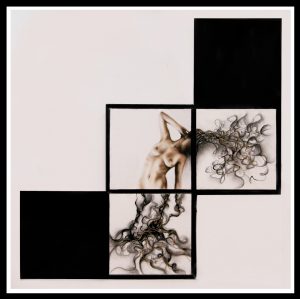
Martina dal Brollo, Donna Albero, 2010


La mela sul suo ramo è il desiderio
di lei, – sospensione lucente e mimica del sole.
Il ramo le ha tolto il respiro, e la sua voce,
nell’inclinarsi e levarsi su di lei di ramo in ramo,
articolata sordamente ecco le annebbia gli occhi.
Lei prigioniera dell’albero, delle sue dita verdi.

Giunge così a sognare d’essere divenuta albero, col vento
che la possiede e intreccia le sue vene giovani,
la stringe al cielo e al suo rapido azzurro, annegando
la febbre delle mani nella luce
del sole. E non c’è in lei memoria, paura né speranza,
oltre l’erba e le ombre distese ai suoi piedi.

Hart Crane

(Traduzione di Roberto Sanesi)

da “Il ponte e altre poesie”, Garzanti, 1984

***

Garden abstract

The apple on its bough is her desire,—
Shining suspension, mimic of the sun.
The bough has caught her breath up, and her voice,
Dumbly articulate in the slant and rise
Of branch on branch above her, blurs her eyes.
She is prisoner of the tree and its green fingers.

And so she comes to dream herself the tree,
The wind possessing her, weaving her young veins,
Holding her to the sky and its quick blue,
Drowning the fever of her hands in sunlight.
She has no memory, nor fear, nor hope
Beyond the grass and shadows at her feet.

Hart Crane

da “White Buildings: Poems by Hart Crane”, New York, 1926

Dalla lunga festa triste – Mark Strand

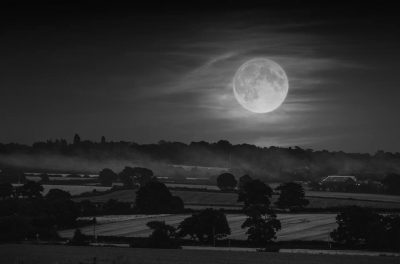
Foto di Nicholas Buer


Qualcuno diceva
qualcosa sulle ombre che coprivano il campo, su
come le cose passano, come ci si addormenta verso il mattino
e il mattino se ne va.

Qualcuno diceva
di come il vento si spegne ma poi torna,
di come le conchiglie sono le bare del vento
ma le intemperie continuano.

Era una lunga serata
e qualcuno diceva qualcosa sulla luna che cosparge di bianco
i campi gelidi, e che non c’era niente da aspettarsi
se non sempre le stesse cose.

Non so chi parlò
di una città in cui era stata prima della guerra, una stanza e due candele
al muro, qualcuno che ballava, qualcuno che guardava.
Cominciammo a credere

che la sera non sarebbe mai terminata.
Qualcuno diceva che la musica era finita e non se n’era accorto nessuno.
Poi qualcuno disse qualcosa sui pianeti, sulle stelle,
di quant’erano minuscoli, quant’erano lontani.

Mark Strand

(Traduzione di Damiano Abeni)

da “L’ora tarda”, 1978, in “L’uomo che cammina un passo avanti al buio”, Mondadori, Milano, 2011

***

From the Long Sad Party

Someone was saying
something about shadows covering the field, about
how things pass, how one sleeps toward morning
and the morning goes.

Someone was saying
how the wind dies down but comes back,
how shells are the coffins of wind
but the weather continues.

It was a long night
and someone said something about the moon shedding its white
on the cold field, that there was nothing ahead
but more of the same.

Someone mentioned
a city she had been in before the war, a room with two candles
against a wall, someone dancing, someone watching.
We began to believe

the night would not end.
Someone was saying the music was over and no one had noticed.
Then someone said something about the planets, about the stars,
how small they were, how far away.

 Mark Strand

da “The Late Hour”, Atheneum, 1978

La poesia che non ho scritto – Raymond Carver

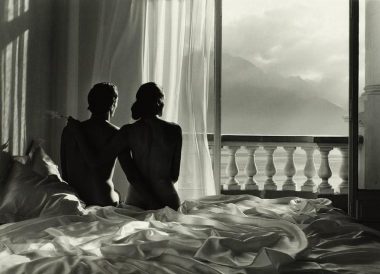
Christian Vogt, The Pair, 1987


Ecco la poesia che volevo scrivere
prima, ma non l’ho scritta
perché ti ho sentita muoverti.
Stavo ripensando
a quella prima mattina a Zurigo.
Quando ci siamo svegliati prima dell’alba.
Per un attimo disorientati. Ma poi siamo
usciti sul balcone che dominava
il fiume e la città vecchia.
E siamo rimasti lì senza parlare.
Nudi. A osservare il cielo schiarirsi.
Così felici ed emozionati. Come se
fossimo stati messi lì
proprio in quel momento.

Raymond Carver

(Traduzione di Riccardo Duranti)

da “Racconti in forma di poesia”, Ed. Minimum Fax, 1999

***

The Poem I Didn’t Write

Here is the poem I was going to write
earlier, but didn’t
because I heard you stirring.
I was thinking again
about that first morning in Zurich.
How we woke up before sunrise.
Disoriented for a minute. But going
out onto the balcony that looked down
over the river, and the old part of the city.
And simply standing there, speechless.
Nude. Watching the sky lighten.
So thrilled and happy. As if
we’d been put there
just at that moment.

Raymond Carver

da “All Of Us: The Collected Poems”, New York: Alfred A.Knopf, 1998

Il lunatico – Charles Simic

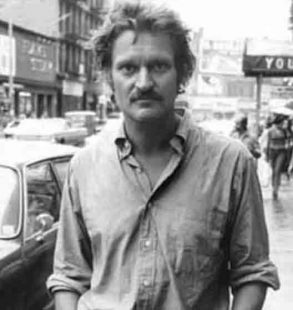
Charles Simic


Lo stesso fiocco di neve
continuava a cadere dal cielo grigio
per tutto il pomeriggio,
cadeva e ricadeva
poi si ritirava su
da terra,
per cadere di nuovo,
ma ora in modo più furtivo,
con maggiore prudenza
mentre la notte si avvicinava
per vedere un po’ che succedeva.

Charles Simic

(Traduzione di Damiano Abeni e Moira Egan)

da “The lunatic”, Elliot Edizioni, 2017

∗∗∗

The Lunatic

The same snowflake
Kept falling out of the gray sky
All afternoon,
Falling and falling
And picking itself up
Off the ground,
To fall again,
But now more surreptitiously,
More carefully
As night strolled over
To see what’s up.

Charles Simic

da “The lunatic”, Ecco Pr; Reprint edizione, 2016

Un uomo di parole – John Ashbery

John Ashbery


Il suo caso suscita interesse
ma scarsa simpatia; è più piccolo
di quanto non sembrasse a prima vista. Che contributo
dà la prima ortica se ciò che cresce
diventa uno sketch? Tre lati conchiusi,
il quarto aperto all’erosione delle intemperie,
uscite ed entrate, gesti intesi in modo teatrale
a interrompere ripetutamente come malerbe piegate su se stesse
mentre il giardino si satura di neve?
Ah, ma si sarebbe trattato di un altro, ben altro
spettacolo, non del sapore metallico
che ho in bocca mentre distolgo lo sguardo, densità nera come polvere infume
negli angoli in cui continua lo scrivere d’erba,
Rosarossa in luoghi inusitati come la pressione
di dita su un libro chiuso di scatto all’improvviso.

Quelle intricate versioni del vero vengono
sbrogliate, i ringhiosi grovigli estirpati
e sparpagliati. Dietro la maschera
permane una comprensione continentale
del bello, che s’appalesa di rado e quando lo fa già
muore sulle ali del vento che l’ha portato sulla soglia
della parola. Racconto consunto dal raccontare.
Tutti i diari s’assomigliano, limpidi e gelidi, con
la prospettiva di un gelo interminabile. Vengono collocati
in orizzontale, paralleli alla terra,
come i morti che non ci intralciano. Giusto il tempo di rileggere
e il passato ti scivola tra le dita, augurandosi che tu sia con lui.

John Ashbery

(Traduzione di Damiano Abeni)

da “Autoritratto entro uno specchio convesso”, Bompiani, 2019

∗∗∗

A man of words

His case inspires interest
But little sympathy; it is smaller
Than at first appeared. Does the first nettle
Make any difference as what grows
Becomes a skit? Three sides enclosed,
The fourth open to a wash of the weather,
Exits and entrances, gestures theatrically meant
To punctuate like doubled-over weeds as
The garden fills up with snow?
Ah, but this would have been another, quite other
Entertainment, not the metallic taste
In my mouth as I look away, density black as gunpowder
In the angles where the grass writing goes on,
Rose-red in unexpected places like the pressure
Of fingers on a book suddenly snapped shut.

Those tangled versions of the truth are
Combed out, the snarls ripped out
And spread around. Behind the mask
Is still a continental appreciation
Of what is fine, rarely appears and when it does is already
Dying on the breeze that brought it to the threshold
Of speech. The story worn out from telling.
All diaries are alike, clear and cold, with
The outlook for continued cold. They are placed
Horizontal, parallel to the earth,
Like the unencumbering dead. Just time to reread this
And the past slips through your fingers, wishing you were there.

John Ashbery

da “Self-Portrait in a Convex Mirror”, Penguin Publishing Group, 1972