L’amico della sposa – Marcello Comitini

Toni Schneiders, Self Portrait, 1952


Con le affilate lame del rancore
seguendo inquieto il verso della vita
ad occhi bassi tagli bianche trame
nel tiepido manto del mio corpo.
In due separi il sogno dall’amore
l’odio dalla speranza.
È mio l’amore. Tu conservi il sogno
di stringermi nel buio del desiderio.
In te c’è l’odio, in me respingi la speranza
che senza un uomo non ci sia per me felicità.
Ed io di qua rimango gioia malinconica
che mi addolcisce il viso.
È questo il senso del tuo gesto
che a mano spalancata mi allontana.

Marcello Comitini

da “Donne sole”, Edizioni Caffè Tergeste, 2020

AMAZON – Donne sole, Edizioni Caffè Tergeste, 2020
IL MIO LIBRO – Donne sole, Edizioni Caffè Tergeste, 2020

Un fantasma – Charles Baudelaire

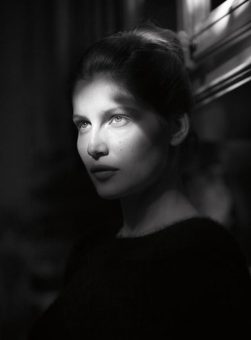
Foto di Dominique Issermann


XXXVIII.

I
Le Tenebre

Nella tomba di tristezza infinita
dove il Destino mi ha già relegato,
dove mai entra un raggio rosa e gaio,
dove, solo con la Notte, ospite incupita,

sono come un pittore da un ironico Dio
condannato a dipingere, ahimè, sulle tenebre,
dove, cuoco dai gusti funerei,
faccio cuocere e mangio il mio cuore,

a tratti brilla si allunga e si rivela
uno spettro fatto di grazia e di splendore.
Dalla sognante andatura orientale,

quando si mostra in tutta la sua grandezza,
la mia bella visitatrice riconosco:
è Lei, nera eppure luminosa.

II
Il Profumo

Lettore, qualche volta hai respirato
con ebbrezza e lenta golosità
quel grano d’incenso che riempie una chiesa
o un sacchetto di muschio invecchiato?

Fascino profondo, magico, che ci incanta
ricostruendo il passato nel presente!
Così l’amante su un corpo adorato
coglie il fiore squisito del ricordo.

Dai suoi capelli flessuosi e pesanti
vivente sacchetto, incensiere d’alcova,
un sentore saliva, aspro e selvaggio,

e dagli abiti, di mussola o velluto
tutti impregnati della sua pura giovinezza
si sprigionava un profumo di pelliccia.

III
La Cornice

Come una bella cornice aggiunge a un quadro,
quand’anche sia di un pittore famoso,
non so cosa di strano e d’incantevole,
isolandolo dall’immensa natura,

così gioielli, mobili, metalli, dorature
s’adattavano giusto alla sua rara bellezza.
Nulla offuscava il suo splendore perfetto
e tutto sembrava servirle da cornice.

Avrei detto persino che talvolta credeva
che tutto la volesse amare ed annegava
con immenso piacere la sua nudità

nei baci voluttuosi della seta e del raso,
e lentamente o brusca ad ogni movimento
mostrava della scimmia le infantili grazie.

IV
Il Ritratto

La Malattia e la Morte riducono in cenere
interamente il fuoco che per noi ardeva.
Di questi grandi occhi così teneri e accesi,
della sua bocca dove il mio cuore annegava,

di questi baci possenti come il dittamo
degli entusiasmi accesi come raggi
che resta? Orribile, mia anima!
Tre colori pallidi di uno schizzo

che muore come me di solitudine,
e che il Tempo, irriguardoso vecchio,
ogni giorno stropiccia con le ali rudi …

Nudo assassino della Vita e dell’Arte
non ucciderai mai nella mia memoria
colei che fu il solo mio piacere e la mia gloria!

Charles Baudelaire

(Traduzione di Marcello Comitini)

da “Spleen e Ideale”, in “I fiori del male 1857-1861”, Edizioni Caffè Tergeste, Roma, 2017

I fiori del male 1857-1861, Edizioni Caffè Tergeste, Roma, 2017

∗∗∗

XXXVIII. Un fantôme 

I
Les Ténèbres

Dans les caveaux d’insondable tristesse
Où le Destin m’a déjà relégué;
Où jamais n’entre un rayon rose et gai;
Où, seul avec la Nuit, maussade hôtesse,

Je suis comme un peintre qu’un Dieu moqueur
Condamne à peindre, hélas! sur les ténèbres;
Où, cuisinier aux appétits funèbres,
Je fais bouillir et je mange mon cœur,

Par instants brille, et s’allonge, et s’étale
Un spectre fait de grâce et de splendeur.
À sa rêveuse allure orientale,

Quand il atteint sa totale grandeur,
Je reconnais ma belle visiteuse:
C’est Elle! noire et pourtant lumineuse.

II
Le Parfum

Lecteur, as-tu quelquefois respiré
Avec ivresse et lente gourmandise
Ce grain d’encens qui remplit une église,
Ou d’un sachet le musc invétéré?

Charme profond, magique, dont nous grise
Dans le présent le passé restauré!
Ainsi l’amant sur un corps adoré
Du souvenir cueille la fleur exquise.

De ses cheveux élastiques et lourds,
Vivant sachet, encensoir de l’alcôve,
Une senteur montait, sauvage et fauve,

Et des habits, mousseline ou velours,
Tout imprégnés de sa jeunesse pure,
Se dégageait un parfum de fourrure.

III
Le Cadre

Comme un beau cadre ajoute à la peinture,
Bien qu’elle soit d’un pinceau très-vanté,
Je ne sais quoi d’étrange et d’enchanté
En l’isolant de l’immense nature,

Ainsi bijoux, meubles, métaux, dorure,
S’adaptaient juste à sa rare beauté;
Rien n’offusquait sa parfaite clarté,
Et tout semblait lui servir de bordure.

Même on eût dit parfois qu’elle croyait
Que tout voulait l’aimer; elle noyait
Sa nudité voluptueusement

Dans les baisers du satin et du linge,
Et, lente ou brusque, à chaque mouvement
Montrait la grâce enfantine du singe.

IV
Le Portrait

La Maladie et la Mort font des cendres
De tout le feu qui pour nous flamboya.
De ces grands yeux si fervents et si tendres,
De cette bouche où mon coeur se noya,

De ces baisers puissants comme un dictame,
De ces transports plus vifs que des rayons,
Que reste-t-il? C’est affreux, ô mon âme!
Rien qu’un dessin fort pâle, aux trois crayons,

Qui, comme moi, meurt dans la solitude,
Et que le Temps, injurieux vieillard,
Chaque jour frotte avec son aile rude…

Noir assassin de la Vie et de l’Art,
Tu ne tueras jamais dans ma mémoire
Celle qui fut mon plaisir et ma gloire!

Charles Baudelaire

da “Spleen et Idéal”, in “Les Fleurs du mal”, ‎Paris, Poulet-Malassis et de Broise, 1861

Giardino d’estate – Louise Glück

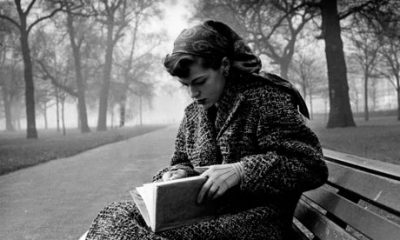
Foto di Bert Hardy

1.

Diverse settimane fa ho scoperto una fotografia di mia madre
seduta al sole, la sua faccia arrossata come per un successo o un trionfo.
Il sole splendeva. I cani
dormivano ai suoi piedi dove dormiva anche il tempo,
calmo e immobile come in ogni fotografia.

Ho spazzato via la polvere dal viso di mia madre.
La polvere, in effetti, copriva tutto; mi sembrava la foschia
persistente di nostalgia che protegge tutte le reliquie dell’infanzia.
Sullo sfondo, un assortimento di mobili da giardino, alberi e arbusti.

Il sole si spostava più in basso nel cielo, le ombre si allungavano e si oscuravano.
Più polvere ho rimosso, più queste ombre crescevano.
L’estate è arrivata. I bambini
si sporgevano oltre la siepe di rose, le loro ombre
si fondevano con le ombre delle rose.

Una parola mi è venuta in mente, riguardo
a questi spostamenti e cambiamenti, a queste cancellazioni
che adesso erano evidenti –

apparve e altrettanto rapidamente svanì.
Era cecità o oscurità, pericolo, confusione?

Arrivò l’estate, quindi l’autunno. Le foglie mutano
i bambini dei punti luminosi in una miscela di bronzo e terra di siena.

2.

Quando mi fui un po’ ripresa da questi eventi,
ho rimesso la fotografia come l’avevo trovata
tra le pagine di un antico libro rilegato,
molti suoi brani erano stati
annotati a margine, a volte con frasi ma più spesso
con vivaci domande ed esclamazioni
dal significato di “sono d’accordo” o “non sono sicuro, perplesso” —

L’inchiostro era sbiadito. In alcuni punti non capivo
quali pensieri fossero venuti in mente al lettore
ma attraverso le macchie potevo percepire
un senso di gravità, come se fossero cadute lacrime.

Ho tenuto il libro per un po’.
Era Morte a Venezia (in traduzione);
Avevo segnato la pagina nell’ipotesi in cui, come credeva Freud,
nulla accadesse per caso.

Così la piccola fotografia
è stata nuovamente sepolta, come il passato è sepolto nel futuro.
A margine c’erano due parole,
collegate da una freccia: “sterilità” e, in fondo alla pagina, “oblio” —

“E gli sembrava che il pallido e adorabile
Evocatore là fuori gli avesse sorriso e fatto cenno … “

3.

Com’è tranquillo il giardino;
nessuna brezza scuote la ciliegia del Corniolo.
L’estate è arrivata.

Com’è tranquillo
ora che la vita ha trionfato. I rozzi

pilastri dei sicomori
sostengono le mensole
immobili del fogliame,

il prato sottostante
lussureggiante, iridescente —

E in mezzo al cielo
il dio immodesto.

Le cose stanno, dice. Sono, non cambiano;
la risposta non cambia.

Com’è silenzioso il palcoscenico
come anche il pubblico; sembra
che respirare sia un’intrusione.

Deve essere molto vicino,
l’erba è senza ombre.

Com’è tranquillo, com’è silenzioso,
come un pomeriggio a Pompei.

4.

Madre morta la scorsa notte,
Madre che non muore mai.

L’inverno era nell’aria,
a molti mesi di distanza
ma comunque nell’aria.

Era il dieci di maggio.
Fiori di melo e giacinto
sbocciati nel giardino sul retro.

Potremmo sentire
Maria che canta canzoni dalla Cecoslovacchia —

Quanto sono sola –
canzoni di questo tipo.

Quanto sono sola
né madre, né padre –
il mio cervello sembra così vuoto senza di loro.

Gli aromi uscivano dalla terra;
i piatti erano nel lavandino,
risciacquati ma non in ordine.

Sotto la luna piena
Maria stava piegando la biancheria;
le lenzuola rigide erano diventate
rettangoli di luce lunare asciutti e bianchi.

Quanto sono sola, ma nella musica
la mia desolazione è la mia gioia.

Era il decimo giorno di maggio
come era stato il nono, l’ottavo.

La madre dormiva nel suo letto,
le braccia tese, la testa
in equilibrio tra di esse.

5.

Beatrice ha portato i bambini al parco di Cedarhurst.
Il sole splendeva. Aeroplani
passavano avanti e indietro, pacifici perché la guerra era finita.

Era il mondo della sua immaginazione:
vero e falso non aveva importanza.

Appena lucidato e scintillante —
quello era il mondo. La polvere
non era ancora precipitata sulla superficie delle cose.

Gli aerei passavano avanti e indietro, diretti
a Roma e Parigi — non potevi arrivarci
a meno che non sorvolassi il parco. Tutto
deve passare, niente può fermarsi —

I bambini si tenevano per mano, chinandosi
ad annusare le rose.
Erano cinque e sette.

Infinito, infinito: quella
era la sua percezione del tempo.

Si sedette su una panchina, un po’ nascosta dalle querce.
Lontano, la paura si avvicinò e se ne andò;
dalla stazione dei treni ne giungeva il suono.
Il cielo era rosa e arancione, più vecchio perché la giornata era finita.

Non c’era vento. Il giorno d’estate
proietta ombre a forma di quercia sull’erba verde.

Louise Glück

(TRADUZIONE DI MARCELLO COMITINI)
ALTRE POESIE DI LOUISE GLÜCK TRADOTTE DA MARCELLO COMITINI

∗∗∗

A summer garden 

1.

Several weeks ago I discovered a photograph of my mother
sitting in the sun, her face flushed as with achievement or triumph.
The sun was shining. The dogs
were sleeping at her feet where time was also sleeping,
calm and unmoving as in all photographs.

I wiped the dust from my mother’s face.
Indeed, dust covered everything; it seemed to me the persistent
haze of nostalgia that protects all relics of childhood.
In the background, an assortment of park furniture, trees, and shrubbery.

The sun moved lower in the sky, the shadows lengthened and darkened.
The more dust I removed, the more these shadows grew.

Summer arrived. The children
leaned over the rose border, their shadows
merging with the shadows of the roses.

A word came into my head, referring
to this shifting and changing, these erasures
that were now obvious —

it appeared, and as quickly vanished.
Was it blindness or darkness, peril, confusion?

Summer arrived, then autumn. The leaves turning,
the children bright spots in a mash of bronze and sienna.

2.

When I had recovered somewhat from these events,
I replaced the photograph as I had found it
between the pages of an ancient paperback,
many parts of which had been
annotated in the margins, sometimes in words but more often
in spirited questions and exclamations
meaning “I agree” or “I’m unsure, puzzled”—

The ink was faded. Here and there I couldn’t tell
what thoughts occurred to the reader
but through the blotches I could sense
urgency, as though tears had fallen.

I held the book awhile.
It was Death in Venice (in translation);
I had noted the page in case, as Freud believed,
nothing is an accident.

Thus the little photograph
was buried again, as the past is buried in the future.
In the margin there were two words,
linked by an arrow: “sterility” and, down the page, “oblivion”—

“And it seemed to him the pale and lovely
Summoner out there smiled at him and beckoned…”

3.

How quiet the garden is;
no breeze ruffles the Cornelian cherry.
Summer has come.

How quiet it is
now that life has triumphed. The rough

pillars of the sycamores
support the immobile
shelves of the foliage,

the lawn beneath
lush, iridescent—

And in the middle of the sky,
the immodest god.

Things are, he says. They are, they do not change;
response does not change.

How hushed it is, the stage
as well as the audience; it seems
breathing is an intrusion.

He must be very close,
the grass is shadowless.

How quiet it is, how silent,
like an afternoon in Pompeii.

4.

Mother died last night,
Mother who never dies.

Winter was in the air,
many months away
but in the air nevertheless.

It was the tenth of May.
Hyacinth and apple blossom
bloomed in the back garden.

We could hear
Maria singing songs from Czechoslovakia—

How alone I am—
songs of that kind.

How alone I am,
no mother, no father—
my brain seems so empty without them.

Aromas drifted out of the earth;
the dishes were in the sink,
rinsed but not stacked.

Under the full moon
Maria was folding the washing;
the stiff sheets became
dry white rectangles of moonlight.

How alone I am, but in music
my desolation is my rejoicing.

It was the tenth of May
as it had been the ninth, the eighth.

Mother slept in her bed,
her arms outstretched, her head
balanced between them.

5.

Beatrice took the children to the park in Cedarhurst.
The sun was shining. Airplanes
passed back and forth overhead, peaceful because the war was over.

It was the world of her imagination:
true and false were of no importance.

Freshly polished and glittering —
that was the world. Dust
had not yet erupted on the surface of things.

The planes passed back and forth, bound
for Rome and Paris — you couldn’t get there
unless you flew over the park. Everything
must pass through, nothing can stop—

The children held hands, leaning
to smell the roses.
They were five and seven.

Infinite, infinite—that
was her perception of time.

She sat on a bench, somewhat hidden by oak trees.
Far away, fear approached and departed;
from the train station came the sound it made.

The sky was pink and orange, older because the day was over.
There was no wind. The summer day
cast oak—shaped shadows on the green grass.

Louise Glück

da “Faithful and Virtuous Night”, Farrar, Straus and Giroux, 2014
«Ho un’infanzia da piangere» – Marcello Comitini

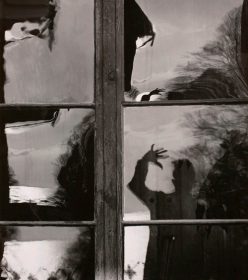
Foto di Anca Mitroi


Ho un’infanzia da piangere
carezze e mani da ricordare
una voce severa tra i dubbi del vivere.
Vuoti che mi stringono la gola
segni dell’esilio
che la mia anima paziente soffre.

Marcello Comitini

da “Donne sole”, Edizioni Caffè Tergeste, 2020

AMAZON – Donne sole, Edizioni Caffè Tergeste, 2020
IL MIO LIBRO – Donne sole, Edizioni Caffè Tergeste, 2020

Mezzanotte – Louise Glück

Foto dal web


Alla fine la notte mi circondò;
ci galleggiavo sopra, forse dentro
o mi trasportava come un fiume trasporta
una barca, e allo stesso tempo
vorticava sopra di me,
costellata di stelle ma comunque oscura.

Questi erano i momenti per i quali ho vissuto.
Ero, mi sentivo, misteriosamente elevata al di sopra del mondo
e quell’azione che alla fin fine era impossibile
rendeva il pensiero non solo possibile ma illimitato.

Non aveva fine. Non ho bisogno, ho sentito,
di fare qualcosa. Qualsiasi cosa
sarebbe stata fatta per me, o fatta a me,
e se non fosse stata fatta, non era
essenziale.

Ero sul mio balcone.
Nella mano destra tenevo un bicchiere di scotch
in cui si stavano sciogliendo due cubetti di ghiaccio.

Il silenzio era entrato in me.
Era come la notte e i miei ricordi — erano come le stelle
in quanto erano fissi, sebbene ovviamente
se si fossero potuti vedere come fanno gli astronomi
si sarebbe visto che sono fuochi senza fine, come i fuochi dell’inferno.
Ho appoggiato il bicchiere sulla ringhiera di ferro.

Sotto, il fiume scintillava. Come ho detto,
tutto brillava — le stelle, le luci del ponte, gli importanti
edifici illuminati che sembravano fermarsi al fiume
per riprendere di nuovo, il lavoro dell’uomo
interrotto dalla natura. Di tanto in tanto ho visto
le imbarcazioni da diporto serali; poiché la notte era calda,
erano ancora piene.

Questa è stata la grande escursione della mia infanzia.
Il breve viaggio in treno che culmina in un tè di gala in riva al fiume,
poi quello che mia zia chiamava la nostra passeggiata,
poi la barca stessa che navigava avanti e indietro sull’acqua scura –

Le monete in mano a mia zia passarono nella mano del capitano.
Mi è stato consegnato il biglietto, ogni volta un nuovo numero.
Quindi la barca si è immessa nella corrente.

Ho tenuto la mano di mio fratello.
Abbiamo visto i monumenti che si susseguivano
sempre nello stesso ordine
e così ci siamo spostati nel futuro
dove si sperimentano ricorrenze perpetue.

La barca risalì il fiume e poi tornò indietro.
Si è spostata nel tempo e poi
attraverso un’inversione di tempo, anche se la nostra direzione
era sempre avanti, la prua continuava
a tracciare un sentiero nell’acqua.

Era come una cerimonia religiosa
in cui la congregazione stava
aspettando, vedendo,
e questo era l’intero punto, il contemplare.

La città andava alla deriva
metà a destra, metà a sinistra.
Guardate com’è bella la città,
ci diceva mia zia. Perché
era illuminata, immagino. O forse perché
qualcuno l’aveva detto nell’opuscolo stampato.

Successivamente abbiamo preso l’ultimo treno.
Spesso mi addormentavo, anche mio fratello dormiva.
Eravamo bambini di campagna, non abituati a tante emozioni.
Voi siete ragazzi esausti, disse mia zia,
come se tutta la nostra infanzia fosse a questo proposito
una qualità esaurita.
Fuori dal treno, il gufo stava chiamando.

Quanto eravamo stanchi quando siamo arrivati a casa.
Sono andata a letto con i calzini.

La notte era molto buia.
La luna è sorta.
Ho visto la mano di mia zia afferrarsi alla ringhiera.

Con grande eccitazione, applausi e ovazioni,
gli altri salirono sul ponte superiore
a guardare la terra scomparire nell’oceano –

Louise Glück

(TRADUZIONE DI MARCELLO COMITINI)
ALTRE POESIE DI LOUISE GLÜCK TRADOTTE DA MARCELLO COMITINI

∗∗∗

Midnight

At last the night surrounded me;
I floated on it, perhaps in it,
or it carried me as a river carries
a boat, and at the same time
it swirled above me,
star-studded but dark nevertheless.

These were the moments I lived for.
I was, I felt, mysteriously lifted above the world
so that action was at last impossible
which made thought not only possible but limitless.

It had no end. I did not, I felt,
need to do anything. Everything
would be done for me, or done to me,
and if it was not done, it was not
essential.

I was on my balcony.
In my right hand I held a glass of Scotch
in which two ice cubes were melting.

Silence had entered me.
It was like the night, and my memories—they were like stars
in that they were fixed, though of course
if one could see as do the astronomers
one would see they are unending fires, like the fires of hell.
I set my glass on the iron railing.

Below, the river sparkled. As I said,
everything glittered—the stars, the bridge lights, the important
illumined buildings that seemed to stop at the river
then resume again, man’s work
interrupted by nature. From time to time I saw
the evening pleasure boats; because the night was warm,
they were still full.

This was the great excursion of my childhood.
The short train ride culminating in a gala tea by the river,
then what my aunt called our promenade,
then the boat itself that cruised back and forth over the dark water—
The coins in my aunt’s hand passed into the hand of the captain
in my aunt’s hand passed into the hand of the captain.
I was handed my ticket, each time a fresh number.
Then the boat entered the current.

I held my brother’s hand.
We watched the monuments succeeding one another
always in the same order
so that we moved into the future
while experiencing perpetual recurrences.

The boat traveled up the river and then back again.
It moved through time and then
through a reversal of time, though our direction
was forward always, the prow continuously
breaking a path in the water.

It was like a religious ceremony
in which the congregation stood
awaiting, beholding,
and that was the entire point, the beholding.

The city drifted by,
half on the right side, half on the left.

See how beautiful the city is,
my aunt would say to us. Because
it was lit up, I expect. Or perhaps because
someone had said so in the printed booklet.

Afterward we took the last train.
I often slept, even my brother slept.
We were country children, unused to these intensities.

It was like a religious ceremony
in which the congregation stood
awaiting, beholding,
and that was the entire point, the beholding.

The city drifted by,
half on the right side, half on the left.

See how beautiful the city is,
my aunt would say to us. Because
it was lit up, I expect. Or perhaps because
someone had said so in the printed booklet.

Afterward we took the last train.
I often slept, even my brother slept.
We were country children, unused to these intensities.

You boys are spent, my aunt said,
as though our whole childhood had about it
an exhausted quality.
Outside the train, the owl was calling.

How tired we were when we reached home.
I went to bed with my socks on.

The night was very dark.
The moon rose.
I saw my aunt’s hand gripping the railing.

In great excitement, clapping and cheering,
the others climbed onto the upper deck
to watch the land disappear into the ocean—

Louise Glück

da “Faithful and Virtuous Night”, Farrar, Straus and Giroux, 2014