After such pleasures – Julio Cortázar

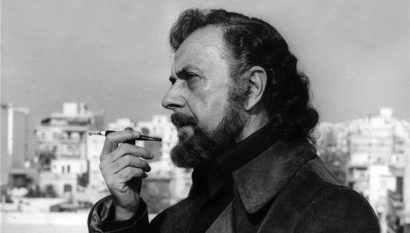
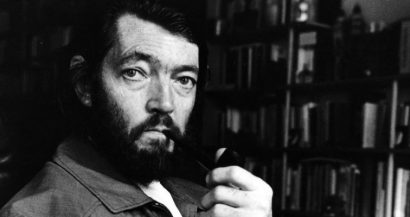
Ulf Andersen, Julio Cortazar


Questa notte, cercando la tua bocca in un’altra bocca,
quasi credendoci, perché così da cieco è questo fiume
che mi tira alle donne e mi sommerge fra le sue palpebre,
che tristezza nuotare infine verso la sponda del sopore
sapendo che il sopore è questo ignobile schiavo
che accetta le false monete, e le fa circolare sorridendo.

Dimenticata purezza, come vorrei riscattare
questo dolore di Buenos Aires, questa
attesa senza pause né speranza.
Solo nella mia casa aperta sopra il porto
un’altra volta ancora cominciare ad amarti,
un’altra volta ancora trovarti al caffè della mattina
senza che tante cose irrinunciabili
siano state.
E non dovermi accontentare di questa dimenticanza
che sale per niente, per cancellare dalla lavagna i tuoi pupazzetti
e non lasciarmi che una finestra destellata.

Julio Cortázar

(Traduzione di Gianni Toti)

da “Le ragioni della collera”, Edizioni Fahrenheit 451, 1995

∗∗∗

After such pleasures

Esta noche, buscando tu boca en otra boca,
casi creyéndolo, porque así de ciego es este río
que me tira en mujer y me sumerge entre sus párpados,
qué tristeza nadar al fin hacia la orilla del sopor
sabiendo que el placer es ese esclavo innoble
que acepta las monedas falsas, las circula sonriendo.

Olvidada pureza, cómo quisiera rescatar
ese dolor de Buenos Aires, esa espera sin pausas ni esperanza.
Solo en mi casa abierta sobre el puerto
otra vez empezar a quererte,
otra vez encontrarte en el café de la mañana
sin que tanta cosa irrenunciable
hubiera sucedido.
Y no tener que acordarme de este olvido que sube
para nada, para borrar del pizarrón tus muñequitos
y no dejarme más que una ventana sin estrellas.

Julio Cortázar

da “Salvo el crepúsculo”, Buenos Aires, Ed. Alfaguara, 1984
Conosco appena le mani – Vittorio Bodini

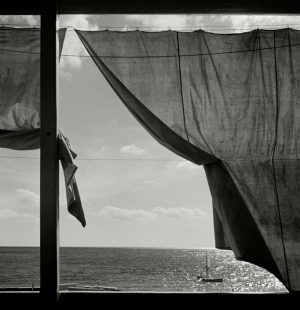
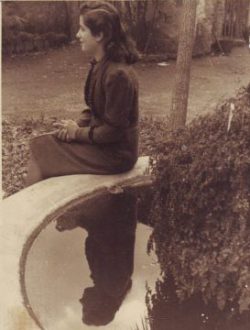
Herbert List, Liguria, 1936


Conosco appena le mani,
le scarpe che metto ai piedi.
Conosco il giorno e la notte
e i terrori del vento.
Ma gli anni? Dove son gli anni,
e tutti i libri che ho letto?
I volti amati si sfrondano
delle loro vicende,
non restano che i nomi.
Tutto nella memoria
cade a pezzi, sprofonda
senza rumore
nelle botole dei morti.
Ah, dove sono le acute presenze
del passato, le sue calde forme,
la cera su cui incidevano
i miei sentimenti?
Dove si nasconde il senso
delle cose che ho vissuto,
e i brividi lucenti
e i cieli dell’avventura?

Vittorio Bodini

da “Metamor”, Scheiwiller, 1967

Epilogo – Ghiannis Ritsos

Ghiannis Ritsos


Vita – una ferita nell’inesistenza.

Ghiannis Ritsos

(Traduzione di Nicola Crocetti)

(1968; da Pietre Ripetizioni Sbarre,1972: Pietre)

da “Pietre Ripetizioni Sbarre”, Crocetti Editore, 2020

∗∗∗

Ἐπίλογος

Ζωή, – ἕνα τραῦμα στήν ἀνυπαρξία.

Γιάννης Ρίτσος

1968

da “Πέτρες Ἐπαναλήψεις Κιγκλίδρωμα”, 1972: ‘Πέτρες’

A Jane: La Ricordanza – Percy Bysshe Shelley

Percy Bysshe Shelley by Alfred Clint

I.

Di tanti giorni, belli tutti
   E chiari come te, l’estremo,
L’estremo e più soave, è morto.
   Memoria, noi lo loderemo!
Su, vieni all’opra usata, traccia
   L’elogio di splendor distrutti:
Poi ch’or la Terra ha un’altra faccia,
   E il Ciel corruga il ciglio assorto.

II.

Dei pini andammo alla foresta
   Ch’orla all’Oceano il lido:
In casa stava la tempesta,
   La brezza nel suo nido.
Le nubi ai giochi lor partite,
   Brusìan tra il sonno l’onde,
E il Ciel col suo sorriso mite
   Tenea l’acque profonde.
Di là dal ciel venia quell’ora,
   Che ci schiarava il viso
Con una luce tal, che aurora
   Parea del Paradiso?

III.

Sostammo in mezzo ai pini, eretti
   Giganti dei deserti,
Dal nembo attorti ai rudi aspetti
   Come serpi conserti;
Al soffio degli azzurri fiati
   Nascean tra stelo e stelo
Colori e accordi delicati
   Come quelli del Cielo:
Sopite stavan or le fronde
   Come le verdi ondine,
Silenti  al par delle profonde
   Foreste oceanine.

IV.

Che calma! – un nodo sì tenace
   V’avea il silenzio astretto,
Che quell’inviolabil pace
   Più muta avresti detto
Pel suon del picchio; e pel sereno
   Nostro lieve respiro
Intorno a noi non venia meno
   La calma effusa in giro.
E un cerchio magico tracciato
   Delle remote sedi
Dei monti ai fiori di quel prato
   Esigui ai nostri piedi —
(Spirito intorno effuso, arcana
   Presenza inebriante) —
Pareva a pace indur l’umana
   Nostra angoscia un istante.
Ed io sentia che il centro, il cuore
   Del cerchio magico era
Un esser che infondea l’amore
   Nell’inerte atmosfera.

V.

Sostammo agli acquitrini: il velo
   Dei rami li rinserra;
Ciascun pareva un breve cielo
   Sprofondato sottoterra;
Un cielo d’un chiarore intenso
   Entro il terreno oscuro;
Più del notturno abisso, immenso
   E più del giorno, puro.
E lì crescean come nell’aria
   Le leggiadre foreste,
Perfette più di quante varia
   Fronda quassù riveste.
Là v’era il prato e la radura,
   E tra la verde cinta
Il sol brillava come aurora
   Da nube variopinta.
Parvenze dolci (mai non nacquero,
   In terra, pari a queste)
Fingea laggiù l’amor dell’acque
   Per le verdi foreste.
E il fondo, tutto d’un zaffiro
   D’Eliso era irrigato:
Un’atmosfera senza spiro,
   Un dì più delicato.
La scena, nell’amor, concessa
   Al sen dell’acque s’era
Con ogni foglia e linea espressa
   In forma più che vera.
Ma un vento sottentrò repente,
   Come un pensiero inviso
Che via dall’occhio della mente
   Discaccia un caro viso.
Se ben sei bella tu, e vivace
   Sempre il bosco ha la fronda,
Men spesso il cuor di Shelley ha pace,
   Ch’abbia riposo l’onda.

Percy Bysshe Shelley

(Traduzione di Mario Praz)

da “Poeti inglesi dell’ottocento”, Casa Editrice Marzocco, Firenze, 1925

***

To Jane: The Recollection

I.

Now the last day of many days,
   All beautiful and bright as thou,
The loveliest and the last, is dead,
   Rise, Memory, and write its praise!
Up,–to thy wonted work! come, trace
   The epitaph of glory fled,–
For now the Earth has changed its face,
   A frown is on the Heaven’s brow.

II.

We wandered to the Pine Forest
   That skirts the Ocean’s foam,
The lightest wind was in its nest,
   The tempest in its home.
The whispering waves were half asleep,
   The clouds were gone to play,
And on the bosom of the deep
   The smile of Heaven lay;
It seemed as if the hour were one
   Sent from beyond the skies,
Which scattered from above the sun
   A light of Paradise.

III.

We paused amid the pines that stood
   The giants of the waste,
Tortured by storms to shapes as rude
   As serpents interlaced;
And, soothed by every azure breath,
   That under Heaven is blown,
To harmonies and hues beneath,
   As tender as its own,
Now all the tree-tops lay asleep,
   Like green waves on the sea,
As still as in the silent deep
   The ocean woods may be.

IV.

How calm it was!–the silence there
   By such a chain was bound
That even the busy woodpecker
   Made stiller by her sound
The inviolable quietness;
   The breath of peace we drew
With its soft motion made not less
   The calm that round us grew.
There seemed from the remotest seat
   Of the white mountain waste,
To the soft flower beneath our feet,
   A magic circle traced,–
A spirit interfused around
   A thrilling, silent life,–
To momentary peace it bound
   Our mortal nature’s strife;
And still I felt the centre of
   The magic circle there
Was one fair form that filled with love
   The lifeless atmosphere.

V.

We paused beside the pools that lie
   Under the forest bough,–
Each seemed as ‘twere a little sky
   Gulfed in a world below;
A firmament of purple light
   Which in the dark earth lay,
More boundless than the depth of night,
   And purer than the day–
In which the lovely forests grew,
   As in the upper air,
More perfect both in shape and hue
   Than any spreading there.
There lay the glade and neighbouring lawn,
   And through the dark green wood
The white sun twinkling like the dawn
   Out of a speckled cloud.
Sweet views which in our world above
   Can never well be seen,
Were imaged by the water’s love
   Of that fair forest green.
And all was interfused beneath
   With an Elysian glow,
An atmosphere without a breath,
   A softer day below.
Like one beloved the scene had lent
   To the dark water’s breast,
Its every leaf and lineament
   With more than truth expressed;
Until an envious wind crept by,
   Like an unwelcome thought,
Which from the mind’s too faithful eye
   Blots one dear image out.
Though thou art ever fair and kind,
   The forests ever green,
Less oft is peace in Shelley’s mind,
   Than calm in waters, seen.

Percy Bysshe Shelley

da “The poetical works of Percy Bysshe Shelley”, A. & W. Galignani, 1841

Arpeggio – Giorgio Caproni

Dipinto di Hamish Blakely


Cristo ogni tanto torna,
se ne va, chi l’ascolta…
Il cuore della città
è morto, la folla passa
e schiaccia – è buia massa
compatta, è cecità…

Giorgio Caproni

196…

da “Il «Terzo libro» e altre cose”, Einaudi, Torino, 1968