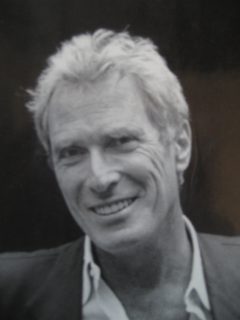
Ciò che resta – Mark Strand


for Bill and Sandy Bailey

Mi svuoto dei nomi degli altri. Mi svuoto le tasche.
Mi svuoto le scarpe e le lascio sul ciglio della strada.
Di notte metto indietro gli orologi;
apro l’album di famiglia e mi guardo bambino.

A che giova? Le ore hanno fatto il loro dovere.
Dico il mio nome. Dico addio.
Le parole si inseguono nel vento.
Amo mia moglie ma la ripudio.

I miei genitori si alzano dai troni
nelle stanze lattee delle nubi. Come posso cantare?
Il tempo mi dice ciò che sono. Cambio e sono lo stesso.
Mi svuoto della mia vita e resta la mia vita.

Mark Strand

(Traduzione di Damiano Abeni)

da “L’inizio di una sedia”, Donzelli Poesia, 1999

∗∗∗

The Remains

for Bill and Sandy Bailey

I empty myself of the names of others. I empty my pockets.
I empty my shoes and leave them beside the road.
At night I turn back the clocks;
I open the family album and look at myself as a boy.

What good does it do? The hours have done their job.
I say my own name. I say goodbye.
The words follow each other downwind.
I love my wife but send her away.

My parents rise out of their thrones
into the milky rooms of clouds. How can I sing?
Time tells me what I am. I change and I am the same.
I empty myself of my life and my life remains.

Mark Strand

da “Darker: poems”, Atheneum, 1970

Una sola volta – Anne Sexton

Rollie McKenna, Anne Sexton


Una sola volta compresi lo scopo della vita.
Accadde a Boston, inaspettatamente.
Camminavo lungo il Charles
e vidi le luci duplicarsi, tutte
con il cuore al neon e vibrante,
spalancando la bocca come cantanti dopera;
e contai le stelle, le mie piccole veterane,
cicatrici fiorite, e capii che stavo portando
il mio amore sulla sponda verde notturna, e in lacrime
aprii il cuore alle auto dirette a est e a ovest
e feci passare un ponticello alla mia verità
e la condussi a casa in fretta col suo fascino
e fino allalba accumulai queste costanti
per scoprire poi che se nerano andate. 


Anne Sexton

(Traduzione di Edoardo Zuccato)

da “Poesie d’amore, 1969”, in “L’estrosa abbondanza”, Crocetti Editore, 1997

∗∗∗

Just Once

Just once I knew what life was for.
In Boston, quite suddenly, I understood;
walked there along the Charles River,
watched the lights copying themselves,
all neoned and strobe-hearted, opening
their mouths as wide as opera singers;
counted the stars, my little campaigners,
my scar daisies, and knew that I walked my love
on the night green side of it and cried
my heart to the eastbound cars and cried
my heart to the westbound cars and took
my truth across a small humped bridge
and hurried my truth, the charm of it, home
and hoarded these constants into morning
only to find them gone.

Anne Sexton

da “Love Poems, 1969”, in “Anne Sexton, The Complete Poems”, Boston, Houghton Mifflin, 1981 

«Questa piccola rosa nessuno la conosce» – Emily Dickinson

Foto di Rimel Neffati

35

Questa piccola rosa nessuno la conosce.
Potrebbe essere una pellegrina
se non l’avessi tolta ai suoi sentieri
e serbata per te.
Solo un’ape a cercarla patirà,
soltanto una farfalla,
di lontano affrettatasi
per giacere sul suo seno −
solo un uccello se ne stupirà −
solo una brezza esalerà un sospiro −
Oh rosellina − quanto è facile
per le creature come te morire!

Emily Dickinson

c.1858

(Traduzione di Silvio Raffo)

da “Tutte le poesie”, “I Meridiani” Mondadori, 1997

∗∗∗

35

Nobody knows this little Rose −
It might a pilgrim be
Did I not take it from the ways
And lift it up to thee.
Only a Bee will miss it −
Only a Butterfly,
Hastening from far journey −
On it’s breast to lie −
Only a Bird will wonder −
Only a Breeze will sigh −
Ah Little Rose − how easy
For such as thee to die!

Emily Dickinson

da “Poems”, a cura di Mabel Loomis Todd e Thomas W. Higginson, Boston, Robert Brothers, 1890

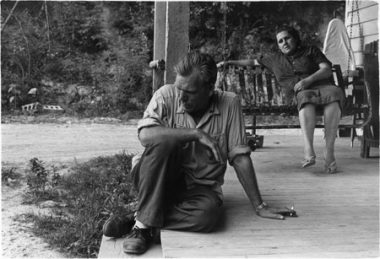
Fallimento – Philip Schultz

Foto di William Gedney


Per pagare il funerale di mio padre
mi feci prestare soldi da persone
cui lui già doveva soldi.
Uno lo definì una nullità.
No, dissi io, lui era un fallito.
Nessuno ricorda
il nome di una nullità, perciò
sono chiamati nullità.
I falliti non li dimentichi.
Il rabbino che lesse l’elogio di rito
di un uomo che non apparteneva
e non credeva a niente
era lui un fallito e una nullità.
Non riuscì a capire che ogni
sua parola umiliava il figlio
e la moglie del morto.
A capire che non
credere e non appartenere a
niente richiedeva una sorta
di fede e di spavalderia.
Uno zio, che contava sulle dita
gli affari falliti di mio padre –
un parcheggio dove allevava oche,
un motel con lune di miele in palio,
un bowling con mariachi itineranti –
non riuscì ad amare e rispettare suo fratello,
che gli aveva insegnato a fischiare
di nascosto, a rubare mele
con la destra e la sinistra. In realtà,
mio padre era un tipo buffo.
L’orologio gli pizzicava il polso, inciampava
nel risvolto dei calzoni e russava
forte al cinema, dove
la stanchezza alla fine
lo vinceva. Non credeva a:
risparmi assicurazioni giornali
verdure bene e male fragilità
umana storia né Dio.
I parenti ci evitavano
come la peste. Lasciai la città
ma non riuscii a scappare.

Philip Schultz

(Traduzione di Paola Splendore, con la collaborazione di Maria Baiocchi, Barbara Fiore e Sandro Triulzi)

da “Fallimento, 2007”, in “Il dio della solitudine”, a cura di Paola Splendore, Donzelli Poesia, 2018

∗∗∗

Failure

To pay for my father’s funeral
I borrowed money from people
he already owed money to.
One called him a nobody.
No, I said, he was a failure.
You can’t remember
a nobody’s name, that’s why
they’re called nobodies.
Failures are unforgettable.
The rabbi who read a stock eulogy
about a man who didn’t belong to
or believe in anything
was both a failure and a nobody.
He failed to imagine the son
and wife of the dead man
being shamed by each word.
To understand that not
believing in or belonging to
anything demanded a kind
of faith and buoyancy.
An uncle, counting on his fingers
my father’s business failures –
a parking lot that raised geese,
a motel that raffled honeymoons,
a bowling alley with roving mariachis –
failed to love and honor his brother,
who showed him how to whistle
under covers, steal apples
with his right or left hand. Indeed,
my father was comical.
His watches pinched, he tripped
on his pant cuffs and snored
loudly in movies, where
his weariness overcame him
finally. He didn’t believe in:
savings insurance newspapers
vegetables good or evil human
frailty history or God.
Our family avoided us,
fearing boils. I left town
but failed to get away.

Philip Schultz

da “Failure”, Harcourt Books, 2007
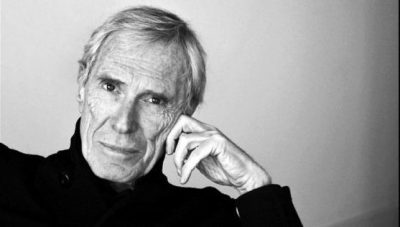
Tenere insieme le cose – Mark Strand


In un campo
io sono l’assenza
del campo.
È
sempre così.
Ovunque sia
io sono ciò che manca.

Quando cammino
divido l’aria
e sempre
l’aria rifluisce
a riempire gli spazi
in cui era stato il mio corpo.

Abbiamo tutti motivi
per muoverci.
Io mi muovo
per tenere insieme le cose.

Mark Strand

(Traduzione di Damiano Abeni con Moira Egan)

da “Motivi per muoversi”, 1968,  in “Mark Strand, Tutte le poesie”, Mondadori, 2019

∗∗∗

Keeping Things Whole

In a field
I am the absence
of field.
This is
always the case.
Wherever I am
I am what is missing.

When I walk
I part the air
and always
the air moves in
to fill the spaces
where my body’s been.

We all have reasons
for moving.
I move
to keep things whole.

Mark Strand

da “Reasons for Moving”, 1968, in “Collected Poems”, New York, Alfred A. Knopf/ Random House, 2014