Terza rima – Adrienne Rich

Alex Howitt, Rain

 1.

Cielo sputa-grandine     sole
che schizza dai cachi rimasti
nel giardino abbandonato

della casa abbandonata     La targa dell’agente immobiliare ondeggia
contro questo denso di nubi questo
lotto arreso

Ti narrerei     quindi aiutami     se potessi
il gran maestro
che mi apparve al fianco dicendo:

Scendiamo        all’oltretomba
– la terra già spaccata
Lasciati prendere per mano

– ma chi potrebbe essere?
tremante sulla crosta aperta
di chi fidarmi?

divento il maestro mancato deragliato dalla memoria assaltato
zoppicante
che non ho avuto mai     io conduco e     io tengo dietro

2.

Chiamalo sentiero del terremoto:
io conduco attraverso campi di lecci
fino al colle     dove hanno tremato le placche

riavvolgo la storia sismica
indico lo steccato
spezzato del 1906     le pietre dissestate

traccio la curva sotto scuri rami d’alloro
macchiati di muschio
al modo di una guida

Al modo di un novizio resto
indietro con il serpentello
morto sul viottolo battuto

Non accadrà mai piú

3.

In fondo al viottolo battuto ci regalano
biglietti per la cerimonia
della morte della storia

L’ultima pagina del calendario
salterà in aria   foglio di fiamma
(nessuno potrà accedere sul ponte)

Raggrupperemo per lettera
ordine alfabetico
ogni biglietto una lettera

per vederci giganti
sul maxischermo
del parcheggio

figure di uomini e donne che spingono decisi
neonati in carrozzine imbottite
attraverso ipermercati in disintegrazione

dentro la nuova era

4.

Ho perso la nostra via      la colpa è mia
nostra   la colpa appartiene
a noi    divento    la guida

che avrebbe dovuto mancare
che avrebbe dovuto rimanere novizio
io     come guida    ho fallito

io come novizio       ho tremato
avrei dovuto essere piú forte     tenerci
uniti

5.

Mi pensavo piú
forte     vedevo la volontà come una vela
che lanciava i miei scafi

su fiumi ghiacciati
insanguinati dal tramonto
pensavo di poter essere per sempre

volontà intatta     la mia vela gonfia
di perfetto ozono     le mie lame
lampi lucenti nel ghiaccio

6.

Era quella la giovinezza?     quello zaffiro
splendente sulla neve
un’ora precisa

a Central Park     quell’odore
su marciapiede e davanzale
fresco e intatto

la pace e il dramma della tempesta
sopra la città
pubblica intimità

                                   in attesa
nella piccola copisteria appannata
piste di fango sul parquet

poi tremante     inebriata
nel crepuscolo
alla fermata del tram     in mezzo agli altri     pubblica felicità

7.

Non è semplice svolgere
il lavoro della guida     i novizi
irrompono a ogni ora con il loro eccesso di vigore

senza sapere chi sono
ogni fase della luna una scusa
per fibrillare

oltre il bisogno     nel mondo d’oggi
pensare
a espandere     il nuovo pensiero

– O: l’amore ti muoverà con forza
o lo farà il commercio
Vuoi un prete?     vai all’altare

dove accordi eterni sono conclusi
vuoi amore?
discendi nel tuo cuore distruttibile

8.

Nella pellicola di Almodóvar
andiamo a caccia della verità nel campo delle prostitute
a trovare passato e futuro

eleganti     pestate e accoltellate
sesso senza genere
sfruttato e sfruttatore

transazioni     zone di gioco
girare in auto
alla ricerca dei propri desideri

teatro dell’amore     nono cerchio
ci sono cosí tanti maestri
qui     nessun fuoco li consuma

Capisci?     potrebbero frustarti
in faccia in un posto del genere
Credi che sia un film?

9.

Lei dice: Ho dato il mio nome ed è stato preso
Il mio nome non l’ho piú
Ho dato la mia parola ed è stata rotta

Le mie parole stanno imparando
a camminare con le grucce
in mezzo al traffico

senza incespicare
Il mio nome è un prigioniero
che non farà nomi

Dice:     Ho dato la mia lingua
all’amore    e questo
rende difficile parlare

Dice:    Quando la mia vita dipendeva
da uno dei due
termini opposti

beltà e coraggio ho osato mescolare
entrambi sono stati i miei amanti
insieme sono stati torturati

10.

Stanca delle mie vecchie poesie        sorpresa
da un acquazzone sulla Quinta Strada
in una libreria

allungo la mano a uno scaffale
ed eccoti     Pier Paolo
che parli alle ceneri di Gramsci

nella vecchia rima incatenata
Vivo nel non volere
del tramontato dopoguerra:

                                                amando
il mondo che odio…
quella voce vernacolare
intimamente politica

e in questo modo sei morto
cosí mi stringo il libro al cuore
mentre il negozio chiude

11.

Sotto gli spigoli di metallo annerito
della piccola moka
blu arde una fiamma

un profumo impregna la stanza
– aroma o precognizione di
una vita che in effetti potrebbe essere

vissuta     un chicco di speranza
un morso di cioccolata amara nel metrò
per ravvivare i sensi

senza i quali siamo prede
della volontà fallita
la sua scienza della disperazione

12.

Come odio quando mi attribuisci
una “visione di donna”
accogliente tra le porcellane     le tende tirate

o     china in abito di pelle nera
sulla tua sedia
con l’unghia nera a tracciarti i lineamenti

Sibilla sfinita galleggiante nella bottiglia

Quanto ho odiato parlare “da donna”
per la mera continuazione
mentre vedevo la frattura

Da donna     amo
e odio?     da donna
mastico la mia cioccolata amara sottoterra?

Sí.     No.     Anche tu
sessuato come sei     odiando
l’intero affare     continui     a perpetuarlo

13.

Là dove il novizio tira la guida
per l’aria gelata
dove la guida all’improvviso afferra     la spalla

del novizio     dove il muschio è d’oro
il cielo chiazzato di rosa al tramonto
dove l’urina della renna appena scomparsa

punge l’aria come un’erba affilata
dove la gola della radura si apre
per la foresta arresa

è piú difficile restare
con te     io conduco
e tengo dietro

le nostre ombre     grandi come renne
scivolano sulla mappa
del caso e del fine     figure

sulla crosta aperta
si scambiano posto     bocconi
uno sguardo

Adrienne Rich

2000

(Traduzione di Maria Luisa Vezzali)

da “La guida nel labirinto”, Crocetti Editore, 2011

***

Terza Rima

1.

Hail-spurting sky     sun
splashing off persimmons left
in the quit garden

of the quit house     The realtor’s swaying name
against this cloudheap this
surrendered acre

I would     so help me     tell you if I could
how some great teacher
came to my side and said:

Let’s go down     into the underworld
—the earth already crazed
Let me take your hand

—but who would that be?
already trembling on the broken crust
who would I trust?

I become the default derailed memory-raided
limping
teacher I never had     I lead and     I follow

2.

Call it the earthquake trail:
I lead through live-oak meadows
to the hillside     where the plates shuddered

rewind the seismic story
point to the sundered
fence of 1906     the unmatching rocks

trace the loop under dark bay branches
blurred with moss
behaving like a guide

Like a novice I lag
behind with the little snake
dead on the beaten path

This will never happen again

3.

At the end of the beaten path we’re sold free
tickets for the celebration
of the death of history

The last page of the calendar
will go up a sheet of flame
(no one will be permitted on the bridge)

We’ll assemble by letters
alphabetical
each ticket a letter

to view ourselves as giants
on screen-surround
in the parking lot

figures of men and women firmly pushing
babies in thickly padded prams
through disintegrating malls

into the new era

4.

I have lost our way the fault is mine
ours the fault belongs
to us     I become     the guide

who should have defaulted
who should have remained the novice
I     as guide     failed

I as novice     trembled
I should have been stronger     held us
together

5.

I thought I was
stronger    my will the ice-sail
speeding my runners

along frozen rivers
bloodied by sunset
thought I could be forever

will-ful     my sail filled
with perfect ozone     my blades
flashing clean into the ice

6.

Was that youth?     that clear
sapphire on snow
a distinct hour

in Central Park     that smell
on sidewalk and windowsill
fresh and unmixt

the blizzard’s peace and drama
over the city
a public privacy

                               waiting
in the small steamed-up copy shop
slush tracked in across a wooden floor

then shivering     elated
in twilight
at the bus stop     with others     a public happiness

7.

Not simple is it to do
a guide’s work     the novices
irrupting hourly with their own bad vigor

knowing not who they are
every phase of moon an excuse
for fibrillating

besides the need in     today’s world
to consider
outreach     the new thinking

—Or: love will strongly move you
or commerce will
You want a priest?    go to the altar

where eternal bargains are struck
want love?
go down inside your destructible heart

8.

In Almodóvar’s film
we go for truth to the prostitutes’ field
to find past and future

elegant     beaten-up and knifed
sex without gender
preyed-on and preying

transactions     zones of play
the circling drivers
in search of their desires

theater of love     Ninth Circle
there are so many teachers
here no fire can shrink them

Do you understand?     you could get your face
slashed in such a place
Do you think this is a movie?

9.

She says: I gave my name and it was taken
I no longer have my name
I gave my word and it was broken

My words are learning
to walk on crutches
through traffic

without stammering
My name is a prisoner
who will not name names

She says:     I gave my tongue
to love     and this
makes it hard to speak

She says:     When my life depended
on one of two
opposite terms

I dared mix beauty with courage
they were my lovers
together they were tortured

10.

Sick of my own old poems     caught
on rainshower Fifth Avenue
in a bookstore

I reach to a shelf
and there you are     Pier Paolo
speaking to Gramsci’s ashes

in the old encircling rhyme
Vivo nel non volere
del tramontato dopoguerra:

amando
il mondo che odio . . .
that vernacular voice
intimately political

and that was how you died
so I clasp my book to my heart
as the shop closes

11.

Under the blackened dull-metal corners
of the small espresso pot
a jet flares blue

a smell tinctures the room
—some sniff or prescience of
a life that actually could be

lived     a grain of hope
a bite of bitter chocolate in the subway
to pull on our senses

without them we’re prey
to the failed will
its science of despair

12.

How I hate it when you ascribe to me
a “woman’s vision”
cozy with coffeepots     drawn curtains

or     leaning in black leather dress
over your chair
black fingernail tracing your lines

overspent Sibyl drifting in a bottle

How I’ve hated speaking “as a woman”
for mere continuation
when the broken is what I saw

As a woman     do I love
and hate?     as a woman
do I munch my bitter chocolate underground?

Yes.     No.     You too
sexed as you are hating
this whole thing     you keep on it     remaking

13.

Where the novice pulls the guide
across frozen air
where the guide suddenly grips     the shoulder

of the novice     where the moss is golden
the sky sponged with pink at sunset
where the urine of reindeer barely vanished

stings the air like a sharp herb
where the throat of the clear-cut opens
across the surrendered forest

I’m most difficultly
with you    I lead
and I follow

our shadows     reindeer-huge
slip onto the map
of chance and purpose     figures

on the broken crust
exchanging places     bites to eat
a glance

Adrienne Rich

2000

da “Fox: Poems 1998 – 2000 by Adrienne Rich”, WW. Norton & Company, 2003

«Si ricorda di te l’umida terra» – Edna St. Vincent Millay

Foto di Arianna Marchesani


Si ricorda di te l’umida terra
di primavera, con tutti i suoi fiori,
le strade polverose, i cardi, e il lento
crescere della tonda luna, e tutte
le gole che cantarono d’estate,
le ali in partenza, i nidi, i rami spogli,
i venti che soffiarono a ogni tempo
e le tempeste di quattro stagioni.
Tu non vai piú  col tuo passo di gloria
sui sentieri dell’alba e della bruma,
non vegli al vento, non ascolti il palpito
d’invisibili ali alte nell’aria.
Qualcosa in piú che giovane e gentile
eri tu: l’anno intero ti ricorda.

Edna St. Vincent Millay

(Traduzione di Silvio Raffo)

da “Sonetti”, in “L’amore non è cieco”, Crocetti Editore, 1991

∗∗∗

«Mindful of you the sodden earth in spring»

Mindful of you the sodden earth in spring,
And all the flowers that in the springtime grow;
And dusty roads, and thistles, and the slow
Rising of the round moon; all throats that sing
The summer through, and each departing wing,
And all the nests that the bared branches show;
And all winds that in any weather blow,
And all the storms that the four seasons bring.
You go no more on your exultant feet
Up paths that only mist and morning knew;
Or watch the wind, or listen to the beat
Of a bird’s wings too high in air to view,—
But you were something more than young and sweet
And fair,—and the long year remembers you.

Edna St. Vincent Millay

da “Renascence and other poems”, Harper & Brothers, 1917

Come è – Mark Strand

Foto di Timothy Greenfield

Il mondo è orribile
E la gente è triste.
Wallace Stevens
         

Sto a letto.
Mi rigiro tutta notte
nel freddo indisturbato abisso
delle lenzuola senza dormire.

Il mio vicino cammina per la sua stanza,
indossa la maschera
lucente di un falco dal grande becco.
Sta alla finestra. Una piuma viola

sale dalla sommità del suo elmo.
La luce della luna
si versa come latte su di lui e il vento sciacqua le bianche
coppe vitree dei suoi occhi.

Con l’elmo in un sacchetto della spesa
siede nel parco, sventola una bandierina americana.
Non lo si sente quando si sposta
dietro alle siepi e alle piante,

sempre sui confini consunti
del paese, e punta una pistola a qualcuno come me. Mi accuccio
sotto il tavolo della cucina, e mi dico
sono un cane, chi ucciderebbe mai un cane?

La moglie del vicino torna a casa.
Entra in salotto,
si spoglia, la chioma le ricade sulla schiena.
Pare che lei guadi

lunghi fiumi placidi d’ombra.
Ha le piante dei piedi nere.
Bacia il marito sul collo
e gli infila le mani nei calzoni.

I miei vicini ballano.
Rotolano sul pavimento, lui le mette la lingua
nell’orecchio, i suoi polmoni
esalano il fetore della broda e del clima dell’inferno.

Per strada c’è gente che si sdraia
ginocchia all’aria, con occhi
colmi di lacrime, ceneri
che penetrano nelle orecchie.

I vestiti gli vengono strappati
di dosso. Hanno le facce estenuate.
Cavalieri gli galoppano intorno, spiegando perché
dovrebbero morire.

La moglie del vicino mi chiama, la bocca schiacciata
contro il muro alle spalle del mio letto.
Dice: «Mio marito è morto».
Io mi giro sul fianco,

sperando che non abbia mentito.
Le pareti e il soffitto di camera mia sono grigi −
il colore della luna visto dalle finestre di un lavasecco.
Chiudo gli occhi.

Mi vedo a galla
sul mar morto del mio letto, risucchiato via,
e chiedo aiuto, ma l’urlo vago
mi si strozza in gola.

Mi vedo nel parco
a cavallo, circondato dal buio,
che conduco gli eserciti di pace.
Le zampe di ferro del cavallo non si flettono.

Lascio le redini. Dove finiranno i disordini?
Flotte di taxi si fermano
nella nebbia, i passeggeri
si addormentano. Della benzina cola

da un tubo di scappamento tricolore.
Chiudendo a chiave le porte,
le persone che escono dagli uffici si stringono l’un l’altra,
raccontando sempre daccapo la stessa storia.

Tutti quelli che si sono venduti vogliono ricomprarsi.
Non si fa nulla. La sera
consuma le loro membra
come una carestia.

Tutto si offusca.
Il futuro non è più quello di una volta.
Le tombe sono pronte. I morti
erediteranno i morti.

Mark Strand

(Traduzione di Damiano Abeni)

da “Il futuro non è più quello di una volta”, minimum fax, Roma, 2006

∗∗∗

The Way It Is 

The world is ugly
And the people are sad.
Wallace Stevens

I lie in bed.
I toss all night
in the cold unruffled deep
of my sheets and cannot sleep.

My neighbor marches in his room,
wearing the sleek
mask of a hawk with a large beak.
He stands by the window. A violet plume

rises from his helmet’s dome.
The moon’s light
spills over him like milk and the wind rinses the white
glass bowls of his eyes.

His helmet in a shopping bag,
he sits in the park, waving a small American flag.
He cannot be heard as he moves
behind trees and hedges,

always at the frayed edges
of town, pulling a gun on someone like me. I crouch
under the kitchen table, telling myself
I am a dog, who would kill a dog?

My neighbor’s wife comes home.
She walks into the living room,
takes off her clothes, her hair falls down her back.
She seems to wade

through long flat rivers of shade.
The soles of her feet are black.
She kisses her husband’s neck
and puts her hands inside his pants.

My neighbors dance.
They roll on the floor, his tongue
is in her ear, his lungs
reek with the swill and weather of hell.

Out on the street people are lying down
with their knees in the air, tears
fill their eyes, ashes
cover their ears.

Their clothes are torn
from their backs. Their faces are worn.
Horsemen are riding around them, telling them why
they should die.

My neighbor’s wife calls to me, her mouth is pressed
against the wall behind my bed.
She says, «My husband’s dead.»
I turn over on my side,

hoping she has not lied.
The walls and ceiling of my room are gray —
the moon’s color through the windows of a laundromat.
I close my eyes.

I see myself float
on the dead sea of my bed, falling away,
calling for help, but the vague scream
sticks in my throat.

I see myself in the park
on horseback, surrounded by dark,
leading the armies of peace.
The iron legs of the horse do not bend.

I drop the reins. Where will the turmoil end?
Fleets of taxis stall
in the fog, passengers fall
asleep. Gas pours

from a tricolored stack.
Locking their doors,
people from offices huddle together,
telling the same story over and over.

Everyone who has sold himself wants to buy himself back.
Nothing is done. The night
eats into their limbs
like a blight.

Everything dims.
The future is not what it used to be.
The graves are ready. The dead
shall inherit the dead.

Mark Strand

da “Darker: poems”, Atheneum, 1970

Fiaba – Ted Hughes

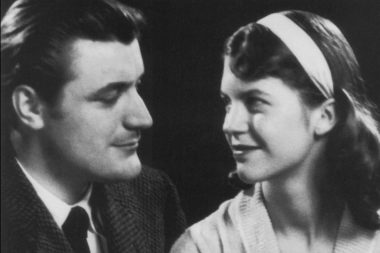
Sylvia Plath and Ted Hughes


Il quarantanove era il tuo numero magico.
Quarantanove questo.
Quarantanove quello. Quarantotto
porte nel tuo alto palazzo potevano essere aperte.
Ogni notte, dopo che eri andata via,
potevo scegliere tra quarantotto stanze.
Ma la quarantanovesima – ne tenevi tu la chiave.
Quella l’avremmo aperta, un giorno, insieme.

Andavi via: una vampata di capelli e un tuffo
nell’abisso.
Ogni notte. Il tuo amante Orco
che per tutto il giorno ritemprava le forze
dentro la morte, aspettava nel baratro
sotto le stelle frementi.
E io avevo quarantotto chiavi, porte e stanze
con cui giocare. Il tuo Orco
era la somma, stipata in una sola carcassa vudù,
di tutti i tuoi amanti passati –
quanti, chi, dove, quando
non lo dicesti mai neppure al tuo diario segreto.
Solo uno splendeva come un vulcano
lontano nella notte.
Ma io non guardai mai, non vidi mai
la sua effigie laggiù, che bruciava nelle tue lacrime
come fosse di catrame.
Come il lume da notte di un bambino addormentato,
consolava il tuo cosmo.
Nel frattempo, quell’Orco era più che sufficiente,
come se ogni notte tu morissi per stargli vicino,
come se volassi via nella morte.
Queste le tue notti. Di giorno,
sorridente, mi ascoltavi
raccontare le sorprese di questa o quella
delle quarantotto stanze.
La tua felicità rendeva soffice il letto.
Una fiaba? Sì.

Fino al giorno in cui gridasti nel sonno
(no, non fui io, come credevi,
fosti tu). Gridasti
il tuo male d’amore per quell’Orco,
la tua supplica gemente.

Coi capelli di ghiaccio, lo sentii echeggiare
per tutti i corridoi del nostro palazzo –
alto lassù fra le aquile. Finché lo sentii
battere alla quarantanovesima porta
come il mio cuore batteva contro le costole.
Un suono spaventoso.
Batteva a quella porta come il mio cuore
che cercava di uscire dal corpo.

L’indomani notte – dopo il tuo tuffo
per ritrovare quelle braccia
che si inarcavano verso di te dalla morte –
trovai quella porta. Col cuore che mi feriva le costole
aprii la quarantanovesima porta
con un filo d’erba. Tu non hai mai saputo
quale passe-partout avessi trovato
in un semplice filo d’erba. Ed entrai.

La quarantanovesima stanza si contorse tutta
al ruggito dell’Orco
che, sfondata la parete, si tuffò
nel suo abisso. Lo intravidi
mentre inciampavo
nel tuo cadavere e cadevo con lui
dentro il suo abisso.

Ted Hughes

(Traduzione di Anna Ravano)

da “Lettere di compleanno”, Mondadori, Milano, 1999

***

Fairy Tale

Forty-nine was your magic number.
Forty-nine this.
Forty-nine that. Forty-eight
Doors in your high palace could be opened.
Once you were gone off every night
I had forty-eight chambers to choose from.
But the forty-ninth – you kept the key.
We would open that, some day, together.

You went off, a flare of hair and a plunge
Into the abyss.
Every night. Your Ogre lover
Who recuperated all day
Inside death, waited in the chasm
Under the tingling stars.
And I had forty-eight keys, doors, chambers,
To play with. Your Ogre
Was the sum, crammed in one voodoo carcase,
Of all your earlier lovers –
You never told even your secret journal
How many, who, where, when.
Only one glowed like a volcano
Off in the night.
But I never looked, I never saw
His effigy there, burning in your tears
Like a thing of tar.
Like a sleeping child’s night-light,
It consoled your cosmos.
Meanwhile, that Ogre was more than enough,
As if you died each night to be with him,
As if you flew off into death.
So your nights. Your days
With your smile you listened to me
Recounting the surprises of one or other
Of the forty-eight chambers.
Your happiness made the bed soft.
A fairy tale? Yes.

Till the day you cried out in your sleep
(No, it was not me, as you thought.
It was you.) You cried out
Your love-sickness for that Ogre,
Your groaning appeal.

Icy-haired, I heard it echoing
Through all the corridors of our palace –
High there among eagles. Till I heard it
Beating on the forty-ninth door
Like my own heart on my own ribs.
A terrifying sound.
It beat on that door like my own heart
Trying to get out of my body.

The first next night – after your plunge
To find again those arms
Arching towards you out of death –
I found that door. My heart hurting my ribs
I unlocked the forty-ninth door
With a blade of grass. You never knew
What a skeleton key I had found
In a single blade of grass. And I entered.

The forty-ninth chamber convulsed
With the Ogre’s roar
As he burst through the wall and plunged
Into his abyss. I glimpsed him
As I tripped
Over your corpse and fell with him
Into his abyss.

Ted Hughes

da “Birthday Letters”, Faber & Faber Publication, 1998

«Se in autunno tu venissi da me» – Emily Dickinson

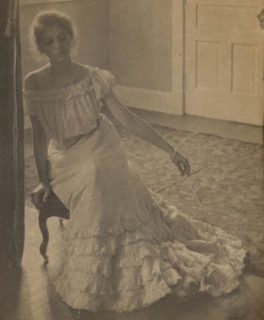
Clarence H. White, The Peacock Feather (Julia Hall McCune), 1902

511

Se in autunno tu venissi da me
caccerei l’estate
un po’ sorridente – un po’ irritata –
come la massaia scaccia una mosca.

Se potessi rivederti tra un anno
farei tanti gomitoli dei mesi –
li metterei in cassetti separati
per paura che i numeri si confondano.

Se l’attesa fosse soltanto di secoli
li conterei sulla mano
sottraendo finché non mi cadessero
le dita nel paese di Van Dieman.

E se fossi certa che finita questa vita
la mia e la tua continueranno a vivere
getterei la mia come una buccia
e sceglierei con te l’eternità.

Ma ora – incerta sulla durata del tempo –
che ci separa, la cosa m’inquieta,
come l’ape folletto,
che non avverte quando pungerà.

Emily Dickinson

(Traduzione di Gabriella Sobrino)

c.1863

da “Emily Dickinson, Poesie”, Newton Compton, Roma, 1987

∗∗∗

511

If you were coming in the Fall,
I’d brush the Summer by
With half a smile, and half a spurn,
As Housewives do, a Fly.

If I could see you in a year,
I’d wind the months in balls –
And put them each in separate Drawers,
For fear the numbers fuse –

If only Centuries, delayed,
I’d count them on my Hand,
Subtracting, till my fingers dropped
Into Van Dieman’s Land.

If certain, when this life was out –
That your’s and mine, should be –
I’d toss it yonder, like a Rind,
And take Eternity –

But, now, uncertain of the length
Of this, that is between,
It goads me, like the Goblin Bee –
That will not state – it’s sting.

Emily Dickinson

da “Poems”, a cura di Mabel Loomis Todd e Thomas W. Higginson, Boston, Robert Brothers, 1890