Dalla lunga festa triste – Mark Strand

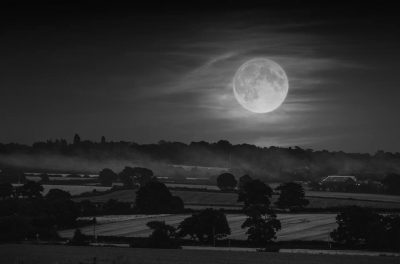
Foto di Nicholas Buer


Qualcuno diceva
qualcosa sulle ombre che coprivano il campo, su
come le cose passano, come ci si addormenta verso il mattino
e il mattino se ne va.

Qualcuno diceva
di come il vento si spegne ma poi torna,
di come le conchiglie sono le bare del vento
ma le intemperie continuano.

Era una lunga serata
e qualcuno diceva qualcosa sulla luna che cosparge di bianco
i campi gelidi, e che non c’era niente da aspettarsi
se non sempre le stesse cose.

Non so chi parlò
di una città in cui era stata prima della guerra, una stanza e due candele
al muro, qualcuno che ballava, qualcuno che guardava.
Cominciammo a credere

che la sera non sarebbe mai terminata.
Qualcuno diceva che la musica era finita e non se n’era accorto nessuno.
Poi qualcuno disse qualcosa sui pianeti, sulle stelle,
di quant’erano minuscoli, quant’erano lontani.

Mark Strand

(Traduzione di Damiano Abeni)

da “L’ora tarda”, 1978, in “L’uomo che cammina un passo avanti al buio”, Mondadori, Milano, 2011

***

From the Long Sad Party

Someone was saying
something about shadows covering the field, about
how things pass, how one sleeps toward morning
and the morning goes.

Someone was saying
how the wind dies down but comes back,
how shells are the coffins of wind
but the weather continues.

It was a long night
and someone said something about the moon shedding its white
on the cold field, that there was nothing ahead
but more of the same.

Someone mentioned
a city she had been in before the war, a room with two candles
against a wall, someone dancing, someone watching.
We began to believe

the night would not end.
Someone was saying the music was over and no one had noticed.
Then someone said something about the planets, about the stars,
how small they were, how far away.

 Mark Strand

da “The Late Hour”, Atheneum, 1978

Si comincia – Margaret Atwood

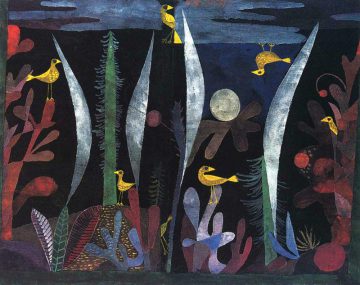
Paul Klee, Landscape with Yellow Birds, 1923


Si comincia così:
questa è la tua mano,
questo è il tuo occhio,
questo è un pesce azzurro lì
sulla carta, quasi
a forma di occhio.
Questa è la tua bocca, questa è una O
o la luna, come
preferisci. Questo è il giallo.

Fuori dalla finestra
c’è la pioggia, verde
perché siamo in estate, e al di là
gli alberi e il mondo,
che è tondo e ha solo
i colori di questi nove pastelli.

Questo è il mondo, più pieno
e più difficile da apprendere di quanto abbia detto.
Fai bene a pasticciare in quel modo
con il rosso e poi
l’arancio: il mondo brucia.

Quando avrai imparato queste parole
saprai che ci sono più
parole di quante tu possa imparare.
La parola mano galleggia sulla tua mano
come la nuvoletta sul lago.
La parola mano àncora
la tua mano a questo tavolo,
la tua mano è una pietra calda
che io reggo tra due parole.

Questa è la tua mano, queste sono le mie mani, questo è il mondo,
che è tondo ma non piatto e ha più colori
di quanti ne possiamo vedere.

Margaret Atwood

(Traduzione di Biancamaria Rizzardi Perutelli)

dalla rivista “Poesia”, Anno XVIII, Dicembre 2005, N. 200, Crocetti Editore 

∗∗∗

You Begin

You begin this way:
this is your hand,
this is your eye,
that is a fish, blue and flat
on the paper, almost
the shape of an eye.
This is your mouth, this is an O
or a moon, whichever
you like. This is yellow.

Outside the window
is the rain, green
because it is summer, and beyond that
the trees and then the world,
which is round and has only
the colors of these nine crayons.

This is the world, which is fuller
and more difficult to learn than I have said.
You are right to smudge it that way
with the red and then
the orange: the world burns.

Once you have learned these words
you will learn that there are more
words than you can ever learn.
The word hand floats above your hand
like a small cloud over a lake.
The word hand anchors
your hand to this table,
your hand is a warm stone
I hold between two words.

This is your hand, these are my hands, this is the world,
which is round but not flat and has more colors
than we can see.

It begins, it has an end,
this is what you will
come back to, this is your hand.

Margaret Atwood

da “Two-Headed Poems”, Oxford University Press, 1978

Moltissimo – Margaret Atwood

Foto di Julia Margaret Cameron


È una parola antica, che va sbiadendo.
Moltissimo volli.
Moltissimo pregai.
Io lo amai moltissimo.

Mi faccio strada camminando
con attenzione, per via delle ginocchia malandate
di cui mi frega assai meno
di quanto possiate immaginare
visto che esistono altre cose un pelino più importanti
(aspetta e vedrai).

Ho in mano un mezzo caffè
in una tazza di carta con
– me ne rammarico moltissimo –
un coperchio di plastica,
cerco di ricordare cos’erano quelle parole un tempo.

Moltissimo.
Com’era usata?
Moltissimo amati.
Moltissimo amati, siamo riuniti.
Moltissimo amati, siamo oggi qui riuniti
in questo album di foto dimenticate
che ho ritrovato di recente.

Sbiadite ormai,
color seppia, in bianco e nero, stampate a colori,
ognuno di noi così tanto più giovane.
Le Polaroid.
Cos’è una Polaroid? Chiede il neonato.
Neonato da un decennio.

Come spiegarlo?
Tu scatti e la foto esce dalla parte rialzata.
Alzata sopra cosa?
Con quello sguardo perplesso che vedo di continuo.
Così difficile da descrivere
i dettagli più minuti di come
– tutti questi moltissimo amati qui riuniti –
di come vivevamo un tempo.
Si incartava l’immondizia con la carta
del quotidiano legata con un filo.
Cos’è un quotidiano?
Voi capite cosa intendo.

Il filo però, di filo ne abbiamo ancora.
Lega le cose insieme.
Un filo di perle.
Ecco cosa ti dicono.
Come tenere traccia dei giorni?

Ognuno splendido, ognuno separato,
ognuno unico e finito.
Li ho tenuti sulla carta in un cassetto,
quei giorni, adesso svaniti.
Le perle possono essere usate per contare.
Come nei rosari.
Ma non mi piace avere pietre intorno al collo.

Lungo questa strada ci sono molti fiori,
sbiaditi adesso ché è agosto,
polverosi e diretti verso l’autunno.
Presto i crisantemi fioriranno,
i fiori dei morti, in Francia.
Non pensare che questo sia morboso.
Sono le cose come stanno.

Così difficile descrivere i dettagli più minuti dei fiori.
Ecco gli stami, niente a che fare con gli umani.
Ecco i pistilli, niente a che fare con le pistole.
Sono i dettagli più minuti a ostacolare i traduttori
e anche me, quando provo a descrivere.
Capite cosa intendo dire.
Tu puoi deviare. Tu puoi perderti.
Lo stesso accade alle parole.

Moltissimo amate, riunite qui insieme
in questo cassetto chiuso,
ormai sbiadite, mi mancate.
Mi manca chi è mancato, chi è partito troppo presto.
Mi mancano anche quelli che sono ancora qui.
Mi mancate tutti moltissimo.
Moltissimo rimpianto ho di voi.

Rimpianto: ecco un’altra parola
che non senti più tanto spesso.
Io rimpiango moltissimo.

Margaret Atwood

(Traduzione di Renata Morresi)

da “Moltissimo”, “Ponte alle Grazie”, 2021

∗∗∗

Dearly

It’s an old word, fading now.
Dearly did I wish.
Dearly did I long for.
I loved him dearly.

I make my way along the sidewalk
mindfully, because of my wrecked knees
about which I give less of a shit
than you may imagine
since there are other things, more important –
wait for it, you’ll see –

bearing half a coffee
in a paper cup with –
dearly do I regret it –
a plastic lid –
trying to remember what words once meant.

Dearly.
How was it used?
Dearly beloved.
Dearly beloved, we are gathered.
Dearly beloved, we are gathered here
in this forgotten photo album
I came across recently.

Fading now,
the sepias, the black and whites, the colour prints,
everyone so much younger.
The Polaroids.
What is a Polaroid? Asks the newborn.
Newborn a decade ago.

How to explain?
You took the picture and then it came out the top.
The top of what?
It’s that baffled look I see a lot.
So hard to describe
the smallest details of how –
all these dearly gathered together –
of how we used to live.
We wrapped up garbage
in newspaper tied with string.
What is newspaper?
You see what I mean.

String though, we still have string.
It ties things together.
A string of pearls.
That’s what they would say.
How to keep track of the days?

Each one shining, each one alone,
each one then gone.
I’ve kept some of them in a drawer on paper:
those days, fading now.
Beads can be used for counting.
As in rosaries.
But I don’t like stones around my neck.

Along this street there are many flowers,
fading now because it is August
and dusty, and heading into fall.
Soon the chrysanthemums will bloom,
flowers of the dead, in France.
Don’t think this is morbid.
It’s just reality.

So hard to describe the smallest details of flowers.
This is a stamen, nothing to do with men.
This is a pistil, nothing to do with guns.
It’s the smallest details that foil translators
and myself too, trying to describe.
See what I mean.
You can wander away. You can get lost.
Words can do that.

Dearly beloved, gathered here together,
in this closed drawer,
fading now, I miss you.
I miss the missing, those who left earlier.
I miss even those who are still here.
I miss you all dearly.
Dearly do I sorrow for you.

Sorrow: that’s another word
you don’t hear much any more.
I sorrow dearly.

Margaret Atwood

da “Dearly: New Poems”, Ecco Pr, 2010 

Il grande poeta ritorna – Mark Strand

Mark Strand


Quando la luce si riversò da uno spiraglio fra le nubi,
capimmo che il grande poeta si sarebbe mostrato. E così fu.
Scese da una limousine con le gomme bianche e i vetri
fumé, quindi, con andatura nitida e felpata,
entrò nella hall. Si fece silenzio. Aveva ali grandi.
Il taglio dell’abito, la larghezza della cravatta, erano datati.
Quando prese la parola, l’aria parve sbiancata da grida immaginarie.
Il tarlo del desiderio penetrò nel cuore di tutti i presenti.
Avevano le lacrime agli occhi. Il grande era al massimo.
«Non c’è  fretta», disse concludendo la lettura, «la fine
del mondo è solo la fine del mondo che conoscete».
Tipico di lui, pensarono tutti. Poi non lo si vide più,
e il mondo fu vuoto. Faceva freddo e l’aria era ferma.
Ditemi, voi laggiù, cos’è poi la poesia?
            È possibile morire senza averne almeno un po’?

Mark Strand

(Traduzione di Damiano Abeni)

da “Tormenta al singolare, 1988”, in “L’inizio di una sedia”, Donzelli Poesia, 1999

∗∗∗

The Great Poet Returns

When the light poured down through a hole in the clouds,
We knew the great poet was going to show. And he did.
A limousine with all-white tires and stained-glass windows
Dropped him off. And then, with a clear and soundless fluency,
He strode into the hall. There was a hush. His wings were big.
The cut of his suit, the width of his tie, were out of date.
When he spoke, the air seemed whitened by imagined cries.
The worm of desire bore into the heart of everyone there.
There were tears in their eyes. The great one was better than ever.
«No need to rush,» he said at the close of the reading, «the end
Of the world is only the end of the world as you know it».
How like him, everyone thought. Then he was gone,
And the world was a blank. It was cold and the air was still.
Tell me, you people out there, what is poetry anyway?
                         Can anyone die without even a little?

Mark Strand

da “Blizzard of One”, New York: Alfred A. Knopf, 1988

Errore – Mark Strand

Foto di Timothy Greenfield


Scendevamo a valle lungo la corrente sotto un pulviscolo di stelle,
dormendo fino al sorgere del sole. Quando giungemmo alla capitale,
ridotta in macerie, facemmo un enorme falò con le sedie
e i tavoli che riuscimmo a rimediare. Il calore era tanto intenso che gli uccelli
in volo prendevano fuoco e precipitavano in fiamme.
Li mangiammo, poi a piedi ci addentrammo in regioni
dove il mare è di ghiaccio e il terreno è cosparso
di macigni come lune. Se solo ci fossimo fermati,
voltati, e fossimo tornati al giardino da cui eravamo partiti,
con la sua urna spaccata, il mucchio di foglie che imputridiscono, e ci fossimo seduti
a contemplare la casa e avessimo visto solo il trascorrere
del sole sulle finestre, quello sarebbe
bastato, nonostante l’ululare del vento che sospingeva le nubi verso il mare
come pagine di un libro su cui niente era scritto.

Mark Strand

(Traduzione di Damiano Abeni con Moira Egan)

da “Uomo e cammello”, 2006, in “Mark Strand, Tutte le poesie”, Mondadori, 2019

∗∗∗

Error

We drifted downstream under a scattering of stars
and slept until the sun rose. When we got to the capital,
which lay in ruins, we built a large fire out of what chairs
and tables we could find. The heat was so fierce that birds
overhead caught fire and fell flaming to earth.
These we ate, then continued on foot into regions
where the sea is frozen and the ground is strewn
with moonlike boulders. If only we had stopped,
turned, and gone back to the garden we started from,
with its broken urn, its pile of rotting leaves, and sat
gazing up at the house and seen only the passing
of sunlight over its windows, that would have been
enough, even if the wind cried and clouds scudded seaward
like the pages of a book on which nothing was written.

Mark Strand

da “Man and Camel”, Knopf Doubleday Publishing Group, 2008