Tristezza – Philip Schultz

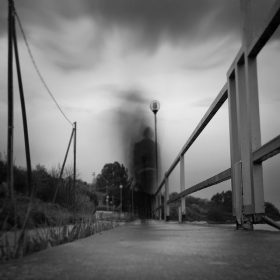
Foto di Arianna Marchesani


All’improvviso
e senza capirne la ragione
tutto mi appare postumo,
impassibile e inevitabile,
ho gli occhi cerchiati dall’unto di chiacchiere e complicità,
le mani ansiose di trattenere ogni piacevole infatuazione
che potrebbe altrimenti scappar via.
All’improvviso
è sera e le luci lungo
la strada appaiono promettenti,
perfino generose,
gonfie come sono di antichi rancori
e progetti inaciditi. Il cielo,
tuttavia,
appare ostile,
e distante, ansioso di consegnare la sua apatia alla mia sofferenza.
A proposito di sofferenza,
le case – le nostre sobrie case refrattarie – traboccano
di sogni diventati opachi con l’età,
per l’accumularsi di verità
non traducibili in un credo fiducioso.
Nel frattempo,
la mia solitudine,
su cui si basano tante leggi mie personali,
continua a consumare ogni cosa.
All’improvviso,
nonostante quel che dicono gli dei,
il presente resta inabitabile,
il passato non perdona il male che ha visto,
mentre
il futuro rimane diafano
e inequivocabile
nel suo desiderio di sfuggirmi.

Philip Schultz

(Traduzione di Paola Splendore, con la collaborazione di Maria Baiocchi, Barbara Fiore e Sandro Triulzi)

da “Lusso, 1918”, in “Il dio della solitudine”, a cura di Paola Splendore, Donzelli Poesia, 2018

∗∗∗

Sadness

Suddenly
for no reason I can point to
everything feels afterwards,
stoic and inevitable,
my eyes ringed with the grease of rumor and complicity,
my hands eager to hold any agreeable infatuation
that might otherwise slip away.
Suddenly
it’s evening and the lights up and
down the street appear hopeful,
even magnanimous,
swollen as they are with ancient grievances
and souring schemes. The sky,
however,
appears unwelcoming,
and aloof, eager to surrender its indifference to my suffering.
Speaking of suffering,
the houses – our sober, recalcitrant houses – are swollen
with dreams that have grown opaque with age,
hoarding as they do truths
untranslatable into auspicious beliefs.
Meanwhile,
my loneliness,
upon which so many personal laws are based,
continues to consume everything.
Suddenly,
regardless of what the gods say,
the present remains uninhabitable,
the past unforgiving of the harm it’s seen,
while
the future remains translucent
and unambiguous
in its desire to elude me.

Philip Schultz

da “Luxury: Poems”, W. W. Norton & Company, 2018

«Mi rinchiudono nella prosa –» – Emily Dickinson

[613]

Mi rinchiudono nella prosa –
come quando da bambina
mi mettevano nello stanzino –
perché mi preferivano «tranquilla» –

Tranquilla! Avessero potuto sbirciare –
vedere come frullava – la mia mente –
Potevano con simile astuzia chiudere un uccello
a tradimento – nel recinto –

Basta che lui lo voglia
e libero come una stella
guarda dall’alto la prigionia –
e ride – Io non facevo altro –

Emily Dickinson

(Traduzione di Silvia Bre)

da “Uno zero più ampio”, Einaudi, Torino, 2013

∗∗∗

[613]

They shut me up in Prose –
As when a little Girl
They put me in the Closet –
Because they liked me «still» –

Still! Could themself have peeped –
And seen my Brain – go round –
They might as wise have lodged a Bird
For Treason – in the Pound –

Himself has but to will
And easy as a Star
Look down upon Captivity –
And laugh – No more have I –

Emily Dickinson

da “The Poems of Emily Dickinson”, a cura di Thomas H. Johnson, The Belknap Press of Harvard University Press, Cambridge (Mass.), 1955

Un giorno d’estate – John Williams

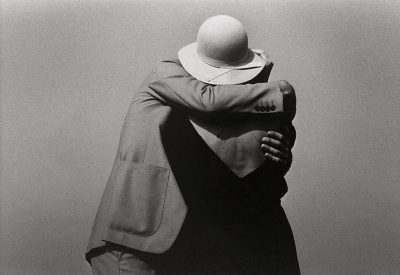
Eddie Kuligowski, Couple, 1978


Dove eravamo stesi
sotto il pino
in quel giorno d’estate
a seguire il profilo
della vetta di un monte
sottile e scuro
ai nostri occhi stupiti,
ora ritorno;
ma più non trovo un segno
che sappia dirmi dove
pestammo con i corpi
quest’erba.

Altri verranno, forse
dove ci sdraiammo
e toccheranno insieme
i loro corpi quando
sopra di loro, vasti
e derelitti, i cieli
in vortice cadranno.
Ma adesso il vento
s’alza, e svelto
il gelo dell’autunno
qui m’inchioda.

Altri potranno,
ma non noi
tornare a visitare
questo luogo,
anche se ancora resto
al termine dell’anno
a immaginarci qui
in quel giorno d’estate.
Non un istante di tregua
per il nostro ritorno;
dal profondo del tempo,
ci guadagniamo le nostre perdite
con l’amore che abbiamo meritato.

John Williams

(Traduzione di Stefano Tummolini)

da “John Williams, Stoner e La necessaria menzogna (Poesie)”, Mondadori, 2020

∗∗∗

A Summer Day

Where we quietly lay
Beneath the pine
On that summer day
And traced the line
Of a mountain’s rise
Thin and dark
In our amazed eyes,
I have come back;
But see no mark
That shows me where
Our bodies crushed
The grasses there.

Others may come
Where we have been
And touch together
Their bodies when
Above them, vast,
The lorn heavens
Reel and descend.
But now the wind
Comes up, and fast
The autumn weather
Chills me where I stand.

Others may,
Yet we cannot
Come again
To this same spot,
Though I stand here
In the falling year
And think of us
On that summer day.
No moment pauses
For our return;
Held deep in time,
We gain our losses
By the love we earn.

John Williams

da “John Williams, Necessary Lie”, Verb Publications, Denver, 1965

Le parole – Anne Sexton


State attenti alle parole,
anche a quelle miracolose.
Per le miracolose diamo il meglio,
brulicano alle volte come insetti
lasciando non un pizzico ma un bacio.
Possono essere buone come le dita.
Possono essere affidabili come le rocce
su cui mettiamo il sedere.
Ma possono essere sia margherite che ferite.

Eppure io le amo.
Sono colombe cadute dal soffitto.
Sono sei arance sacre appoggiate in grembo.
Sono gli alberi, le gambe dell’estate,
e il sole, con il suo volto appassionato.

Eppure spesso mi deludono.
Ho così tanto da dire,
così tante storie, immagini, proverbi, ecc.
Ma le parole non ce la fanno,
mi baciano quelle sbagliate.
A volte volo come un’aquila
ma con le ali dello scricciolo.

Provo comunque a prendermene cura
e ad essere gentile.
Uova e parole vanno maneggiate con cura.
Una volta rotte non si possono
riparare.

Anne Sexton

(Traduzione di Cristina Gamberi)

da “La zavorra dell’eterno”, Crocetti Editore, 2016

∗∗∗

Words

Be careful of words,
even the miraculous ones.
For the miraculous we do our best,
sometimes they swarm like insects
and leave not a sting but a kiss.
They can be as good as fingers.
They can be as trusty as the rock
you stick your bottom on.
But they can be both daisies and bruises.

Yet I am in love with words.
They are doves falling out of the ceiling.
They are six holy oranges sitting in my lap.
They are the trees, the legs of summer,
and the sun, its passionate face.

Yet often they fail me.
I have so much I want to say,
so many stories, images, proverbs, etc.
But the words aren’t good enough,
the wrong ones kiss me.
Sometimes I fly like an eagle
but with the wings of a wren.

But I try to take care
and be gentle to them.
Words and eggs must be handled with care.
Once broken they are impossible
things to repair.

Anne Sexton

da “Anne Sexton, The Complete Poems”, Houghton Mifflin, 1981 

Per sfiducia nei meriti – Marianne Moore


Fortificati a vivere, fortificati a morire
       soltanto per medaglie e per vittorie di posizione?
Combattono, combattono, combattono
        il cieco che è convinto di vedere –
e non vede che chi fa schiavi
è schiavo, chi odia è offeso. O ferma stella
              e splendida, o tumultuoso oceano
                      flagellato finché le cose minime
              si sperdono e l’onda gigantesca
                      rivela ai nostri sguardi la misura 

dell’abisso. Perduti in mare prima di combattere!
      O stella di David, stella di Betlemme,
o nero leone imperiale
       del Signore – emblema
di un mondo risorto – unitevi, unitevi
alla fine. C’è una corona d’odio, e sotto ad essa
               tutto è morte; ce n’è una d’amore, e senza di essa
                              nessuno è re; e gli atti benedetti
                benedicono l’aureola. Come un contagio
                               di malattia procura malattia, 

un contagio di fede può dar fede.
   Combattono in deserti e caverne,
a uno a uno, a battaglioni e squadre;
   combattono perché possa guarire
anch’io da questo male, da Me Stessa;
ne guariscono alcuni; altri morranno. “L’uomo
                è lupo all’uomo”, e noi ci divoriamo.
                               Neanche il nemico avrebbe mai potuto
                aprire una breccia così vasta
                                 nelle nostre difese.

Chi fa da guida a un cieco può sfuggirgli,
   ma Giobbe, disanimato da falso conforto,
sapeva che mai nulla può sconvolgere
  quanto un cieco capace di vedere.
O vivi che siete morti, voi che siete fieri
di non vedere, o polvere meschina della terra
               che incede così piena d’arroganza,
                            la fiducia genera potenza e la fede
               è una cosa amorevole. Noi
                               facciamo un voto, noi promettiamo
a chi combatte – sì, è una promessa – : “Non odieremo
   mai il nero, il bianco, il rosso, il giallo,
l’ebreo, il gentile, l’intoccabile”. Ma noi
   non possiamo esaudire i nostri voti.
Stringendo la mascella essi combattono,
combattono, combattono – alcuni che amiamo
                                                                         e conosciamo,
                 altri che amiamo ma non conosciamo –
                               perché i cuori si scuotano dal sonno.
                Così guarisco; o forse sono quello
                             in cui non posso credere?

Chi nella neve, chi sulle rupi o nelle sabbie mobili,
a poco a poco, a molto a molto,
combattono, combattono, combattono
   perché dov’era morte
sia la vita. “Quando un uomo è preda della collera,
è aizzato dalle cose esterne; ma quando
               tiene testa ed è paziente paziente
                               paziente, allora è l’azione
                o la bellezza”, la migliore difesa del soldato,
                               la più salda corazza

per la lotta. Il mondo è una casa di orfani. E noi
  non avremo mai pace senza pena?
Senza le invocazioni dei morenti
  in cerca di un aiuto che non viene?
O forma abbandonata nella polvere,
io non posso guardare, eppure devo.
              Se questo morire così grande e paziente –
                            tutte queste agonie e ferite e scorrere
                                                                              di sangue –
               potrà insegnarci a vivere,
                              questo morire non è stato invano.

Cuore indurito dall’odio, o cuore di ferro,
  il ferro è ferro finché si fa ruggine.
Non c’è mai stata guerra che non fosse
  dentro di noi; e io devo combattere
finché non avrò vinto entro me stessa
ciò che è causa di guerra e non credevo.
               Dentro di me io non ho fatto nulla.
                             Delitto degno dell’Iscariota!
               La bellezza ha per sé l’eternità
                             e la polvere dura solo un’ora.

Marianne Moore

(Traduzione di Lina Angioletti e Gilberto Forti)

da “Marianne Moore, Le poesie”, Adelphi, 1991

∗∗∗

In Distrust of Merits

Strengthened to live, strengthened to die for
       medals and position victories?
They’re fighting, fighting, fighting the blind
       man who thinks he sees,—
who cannot see that the enslaver is
enslaved; the hater, harmed. O shining O
              firm star, O tumultuous
                     ocean lashed till small things go
              as they will, the mountainous
                     wave makes us who look, know
depth. Lost at sea before they fought! O
       star of David, star of Bethlehem,
O black imperial lion
       of the Lord—emblem
of a risen world—be joined at last, be
joined. There is hate’s crown beneath which all is
              death; there’s love’s without which none
                     is king; the blessed deeds bless
              the halo. As contagion
                     of sickness makes sickness,
contagion of trust can make trust. They’re
       fighting in deserts and caves, one by
one, in battalions and squadrons;
       they’re fighting that I
may yet recover from the disease, My
Self; some have it lightly, some will die. “Man’s
              wolf to man” and we devour
                     ourselves. The enemy could not
              have made a greater breach in our
                     defenses. One pilot-
ing a blind man can escape him, but
       Job disheartened by false comfort knew
that nothing can be so defeating
       as a blind man who
can see. O alive who are dead, who are
proud not to see, O small dust of the earth
              that walks so arrogantly,
                     trust begets power and faith is
              an affectionate thing. We
                     vow, we make this promise
to the fighting—it’s a promise—“We’ll
       never hate black, white, red, yellow, Jew,
Gentile, Untouchable.” We are
       not competent to
make our vows. With set jaw they are fighting,
fighting, fighting,—some we love whom we know,
              some we love but know not—that
                     hearts may feel and not be numb.
              It cures me; or am I what
                     I can’t believe in? Some
in snow, some on crags, some in quicksands,
       little by little, much by much, they
are fighting fighting fighting that where
       there was death there may
be life. “When a man is prey to anger,
he is moved by outside things; when he holds
              his ground in patience patience
                     patience, that is action or
              beauty,” the soldier’s defense
                     and hardest armor for
the fight. The world’s an orphans’ home. Shall
       we never have peace without sorrow?
without pleas of the dying for
       help that won’t come? O
quiet form upon the dust, I cannot
look and yet I must. If these great patient
              dyings—all these agonies
                     and woundbearings and bloodshed—
              can teach us how to live, these
                     dyings were not wasted.
Hate-hardened heart, O heart of iron,
       iron is iron till it is rust.
There never was a war that was
       not inward; I must
fight till I have conquered in myself what
causes war, but I would not believe it.
              I inwardly did nothing.
                     O Iscariotlike crime!
              Beauty is everlasting
                     and dust is for a time.

Marianne Moore

da “Nevertheless”, New York: Macmillan, 1944