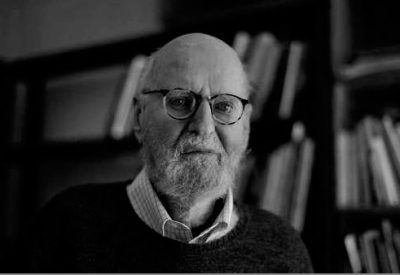
Il mondo è un gran bel posto – Lawrence Ferlinghetti


Il mondo è un gran bel posto
per nascerci
se non vi dà fastidio che la felicità
non sia sempre
poi tutto ’sto spasso
se non vi dà fastidio un pizzico di inferno
di tanto in tanto
proprio quando tutto fila liscio
perché perfino in paradiso
non stanno sempre lì
a cantare

Il mondo è un gran bel posto
per nascerci
se non vi dà fastidio che la gente muoia
di continuo
o magari stia solo morendo di fame
ogni tanto
il che non è poi così grave
se non si tratta di voi

Oh il mondo è un gran bel posto
per nascerci
se non vi dà fastidio più di tanto
qualche mente morta
tra gli alti papaveri
o un paio di bombe
di tanto in tanto
sulle vostre facce rivolte all’insù
o altre consimili sconvenienze
di cui la nostra società Marchio Aziendale
è preda
con i suoi uomini distinti
e i suoi uomini estinti
e i suoi preti
e gli altri vigilantes
e le sue svariate segregazioni
e le investigazioni parlamentari
e le altre stitichezze
di cui la nostra carne cogliona
è erede

Sì il mondo è il miglior posto di tutti
per un sacco di cose tipo
prendere parte alla scena divertente
e prendere parte alla scena d’amore
e prendere parte alla scena lacrimosa
e cantare canzoni sommesse e avere ispirazioni
e passeggiare
guardando tutto
e sentendo il profumo dei fiori
e toccando il culo alle statue
e perfino per pensare
e baciare le persone e
per fare bambini e portare i calzoni
e salutare sventolando il cappello e
per ballare
e andare a nuotare nei fiumi
o a fare picnic
in piena estate
e in generale proprio per
«spassarsela»


ma poi proprio sul più bello
arriva sorridente

il becchino

Lawrence Ferlinghetti

(Traduzione di Damiano Abeni e Moira Egan)

da “Poesie da Fotografie del mondo andato”, 1955, in “A Coney Island of the Mind”, minimum fax, Roma, 2018

∗∗∗

The world is a beautiful place

The world is a beautiful place
to be born into
if you don’t mind happiness
not always being
so very much fun
if you don’t mind a touch of hell
now and then
just when everything is fine
because even in heaven
they don’t sing
all the time

The world is a beautiful place
to be born into
if you don’t mind some people dying
all the time
or maybe only starving
some of the time
which isn’t half so bad
if it isn’t you

Oh the world is a beautiful place
to be born into
if you don’t much mind
a few dead minds
in the higher places
or a bomb or two
now and then
in your upturned faces
or such other improprieties
as our Name Brand society
is prey to
with its men of distinction
and its men of extinction
and its priests
and other patrolmen
and its various segregations
and congressional investigations
and other constipations
that our fool flesh
is heir to

Yes the world is the best place of all
for a lot of such things as
making the fun scene
and making the love scene
and making the sad scene
and singing low songs and having inspirations
and walking around
looking at everything
and smelling flowers
and goosing statues
and even thinking
and kissing people and
making babies and wearing pants
and waving hats and
dancing
and going swimming in rivers
on picnics
in the middle of the summer
and just generally
‘living it up’

Yes
but then right in the middle of it
comes the smiling

mortician

Lawrence Ferlinghetti

da “Pictures of the Gone World”, City Lights, San Francisco, 1955

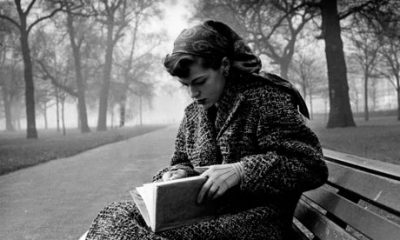
Giardino d’estate – Louise Glück

Foto di Bert Hardy

1.

Diverse settimane fa ho scoperto una fotografia di mia madre
seduta al sole, la sua faccia arrossata come per un successo o un trionfo.
Il sole splendeva. I cani
dormivano ai suoi piedi dove dormiva anche il tempo,
calmo e immobile come in ogni fotografia.

Ho spazzato via la polvere dal viso di mia madre.
La polvere, in effetti, copriva tutto; mi sembrava la foschia
persistente di nostalgia che protegge tutte le reliquie dell’infanzia.
Sullo sfondo, un assortimento di mobili da giardino, alberi e arbusti.

Il sole si spostava più in basso nel cielo, le ombre si allungavano e si oscuravano.
Più polvere ho rimosso, più queste ombre crescevano.
L’estate è arrivata. I bambini
si sporgevano oltre la siepe di rose, le loro ombre
si fondevano con le ombre delle rose.

Una parola mi è venuta in mente, riguardo
a questi spostamenti e cambiamenti, a queste cancellazioni
che adesso erano evidenti –

apparve e altrettanto rapidamente svanì.
Era cecità o oscurità, pericolo, confusione?

Arrivò l’estate, quindi l’autunno. Le foglie mutano
i bambini dei punti luminosi in una miscela di bronzo e terra di siena.

2.

Quando mi fui un po’ ripresa da questi eventi,
ho rimesso la fotografia come l’avevo trovata
tra le pagine di un antico libro rilegato,
molti suoi brani erano stati
annotati a margine, a volte con frasi ma più spesso
con vivaci domande ed esclamazioni
dal significato di “sono d’accordo” o “non sono sicuro, perplesso” —

L’inchiostro era sbiadito. In alcuni punti non capivo
quali pensieri fossero venuti in mente al lettore
ma attraverso le macchie potevo percepire
un senso di gravità, come se fossero cadute lacrime.

Ho tenuto il libro per un po’.
Era Morte a Venezia (in traduzione);
Avevo segnato la pagina nell’ipotesi in cui, come credeva Freud,
nulla accadesse per caso.

Così la piccola fotografia
è stata nuovamente sepolta, come il passato è sepolto nel futuro.
A margine c’erano due parole,
collegate da una freccia: “sterilità” e, in fondo alla pagina, “oblio” —

“E gli sembrava che il pallido e adorabile
Evocatore là fuori gli avesse sorriso e fatto cenno … “

3.

Com’è tranquillo il giardino;
nessuna brezza scuote la ciliegia del Corniolo.
L’estate è arrivata.

Com’è tranquillo
ora che la vita ha trionfato. I rozzi

pilastri dei sicomori
sostengono le mensole
immobili del fogliame,

il prato sottostante
lussureggiante, iridescente —

E in mezzo al cielo
il dio immodesto.

Le cose stanno, dice. Sono, non cambiano;
la risposta non cambia.

Com’è silenzioso il palcoscenico
come anche il pubblico; sembra
che respirare sia un’intrusione.

Deve essere molto vicino,
l’erba è senza ombre.

Com’è tranquillo, com’è silenzioso,
come un pomeriggio a Pompei.

4.

Madre morta la scorsa notte,
Madre che non muore mai.

L’inverno era nell’aria,
a molti mesi di distanza
ma comunque nell’aria.

Era il dieci di maggio.
Fiori di melo e giacinto
sbocciati nel giardino sul retro.

Potremmo sentire
Maria che canta canzoni dalla Cecoslovacchia —

Quanto sono sola –
canzoni di questo tipo.

Quanto sono sola
né madre, né padre –
il mio cervello sembra così vuoto senza di loro.

Gli aromi uscivano dalla terra;
i piatti erano nel lavandino,
risciacquati ma non in ordine.

Sotto la luna piena
Maria stava piegando la biancheria;
le lenzuola rigide erano diventate
rettangoli di luce lunare asciutti e bianchi.

Quanto sono sola, ma nella musica
la mia desolazione è la mia gioia.

Era il decimo giorno di maggio
come era stato il nono, l’ottavo.

La madre dormiva nel suo letto,
le braccia tese, la testa
in equilibrio tra di esse.

5.

Beatrice ha portato i bambini al parco di Cedarhurst.
Il sole splendeva. Aeroplani
passavano avanti e indietro, pacifici perché la guerra era finita.

Era il mondo della sua immaginazione:
vero e falso non aveva importanza.

Appena lucidato e scintillante —
quello era il mondo. La polvere
non era ancora precipitata sulla superficie delle cose.

Gli aerei passavano avanti e indietro, diretti
a Roma e Parigi — non potevi arrivarci
a meno che non sorvolassi il parco. Tutto
deve passare, niente può fermarsi —

I bambini si tenevano per mano, chinandosi
ad annusare le rose.
Erano cinque e sette.

Infinito, infinito: quella
era la sua percezione del tempo.

Si sedette su una panchina, un po’ nascosta dalle querce.
Lontano, la paura si avvicinò e se ne andò;
dalla stazione dei treni ne giungeva il suono.
Il cielo era rosa e arancione, più vecchio perché la giornata era finita.

Non c’era vento. Il giorno d’estate
proietta ombre a forma di quercia sull’erba verde.

Louise Glück

(TRADUZIONE DI MARCELLO COMITINI)
ALTRE POESIE DI LOUISE GLÜCK TRADOTTE DA MARCELLO COMITINI

∗∗∗

A summer garden 

1.

Several weeks ago I discovered a photograph of my mother
sitting in the sun, her face flushed as with achievement or triumph.
The sun was shining. The dogs
were sleeping at her feet where time was also sleeping,
calm and unmoving as in all photographs.

I wiped the dust from my mother’s face.
Indeed, dust covered everything; it seemed to me the persistent
haze of nostalgia that protects all relics of childhood.
In the background, an assortment of park furniture, trees, and shrubbery.

The sun moved lower in the sky, the shadows lengthened and darkened.
The more dust I removed, the more these shadows grew.

Summer arrived. The children
leaned over the rose border, their shadows
merging with the shadows of the roses.

A word came into my head, referring
to this shifting and changing, these erasures
that were now obvious —

it appeared, and as quickly vanished.
Was it blindness or darkness, peril, confusion?

Summer arrived, then autumn. The leaves turning,
the children bright spots in a mash of bronze and sienna.

2.

When I had recovered somewhat from these events,
I replaced the photograph as I had found it
between the pages of an ancient paperback,
many parts of which had been
annotated in the margins, sometimes in words but more often
in spirited questions and exclamations
meaning “I agree” or “I’m unsure, puzzled”—

The ink was faded. Here and there I couldn’t tell
what thoughts occurred to the reader
but through the blotches I could sense
urgency, as though tears had fallen.

I held the book awhile.
It was Death in Venice (in translation);
I had noted the page in case, as Freud believed,
nothing is an accident.

Thus the little photograph
was buried again, as the past is buried in the future.
In the margin there were two words,
linked by an arrow: “sterility” and, down the page, “oblivion”—

“And it seemed to him the pale and lovely
Summoner out there smiled at him and beckoned…”

3.

How quiet the garden is;
no breeze ruffles the Cornelian cherry.
Summer has come.

How quiet it is
now that life has triumphed. The rough

pillars of the sycamores
support the immobile
shelves of the foliage,

the lawn beneath
lush, iridescent—

And in the middle of the sky,
the immodest god.

Things are, he says. They are, they do not change;
response does not change.

How hushed it is, the stage
as well as the audience; it seems
breathing is an intrusion.

He must be very close,
the grass is shadowless.

How quiet it is, how silent,
like an afternoon in Pompeii.

4.

Mother died last night,
Mother who never dies.

Winter was in the air,
many months away
but in the air nevertheless.

It was the tenth of May.
Hyacinth and apple blossom
bloomed in the back garden.

We could hear
Maria singing songs from Czechoslovakia—

How alone I am—
songs of that kind.

How alone I am,
no mother, no father—
my brain seems so empty without them.

Aromas drifted out of the earth;
the dishes were in the sink,
rinsed but not stacked.

Under the full moon
Maria was folding the washing;
the stiff sheets became
dry white rectangles of moonlight.

How alone I am, but in music
my desolation is my rejoicing.

It was the tenth of May
as it had been the ninth, the eighth.

Mother slept in her bed,
her arms outstretched, her head
balanced between them.

5.

Beatrice took the children to the park in Cedarhurst.
The sun was shining. Airplanes
passed back and forth overhead, peaceful because the war was over.

It was the world of her imagination:
true and false were of no importance.

Freshly polished and glittering —
that was the world. Dust
had not yet erupted on the surface of things.

The planes passed back and forth, bound
for Rome and Paris — you couldn’t get there
unless you flew over the park. Everything
must pass through, nothing can stop—

The children held hands, leaning
to smell the roses.
They were five and seven.

Infinite, infinite—that
was her perception of time.

She sat on a bench, somewhat hidden by oak trees.
Far away, fear approached and departed;
from the train station came the sound it made.

The sky was pink and orange, older because the day was over.
There was no wind. The summer day
cast oak—shaped shadows on the green grass.

Louise Glück

da “Faithful and Virtuous Night”, Farrar, Straus and Giroux, 2014
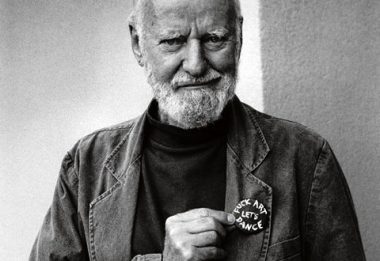
Usi della poesia – Lawrence Ferlinghetti


A cosa serve oggi la poesia
A cosa serve Per cosa è buona
nei giorni e nelle notti dell’Epoca di Autoapocalisse
nella quale la poesia è stata asfaltata
per farne autostrade per eserciti di notte
come in quel paradiso di palme al nord di Nicaragua
dove le promesse fatte nelle piazze
saranno tradite nell’interno
o nei campi tanto verdi
nel Centro Armi Navali di Concord
dove treni armati travolgono i dimostranti verdi
dove la poesia è resa importante dalla sua assenza
l’assenza di uccelli in un paesaggio estivo
la mancanza d’amore in un letto a mezzanotte
o la mancanza di luce a mezzogiorno nei piani alti
Perché perfino la brutta poesia ha rilevanza
per quello che non dice
per quello che tralascia
E che cosa del sole che scorre
nelle maglie del mattino
che cosa delle notti bianche e delle bocche del desiderio
labbra che ripetono e ripetono Lulu Lulu
e tutte le cose nate con le ali che cantano
e pianti lontani lontani sulla spiaggia al tramonto
e luce sempre accesa su terra e mare
e caverne misurate dall’uomo
dove una volta scorrevano fiumi sacri
vicino a città vicine al mare
nelle quali camminiamo e passeggiamo distratti
costantemente meravigliati
dallo spettacolo pazzo dell’esistenza
e tutti questi animali parlanti su ruote
eroi ed eroine con mille occhi
con cuori curvati e sopraanime nascoste
senza più miti da chiamare propri
costantemente meravigliati come anch’io sono
da questi bipedi a facce nude in abiti
questi comici improvvisatori
pallidi idoli nelle strade di notte
ballerini in estasi nella polvere dell’Ultimo Valzer
in quest’epoca di Autoapocalisse ingorgata
dove la voce del poeta risuona ancora distante
la voce della Quarta Persona Singolare
la voce nella voce della tartaruga
la faccia dietro la faccia della razza
un libro di luce nella notte
la voce stessa della vita come Whitman la udì
una tenera risata selvaggia
(ah, ma liberarla ancora
dal word-processor della mente!)
E io sono il cronista di un giornale
di un altro pianeta
arrivato a riportare una storia terra terra
sul Cosa Quando Dove Come e Perché
di questa sorprendente vita quaggiù
e degli strani clown che la controllano 
i curiosi clown che la controllano
con le mani sui davanzali
di tremende officine indemoniate
che gettano le loro ombre oscure
sulla grande ombra della terra
alla fine di un tempo sconosciuto
nel supremo hashish dei nostri sogni

Lawrence Ferlinghetti

(Traduzione di Lucia Cucciarelli)

dalla rivista “Poesia”, Luglio/Agosto 1996, N. 97, Crocetti Editore

Mezzanotte – Louise Glück

Foto dal web


Alla fine la notte mi circondò;
ci galleggiavo sopra, forse dentro
o mi trasportava come un fiume trasporta
una barca, e allo stesso tempo
vorticava sopra di me,
costellata di stelle ma comunque oscura.

Questi erano i momenti per i quali ho vissuto.
Ero, mi sentivo, misteriosamente elevata al di sopra del mondo
e quell’azione che alla fin fine era impossibile
rendeva il pensiero non solo possibile ma illimitato.

Non aveva fine. Non ho bisogno, ho sentito,
di fare qualcosa. Qualsiasi cosa
sarebbe stata fatta per me, o fatta a me,
e se non fosse stata fatta, non era
essenziale.

Ero sul mio balcone.
Nella mano destra tenevo un bicchiere di scotch
in cui si stavano sciogliendo due cubetti di ghiaccio.

Il silenzio era entrato in me.
Era come la notte e i miei ricordi — erano come le stelle
in quanto erano fissi, sebbene ovviamente
se si fossero potuti vedere come fanno gli astronomi
si sarebbe visto che sono fuochi senza fine, come i fuochi dell’inferno.
Ho appoggiato il bicchiere sulla ringhiera di ferro.

Sotto, il fiume scintillava. Come ho detto,
tutto brillava — le stelle, le luci del ponte, gli importanti
edifici illuminati che sembravano fermarsi al fiume
per riprendere di nuovo, il lavoro dell’uomo
interrotto dalla natura. Di tanto in tanto ho visto
le imbarcazioni da diporto serali; poiché la notte era calda,
erano ancora piene.

Questa è stata la grande escursione della mia infanzia.
Il breve viaggio in treno che culmina in un tè di gala in riva al fiume,
poi quello che mia zia chiamava la nostra passeggiata,
poi la barca stessa che navigava avanti e indietro sull’acqua scura –

Le monete in mano a mia zia passarono nella mano del capitano.
Mi è stato consegnato il biglietto, ogni volta un nuovo numero.
Quindi la barca si è immessa nella corrente.

Ho tenuto la mano di mio fratello.
Abbiamo visto i monumenti che si susseguivano
sempre nello stesso ordine
e così ci siamo spostati nel futuro
dove si sperimentano ricorrenze perpetue.

La barca risalì il fiume e poi tornò indietro.
Si è spostata nel tempo e poi
attraverso un’inversione di tempo, anche se la nostra direzione
era sempre avanti, la prua continuava
a tracciare un sentiero nell’acqua.

Era come una cerimonia religiosa
in cui la congregazione stava
aspettando, vedendo,
e questo era l’intero punto, il contemplare.

La città andava alla deriva
metà a destra, metà a sinistra.
Guardate com’è bella la città,
ci diceva mia zia. Perché
era illuminata, immagino. O forse perché
qualcuno l’aveva detto nell’opuscolo stampato.

Successivamente abbiamo preso l’ultimo treno.
Spesso mi addormentavo, anche mio fratello dormiva.
Eravamo bambini di campagna, non abituati a tante emozioni.
Voi siete ragazzi esausti, disse mia zia,
come se tutta la nostra infanzia fosse a questo proposito
una qualità esaurita.
Fuori dal treno, il gufo stava chiamando.

Quanto eravamo stanchi quando siamo arrivati a casa.
Sono andata a letto con i calzini.

La notte era molto buia.
La luna è sorta.
Ho visto la mano di mia zia afferrarsi alla ringhiera.

Con grande eccitazione, applausi e ovazioni,
gli altri salirono sul ponte superiore
a guardare la terra scomparire nell’oceano –

Louise Glück

(TRADUZIONE DI MARCELLO COMITINI)
ALTRE POESIE DI LOUISE GLÜCK TRADOTTE DA MARCELLO COMITINI

∗∗∗

Midnight

At last the night surrounded me;
I floated on it, perhaps in it,
or it carried me as a river carries
a boat, and at the same time
it swirled above me,
star-studded but dark nevertheless.

These were the moments I lived for.
I was, I felt, mysteriously lifted above the world
so that action was at last impossible
which made thought not only possible but limitless.

It had no end. I did not, I felt,
need to do anything. Everything
would be done for me, or done to me,
and if it was not done, it was not
essential.

I was on my balcony.
In my right hand I held a glass of Scotch
in which two ice cubes were melting.

Silence had entered me.
It was like the night, and my memories—they were like stars
in that they were fixed, though of course
if one could see as do the astronomers
one would see they are unending fires, like the fires of hell.
I set my glass on the iron railing.

Below, the river sparkled. As I said,
everything glittered—the stars, the bridge lights, the important
illumined buildings that seemed to stop at the river
then resume again, man’s work
interrupted by nature. From time to time I saw
the evening pleasure boats; because the night was warm,
they were still full.

This was the great excursion of my childhood.
The short train ride culminating in a gala tea by the river,
then what my aunt called our promenade,
then the boat itself that cruised back and forth over the dark water—
The coins in my aunt’s hand passed into the hand of the captain
in my aunt’s hand passed into the hand of the captain.
I was handed my ticket, each time a fresh number.
Then the boat entered the current.

I held my brother’s hand.
We watched the monuments succeeding one another
always in the same order
so that we moved into the future
while experiencing perpetual recurrences.

The boat traveled up the river and then back again.
It moved through time and then
through a reversal of time, though our direction
was forward always, the prow continuously
breaking a path in the water.

It was like a religious ceremony
in which the congregation stood
awaiting, beholding,
and that was the entire point, the beholding.

The city drifted by,
half on the right side, half on the left.

See how beautiful the city is,
my aunt would say to us. Because
it was lit up, I expect. Or perhaps because
someone had said so in the printed booklet.

Afterward we took the last train.
I often slept, even my brother slept.
We were country children, unused to these intensities.

It was like a religious ceremony
in which the congregation stood
awaiting, beholding,
and that was the entire point, the beholding.

The city drifted by,
half on the right side, half on the left.

See how beautiful the city is,
my aunt would say to us. Because
it was lit up, I expect. Or perhaps because
someone had said so in the printed booklet.

Afterward we took the last train.
I often slept, even my brother slept.
We were country children, unused to these intensities.

You boys are spent, my aunt said,
as though our whole childhood had about it
an exhausted quality.
Outside the train, the owl was calling.

How tired we were when we reached home.
I went to bed with my socks on.

The night was very dark.
The moon rose.
I saw my aunt’s hand gripping the railing.

In great excitement, clapping and cheering,
the others climbed onto the upper deck
to watch the land disappear into the ocean—

Louise Glück

da “Faithful and Virtuous Night”, Farrar, Straus and Giroux, 2014

Epilogo – Louise Glück

Foto di Marcello Comitini


Leggendo quello che ho appena scritto, adesso credo
d’essermi fermata precipitosamente, così che la mia storia sembra essere stata
leggermente distorta, terminando, come accadde, non bruscamente
ma in una specie di nebbia artificiale come quella
diffusa sui palchi per consentire difficili cambi di scena.

Perché mi sono fermata? Un qualche istinto
ha percepito una forma, l’artista in me
che è intervenuta per fermare il flusso, per così dire?

Una forma. O il destino, come dicono i poeti,
intuìto in quelle poche ore lontane –

Devo averlo pensato una volta.
Eppure il termine non mi piace
mi sembra una stampella, una fase,
l’adolescenza della mente, forse –

Tuttavia, era un termine che ho usato io stessa,
spesso per spiegare i miei fallimenti.
Fato, destino, i cui disegni e avvertimenti
ora mi sembrano semplicemente
simmetrie locali, metonimiche
palline in un’immensa confusione –

Il caos, era quello che ho visto.
Il mio pennello si è bloccato: non riuscivo a dipingerlo.

Oscurità, silenzio: quella era la sensazione.

Come lo chiamavamo allora?
Una “crisi di visione” corrispondente, credevo,
all’albero che hanno affrontato i miei genitori,

ma mentre loro sono stati costretti
a penetrare nell’ostacolo,
io mi sono ritirata o sono fuggita –

La nebbia copriva il palco (la mia vita).
I personaggi andavano e venivano, i costumi venivano cambiati,
la mia mano pennello si mosse da un lato all’altro
lontano dalla tela,
da un lato all’altro, come un tergicristallo.

Sicuramente questo era il deserto, la notte oscura.
(In realtà, una strada affollata di Londra,
i turisti che sventolavano le loro mappe colorate.)

Si dice una parola: Io.
Fuori da questi argini
le grandi forme –

Ho tratto un respiro profondo. E mi è venuto in mente
che la persona che ha tratto quel respiro
non era la persona della mia storia, la sua mano infantile
brandiva con sicurezza il pastello –

Quella persona ero io? Una bambina ma anche
un esploratrice per la quale il sentiero è improvvisamente sgombro e
la vegetazione le si apre innanzi –

E oltre, non più schermata alla vista, lei esaltava
la solitudine forse sperimentata da Kant
sulla strada per i ponti –
(Condividiamo un compleanno.)

Fuori, le strade in festa
erano imbrigliate, alla fine di gennaio, da luci natalizie stremate.
Una donna si è appoggiata alla spalla del suo amante
cantando Jacques Brel nel suo debole soprano –

Bravo! la porta è chiusa.
Ora niente fugge, niente entra –

Non mi ero mossa. Ho sentito il deserto
allungarsi in avanti, allungarsi (ora sembra)
da tutte le parti, spostandosi mentre parlo,

così che ero costantemente
faccia a faccia con il vuoto, quello
figliastro del sublime,

che, si scopre,
è stato sia il mio soggetto che il mio mezzo.

Cosa avrebbe detto il mio gemello, se i miei pensieri
lo avessero raggiunto?

Forse avrebbe detto
che nel mio caso non c’era nessun ostacolo (tanto per dire qualcosa)
dopo di che sarei stata
deferita alla religione, il cimitero dove
le domande di fede trovano risposta.

La nebbia si era diradata. Le tele vuote
sono state girate con la faccia verso il muro.

Il piccolo gatto è morto (così diceva la canzone).

Devo risorgere dalla morte, chiede lo spirito.
E il sole dice di sì.
E il deserto risponde
la tua voce è sabbia sparsa nel vento.

Louise Glück

(TRADUZIONE DI MARCELLO COMITINI)
ALTRE POESIE DI LOUISE GLÜCK TRADOTTE DA MARCELLO COMITINI

∗∗∗

Afterword

Reading what I have just written, I now believe
I stopped precipitously, so that my story seems to have been
slightly distorted, ending, as it did, not abruptly
but in a kind of artificial mist of the sort
sprayed onto stages to allow for difficult set changes.

Why did I stop? Did some instinct
discern a shape, the artist in me
intervening to stop traffic, as it were?

A shape. Or fate, as the poets say,
intuited in those few long-ago hours—

I must have thought so once.
And yet I dislike the term
which seems to me a crutch, a phase,
the adolescence of the mind, perhaps—

Still, it was a term I used myself,
frequently to explain my failures.
Fate, destiny, whose designs and warnings
now seem to me simply
local symmetries, metonymic
baubles within immense confusion—

Chaos was what I saw.
My brush froze—I could not paint it.

Darkness, silence: that was the feeling.

What did we call it then?
A “crisis of vision” corresponding, I believed,
to the tree that confronted my parents,

but whereas they were forced
forward into the obstacle,
I retreated or fled—

Mist covered the stage (my life).
Characters came and went, costumes were changed,
my brush hand moved side to side
far from the canvas,
side to side, like a windshield wiper.

Surely this was the desert, the dark night.
(In reality, a crowded street in London,
the tourists waving their colored maps.)

One speaks a word: I.
Out of this stream
the great forms—

I took a deep breath. And it came to me
the person who drew that breath
was not the person in my story, his childish hand
confidently wielding the crayon—

Had I been that person? A child but also
an explorer to whom the path is suddenly clear, for whom
the vegetation parts—

And beyond, no longer screened from view, that exalted
solitude Kant perhaps experienced
on his way to the bridges—
(We share a birthday.)

Outside, the festive streets
were strung, in late January, with exhausted Christmas lights.
A woman leaned against her lover’s shoulder
singing Jacques Brel in her thin soprano—

Bravo! the door is shut.
Now nothing escapes, nothing enters—

I hadn’t moved. I felt the desert
stretching ahead, stretching (it now seems)
on all sides, shifting as I speak,

so that I was constantly
face-to-face with blankness, that
stepchild of the sublime,

which, it turns out,
has been both my subject and my medium.

What would my twin have said, had my thoughts
reached him?

Perhaps he would have said
in my case there was no obstacle (for the sake of argument)
after which I would have been
referred to religion, the cemetery where
questions of faith are answered.

The mist had cleared. The empty canvases
were turned inward against the wall.

The little cat is dead (so the song went).

Shall I be raised from death, the spirit asks.
And the sun says yes.
And the desert answers
your voice is sand scattered in wind.

Louise Glück

da “Faithful and Virtuous Night”, Farrar, Straus and Giroux, 2014