La disquisizione costante del vento – Wallace Stevens

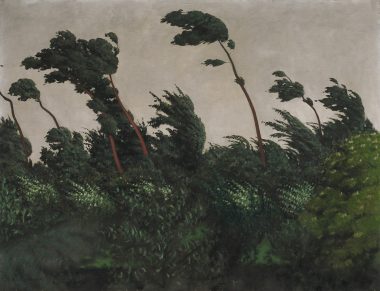
Félix Vallotton, The Wind, 1910, The National Gallery of Art, Washington


Il cielo sembrava così piccolo quel giorno d’inverno,
Una luce sporca su un mondo smorto,
Contratto come uno stecco raggrinzito.

Non era l’ombra di nube e freddo,
Ma un senso della distanza del sole:
L’ombra di un senso suo proprio.

Una consapevolezza che il giorno concreto
Era tanto meno. Solo il vento
Sembrava grande, sonoro, alto, forte.

E mentre pensava dentro il pensiero
Del vento, ignorando che quel pensiero
Non era né suo né di un altro qualunque,

L’immagine appropriata di sé,
Così formata, divenne lui: respirò
Il respiro di un’altra natura come suo,

Solo un respiro momentaneo,
Fuori e oltre la luce sporca
Che mai avrebbe potuto essere animale,

Una natura ancora priva di forma,
Fuorché quella di lui – forse quella di lui
Nell’ozio violento della domenica.

Wallace Stevens

(Traduzione di Massimo Bacigalupo)

da “Il mondo come meditazione”, Guanda, 2010

∗∗∗

The Constant Disquisition of the Wind

The sky seemed so small that winter day,
A dirty light on a lifeless world,
Contracted like a withered stick

It was not the shadow of cloud and cold,
But a sense of the distance of the sun —
The shadow of a sense of his own,

A knowledge that the actual day
Was so much less. Only the wind
Seemed large and loud and high and strong.

And as he thought within the thought
Of the wind, not knowing that that thought
Was not his thought, nor anyone’s,

The appropriate image of himself,
So formed, became himself and he breathed
The breath of another nature as his own,

But only its momentary breath,
Outside of and beyond the dirty light,
That never could be animal,

A nature still without a shape,
Except his own — perhaps, his own
In a Sunday’s violent idleness.

Wallace Stevens

da “The Collected Poems of Wallace Stevens”, Alfred A. Knopf, New York, 1971

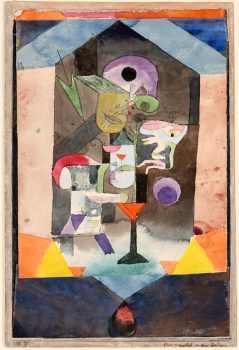
da “Angelo circondato da contadini” – Wallace Stevens

Paul Klee, Remembrance Sheet of a Conception, 1918


[…]

Io sono l’Angelo della realtà,
intravisto un istante sulla soglia.

Non ho ala di cenere, né di oro stinto,
né tepore d’aureola mi riscalda.

Non mi seguono stelle in corteo,
in me racchiudo l’essere e il conoscere.

Sono uno come voi, e ciò che sono e so
per me come per voi, è la stessa cosa.

Eppure, io sono l’Angelo necessario della terra,
poiché chi vede me vede di nuovo

la terra, libera dai ceppi della mente, dura,
caparbia, e chi ascolta me ne ascolta il canto

monotono levarsi in liquide lentezze e afferrare
in sillabe d’acqua; come un significato

che si cerchi per ripetizioni approssimando.
O forse io sono soltanto una figura a metà,

intravista un istante, un’invenzione della mente,
un’apparizione tanto lieve all’apparenza

che basta che io volga le spalle,
ed eccomi presto, troppo presto, scomparso?

Wallace Stevens

(Traduzione di Nadia Fusini)

da “Wallace Stevens, Aurore d’autunno”, Milano, Garzanti, 1992

∗∗∗

da “Angel Surrounded by Paysans”

[…]

I am the angel of reality,
Seen for a moment standing in the door.

I have neither ashen wing nor wear of ore
And live without a tepid aureole,

Or stars that follow me, not to attend,
But, of my being and its knowing, part.

I am one of you and being one of you
Is being and knowing what I am and know.

Yet I am the necessary angel of earth,
Since, in my sight, you see the earth again,

Cleared of its stiff and stubborn, man-locked set,
And, in my hearing, you hear its tragic drone

Rise liquidly in liquid lingerings,
Like watery words awash; like meanings said

By repetitions of half-meanings. Am I not,
Myself, only half of a figure of a sort,

A figure half seen, or seen for a moment, a man
Of the mind, an apparition apparelled in

Apparels of such lightest look that a turn
Of my shoulder and quickly, too quickly, I am gone?

Wallace Stevens

da “The Auroras of Autumn , 1950, in “Selected Poems of Wallace Stevens ”, Alfred A. Knopf, New York, 1971

da «Bringing It All Back Home» – Bob Dylan

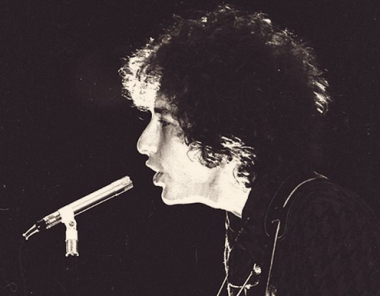
Bob Dylan in 1964 by Lee Pearce


le mie canzoni sono scritte avendo in mente
il timpano/un tocco di qualsiasi ansioso colore,
innominabile. ovvio, e delle persone forse
come un morbido cantante brasiliano… ho
rinunciato a tentare di raggiungere la perfezione/
il fatto che la casa bianca sia piena di
leaders che non sono mai stati all’apollo
theater mi sbalordisce, perché non sia stato scelto
allen ginsberg per leggere poesia all’inaugurazione
mi lascia perplesso/se qualcuno pensa che norman

mailer sia più importante di hank Williams,
niente di male, non ho argomenti e non
bevo mai latte. preferirei modellare dei
portarmonica che discutere di antropologia azteca/
letteratura inglese, o storia delle nazioni
unite. accetto il caos, non sono sicuro se
esso accetta me. so che c’è della gente terrorizzata
dalla bomba, ma ci sono altre persone terrorizzate
ad essere viste con in mano una rivista moderna di cinema.
l’esperienza insegna che il silenzio terrorizza maggiormente
la gente… sono convinto che tutte le anime abbiano
qualche essere superiore con cui fare i conti/come il
sistema scolastico, un cerchio invisibile a cui nessuno
può pensare senza consultare qualcuno/di
fronte a ciò, la responsabilità/la sicurezza, il successo
non significano assolutamente nulla… non vorrei
essere bach. mozart. tolstoy. joe hill. gertrude
stein o james dean/ sono tutti morti. i
Grandi libri sono stati scritti, le Grandi frasi
son state dette tutte/sto per schizzarVi
un quadro di quel che succede da queste parti
qualche volta. anche se neanch’io capisco troppo
bene ciò che avviene davvero. so
che un giorno moriremo tutti e che nessuna
morte ha mai fermato il mondo.le mie poesie
sono scritte in un ritmo di distorsione impoetica/
divise da orecchie forate. ciglia false/ sottratte
da persone che si torturano costantemente l’un
l’altra, con una ronfante linea melodica di vuoto
descrittivo — viste a volte attraverso occhiali scuri
ed altre forme di esplosione psichica. una canzone è
qualsiasi cosa che sappia camminare da sola/vengo chiamato
autore di canzoni. una poesia è una persona nuda… alcuni
dicono che sono un poeta

[…]

Bob Dylan

da “Bringing It All Back Home”, in “Bob Dylan, folk, canzoni e poesie” traduzione di Alessandro Roffeni, Newton Compton Editori Roma, prima edizione luglio 1978

∗∗∗

da «Bringing It All Back Home»

[…]

my songs’re written with the kettledrum
in mind/a touch of any anxious color.
unmentionable. obvious. an’ people perhaps
like a soft brazilian singer… i have
given up at making any attempt at perfection/
the fact that the white house is filled with
leaders that’ve never been t’ the appollo
theather amazes me. why allen ginsberg was
not chosen t’ read poetry at the inauguration
boggles my mind/if someone thinks norman
mailer is more important than hank williams
that’s fine. i have no arguments an’ i
never drink milk. i would rather model
harmonica holders than discuss aztec anthropology/
english literature. or history of the united
nations. i accept chaos. I am not sure whether
it accepts me. i know there’re some people terrified
of the bomb. but there are other people terrified
t’ be seen carrying a modern screen magazine.
experience teaches that silence terrifies people
the most… i am convinced that all souls have
some superior t’ deal with/like the school
system, an invisible circle of which no one
can think without consulting someone/in the
face of this, responsibility/security, success
mean absolutely nothing… i would not want
t’ be bach. mozart. tolstoy. joe hill. gertrude
stein or james dean/they are all dead. the
Great books’ve been written. the Great sayings
have all been said/I am about t’ sketch You
a picture of what goes on around here
sometimes. though I don’t understand too well
myself what’s really happening. i do know
that we’re all gonna die someday an’ that no
death has ever stopped the world. my poems
are written in a rhythm of unpoetic distortion/
divided by pierced ears. false eyelashes/
subtracted by people constantly torturing each
other. with a melodic purring line of descriptive
hollowness… seen at times through dark sunglasses
an’ other forms of psychic explosion. a song is
anything that can walk by itself/i am called
a songwriter. a poem is a naked person… some
people say that i am a poet

[…]

Bob Dylan

da “Polyvocal Bob Dylan: Music, Performance, Literature ”, a cura di  Nduka Otiono e Josh Toth, Palgrave Macmillan, 2019


Mare nero – Mark Strand


Una notte serena mentre gli altri dormivano, ho salito
le scale fin sul tetto di casa e sotto un cielo
cosparso di stelle ho guardato il mare, la sua distesa,
le creste mobili spazzate dal vento che divenivano
lacerti di trina lanciati nell’aria. Ristetti nel sussurro
protratto della notte, in attesa di qualcosa, un segno, l’approssimarsi
di una luce distante, e immaginai che ti facevi vicina,
le onde buie dei  capelli che si fondevano con il mare,
e il buio si fece desiderio, e il desiderio la luce incipiente.
La prossimità, il calore momentaneo di te mentre stavo
lassù da solo a contemplare le ondate lente del mare
frangersi sulla riva e farsi per un poco vetro e scomparire…
Perché credetti che saresti uscita dal nulla? Perché con tutto
quello che il mondo offre saresti dovuta venire solo perché io ero qui?

Mark Strand

(Traduzione di Damiano Abeni)

da “Uomo e cammello”, “Lo Specchio” Mondadori, 2007

∗∗∗

Black Sea

One clear night while the others slept, I climbed
the stairs to the roof of the house and under a sky
strewn with stars I gazed at the sea, at the spread of it,
the rolling crests of it raked by the wind, becoming
like bits of lace tossed in the air. I stood in the long,
whispering night, waiting for something, a sign, the approach
of a distant light, and I imagined you coming closer,
the dark waves of your hair mingling with the sea,
and the dark became desire, and desire the arriving light.
The nearness, the momentary warmth of you as I stood
on that lonely height watching the slow swells of the sea
break on the shore and turn briefly into glass and disappear…
Why did I believe you would come out of nowhere? Why with all
that the world offers would you come only because I was here?

Mark Strand

da “Man and Camel”, Knopf Doubleday Publishing Group, 2008

Cos’era – Mark Strand

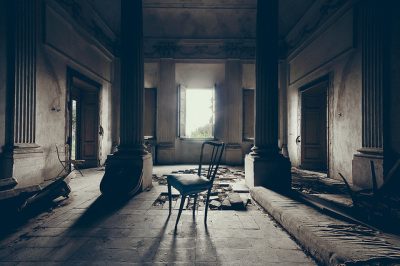
Foto di Nicola Bertellotti

I

Era impossibile da immaginare, impossibile
da non immaginare; il suo azzurro, l’ombra che lasciava,
che cadeva, riempiva l’oscurità del proprio freddo,
il suo freddo che cadeva fuori di se stesso, fuori di qualsiasi idea
di sé descrivesse nel cadere; un qualcosa, una minuzia,
una macchia, un punto, un punto entro un punto, un abisso infinito
di minuzia; una canzone, ma meno di una canzone, qualcosa che affoga
in sé, qualcosa che va, un’alluvione di suono, ma meno
di un suono; la sua fine, il suo vuoto,
il suo vuoto tenero, piccolo che colma la sua eco, e cade,
e si alza, inavvertito, e cade ancora, e così sempre,
e sempre perché, e solo perché, essendo stato, era…

II

Era l’inizio di una sedia;
era il divano grigio; era i muri,
il giardino, la strada di ghiaia; era il modo in cui
i ruderi di luna le crollavano sulla chioma.
Era quello, ed era altro ancora; era il vento che azzannava
gli alberi; era la congerie confusa di nubi, la bava
di stelle sulla riva. Era l’ora che pareva dire
che se sapevi in che punto esatto del tempo si era, non avresti
mai più chiesto nulla. Era quello. Senz’altro era quello.
Era anche l’evento mai avvenuto – un momento tanto pieno
che quando se ne andò, come doveva, nessun dolore riusciva
a contenerlo. Era la stanza che pareva la stessa
dopo tanti anni. Era quello. Era il cappello
dimenticato da lei, la penna che lei lasciò sul tavolo.
Era il sole sulla mia mano. Era il caldo del sole. Era come
sedevo, come attendevo ore, giorni. Era quello. Solo quello.

Mark Strand

(Traduzione di Damiano Abeni)

da “L’inizio di una sedia”, Donzelli Poesia, 1999

∗∗∗

What It Was

I

It was impossible to imagine, impossible
Not to imagine; the blueness of it, the shadow it cast,
Falling downward, filling the dark with the chill of itself,
The cold of it falling out of itself, out of whatever idea
Of itself it described as it fell; a something, a smallness,
A dot, a speck, a speck within a speck, an endless depth
Of smallness; a song, but less than a song, something drowning
Into itself, something going, a flood of sound, but less
Than a sound; the last of it, the blank of it,
The tender small blank of it filling its echo, and falling,
And rising unnoticed, and falling again, and always thus,
And always because, and only because, once having been, it was…

II

It was the beginning of a chair;
It was the gray couch; it was the walls,
The garden, the gravel road; it was the way
The ruined moonlight fell across her hair.
It was that, and it was more. It was the wind that tore
At the trees; it was the fuss and clutter of clouds, the shore
Littered with stars. It was the hour which seemed to say
That if you knew what time it really was, you would not
Ask for anything again. It was that. It was certainly that.
It was also what never happened—a moment so full
That when it went, as it had to, no grief was large enough
To contain it. It was the room that appeared unchanged
After so many years. It was that. It was the hat
She’d forgotten to take, the pen she left on the table.
It was the sun on my hand. It was the sun’s heat. It was the way
I sat, the way I waited for hours, for days. It was that. Just that.

Mark Strand

da “Blizzard of One”, New York: Alfred A. Knopf, 1988