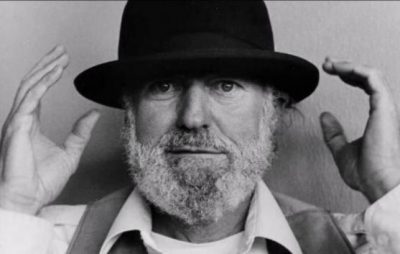
Poeta cieco – Lawrence Ferlinghetti

Da eseguire bendati e con un bastone

Io sono un poeta cieco
Io sono il vostro poeta e pittore cieco
pieno di espressioni e immagini fantastiche
Sto dipingendo il paesaggio della mia anima sottomessa
e dell’anima del genere umano
per come la vedo io
Le sto dando voce
Sto cantando canzoni popolari
sulle oppresse masse
e sui ricchi dalle chiappe grasse
Io sono il pittore che sente
con le dita
Io sono il poeta visionario cieco
Io vedo quello che voi non vedete
Io mangio bene e bevo bene
e sogno i grandi poemi epici
Io sono il vostro artista multimediale
postmoderno oltremoderno
Io sono il più avan- dell’avanguardia
Io sono site-specific e assolutamente concettuale
Perfino i massimi critici sono rimasti sconcertati
dalla mia profondità
Una volta ho incontrato Andy Warhol
E sono andato a letto con voi sapete chi
E sono un uomo che parla veloce
il vostro poeta dalla lingua decostruita
il vostro poeta stratosferico
pieno di estasi e visioni
il vostro nomade poeta da gruppo di scrittura creativa
il vostro irsuto poeta da università
professore ordinario
il vostro più silenzioso poeta buddista
Io mi faccio tournée di letture di poesia
spesato da cima a fondo
Io sento tutto
ed è pane per i miei denti
Lo uso fino in fondo
per fare grande poesia sonora
o grande poesia concreta
impenetrabile per chiunque
La vita è un sogno reale
e io lo sto sognando
E ho tutto nella testa
il Cantico dell’Umanità
e il Cantico della Disumanità
Vi dipingerò un quadro profondo
un quadro d’azione
un quadro gestuale
nient’altro che puro gesto
Vi scriverò una poesia stratosferica
sulla gente comune
Se mi tolgo la maschera
vedrò il mondo reale
per la prima volta
Ma non me la tolgo
Mi si adatta troppo bene
Alla perfezione
È troppo comoda
E devo pensare alla mia carriera
pensare alla mia vita
Si vive una volta sola
e vivere benissimo è la miglior vendetta
Trovatevi la vostra benda per gli occhi
La mia non ve la do
Dovrete affrontare il mondo senza
E ad ogni modo sono troppo giovane per morire
Io sono Americano
e gli Americani non muoiono
Noi siamo i conquistadores
Siamo i nuovi imperatori romani
Stiamo conquistando il mondo
È l’impero invisibile
del sorridente capitalismo rapace
E la democrazia è il capitalismo
Niente più poveri
Niente più gente che muore di fame
Niente più masse accalcate nel nostro impero
La marea montante tiene su tutte le barche
Sempre che ce l’abbiate, una barca

Lawrence Ferlinghetti

(Traduzione di Damiano Abeni)

da “Scoppi urla risate”, SUR, 2019

∗∗∗

Blind poet

Performed with a blindfold and a cane

I am a blind poet
I am your blind poet and painter
full of fantastic phrases and images
I am painting the landscape of my bent soul
and the soul of mankind
as I see it
I am giving it a voice
I am singing folk songs
about the downtrodden masses
and the rich on their fat asses
I am the painter who feels
with his fingers
I am the blind seeing-eye poet
I see what you can’t see
I eat well and drink well
and dream of great epics
I am your postmodern pastmodern
multimedia artist
I am the most avant of the avant
I’m site-specific and totally conceptual
Even the greatest critics have been baffled
by my profundity
I once knew Andy Warhol
And I’ve slept with you know whom
And I’m a fast-speaking man
your deconstructed language poet
your far-out poet
full of ecstasies and visions
your wandering workshop poet
your hairy university poet
with tenure
your buddhist quietest poet
I go on poetry reading tours
where everything is paid for
I hear everything
and it’s grist to my mill
I use it all
to make great sound poetry
or great concrete poetry
that no one can see through
Life is a real dream
and I am dreaming it
And I’ve got it all in my head
the Song of Humanity
and the Song of Inhumanity
I’ll paint you a profound picture
an action painting
a gestural painting
nothing but pure gesture
I’ll write you a far-out song
of common people
If I take off my mask
I’ll see the real world
for the first time
But I won’t take it off
It fits too well
It’s a perfect fit
It’s too comfortable
And I’ve got my career to think of
my life to think of
We only live once
and living very well is the best revenge
Get your own blindfold
You can’t have mine
You’ll have to face the world without it
And anyway I’m too young to die
I’m an American
and Americans don’t die
We’re the conquerors
We’re the new roman emperors
We’re conquering the world
It’s the invisible empire
of genial vulture capitalism
And democracy is capitalism
No more poor people
No more starving and dying
No more huddled masses in our empire
The rising tide lifts all boats
If you’ve got a boat

Lawrence Ferlinghetti

da “Blasts Cries Laughter”, New Directions Publishing, 2014

La storia della poesia – Mark Strand

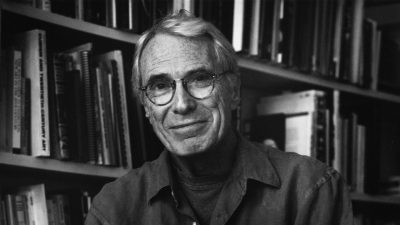
Foto di Chris Felver


I nostri maestri se ne sono andati e se tornassero
chi tra noi li sentirebbe, chi riconoscerebbe
il suono corporeo del paradiso o il paradisiaco
suono del corpo, infinito ed evanescente, che dava sintonia
ai nostri giorni prima che le stelle roteanti
venissero private di ogni potere? La risposta è
nessuno di noi qui. E cosa significa se vediamo
le montagne invetriate di luna e il paese con le porte
e i serbatoi piezometrici muti, e ci viene da alzare la voce
un poco, o a volte a fine autunno
quando la sera fiorisce un momento sui monti a occidente
e ci immaginiamo angeli che si precipitano lungo gli scalini freddi
dell’aria per augurarci il bene, se abbiamo perso ogni volontà
e non facciamo altro che poltrire, udendo e non udendo, i sospiri
di questa o quella brezza vagare senza meta sulle fattorie in malora
e i giardini sterili? Questi giorni quando ci svegliamo
ogni cosa risplende della stessa luce celeste
che colmava il nostro sonno qualche minuto prima,
così non facciamo altro se non contare alberi, nubi,
i pochi uccelli rimasti; poi decidiamo che non dovremmo
essere severi con noi stessi, che il passato non era meglio
di adesso, perché non è forse sempre esistito il nemico,
e la chiesa del mondo non era già in macerie?

Mark Strand

(Traduzione di Damiano Abeni con Moira Egan)

da “La vita ininterrotta”, 1990, in “Mark Strand, Tutte le poesie”, Mondadori, 2019

∗∗∗

The history of poetry

Our masters are gone and if they returned
Who among us would hear them, who would know
The bodily sound of heaven or the heavenly sound
Of the body, endless and vanishing, that tuned
Our days before the wheeling stars
Were stripped of power? The answer is
None of us here. And what does it mean if we see
The moon-glazed mountains and the town with its silent doors
And water towers, and feel like raising our voices
Just a little, or sometimes during late autumn
When the evening flowers a moment over the western range
And we imagine angels rushing down the air’s cold steps
To wish us well, if we have lost our will,
And do nothing but doze, half-hearing the sighs
Of this or that breeze drift aimlessly over the failed farms
And wasted gardens? These days when we waken,
Everything shines with the same blue light
That filled our sleep moments before,
So we do nothing but count the trees, the clouds,
The few birds left; then we decide that we shouldn’t
Be hard on ourselves, that the past was no better
Than now, for hasn’t the enemy always existed,
And wasn’t the church of the world already in ruins?

Mark Strand

da “The Continuous Life”, in “Collected Poems”, Alfred A. Knopf, 2014

(Dediche) – Adrienne Rich

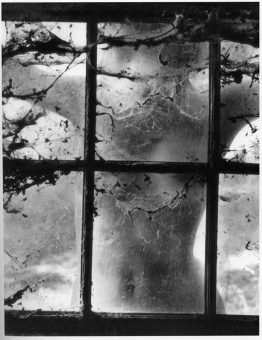
Wynn Bullock, Nude Behind Cobwebbed Window, 1955


So che stai leggendo questa poesia
tardi, prima di lasciare il tuo ufficio
con l’unico lampione giallo e una finestra che rabbuia
nella spossatezza di un edificio dissolto nella quiete
quando l’ora di punta è da molto passata.           So che stai leggendo
questa poesia in piedi, in una libreria lontana dall’oceano
in un giorno grigio agli inizi della primavera, deboli fiocchi sospinti
attraverso gli immensi spazi delle pianure intorno a te.
So che stai leggendo questa poesia
in una stanza in cui è accaduto troppo per poterlo sopportare,
spirali di lenzuola ristagnano sul letto
e la valigia aperta parla di fuga
ma non puoi andartene ora.             So che stai leggendo questa poesia
mentre il metrò rallenta la corsa, prima di lanciarti su per le scale
verso un amore diverso
che la vita non ti ha mai concesso.
So che stai leggendo questa poesia alla luce
della televisione, dove scorrono sussulti di immagini mute,
mentre aspetti le ultime notizie sull’ intifada.
So che stai leggendo questa poesia in una sala d’aspetto
di occhi incontrati e che non si incontrano, di identità con estranei. 
So che stai leggendo questa poesia sotto il neon
nella noia stanca dei giovani che sono esclusi,
che si escludono, troppo presto.             So
che stai leggendo questa poesia con la tua vista indebolita:
le tue lenti spesse dilatano le lettere oltre ogni significato e tuttavia continui a leggere
perché anche l’alfabeto è prezioso.
So che stai leggendo questa poesia in cucina,
mentre riscaldi il latte, con un bambino che ti piange sulla spalla e un libro in mano,
perché la vita è breve e anche tu hai sete.
So che stai leggendo questa poesia che non è nella tua lingua:
di alcune parole non conosci il significato, mentre altre ti fanno continuare a leggere
e io voglio sapere quali sono.
So che stai leggendo questa poesia in attesa di udire qualcosa, divisa tra amarezza e speranza,
per poi tornare ai compiti che non puoi rifiutare.
So che stai leggendo questa poesia perché non c’è altro da leggere,
lí dove sei approdata, nuda come sei.

Adrienne Rich

(Traduzione di Maria Luisa Vezzali)

Da Un atlante del mondo difficile, 1991

da “Cartografie del silenzio”, Crocetti Editore, 2000

∗∗∗

XIII (Dedications)

I know you are reading this poem
late, before leaving your office
of the one intense yellow lamp-spot and the darkening window
in the lassitude of a building faded to quiet
long after rush-hour.            I know you are reading this poem
standing up in a bookstore far from the ocean
on a grey day of early spring, faint flakes driven
across the plains’ enormous spaces around you.
I know you are reading this poem
in a room where too much has happened for you to bear
where the bedclothes lie in stagnant coils on the bed
and the open valise speaks of flight
but you cannot leave yet.            I know you are reading this poem
as the underground train loses momentum and before running up the stairs
toward a new kind of love
your life has never allowed.
I know you are reading this poem by the light
of the television screen where soundless images jerk and slide
while you wait for the newscast from the intifada.
I know you are reading this poem in a waiting-room
of eyes met and unmeeting, of identity with strangers.
I know you are reading this poem by fluorescent light
in the boredom and fatigue of the young who are counted out,
count themselves out, at too early an age.             I know
you are reading this poem through your failing sight, the thick
lens enlarging these letters beyond all meaning yet you read on
because even the alphabet is precious.
I know you are reading this poem as you pace beside the stove
warming milk, a crying child on your shoulder, a book in your hand
because life is short and you too are thirsty.
I know you are reading this poem which is not in your language
guessing at some words while others keep you reading
and I want to know which words they are.
I know you are reading this poem listening for something, torn between bitterness and hope
turning back once again to the task you cannot refuse.
I know you are reading this poem because there is nothing else left to read
there where you have landed, stripped as you are.

Adrienne Rich

1990–1991

da “An Atlas of the Difficult World (1988 – 1991)”, W. W. Norton & Company, 1991

Ciò che è possibile – Adrienne Rich

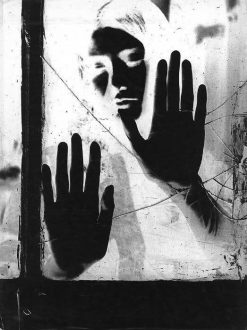
Roger Catherineau, La Vitre, 1954


Una notte chiara               se fosse chiara la mente

Se la mente fosse semplice, se la mente fosse nuda
di tutto tranne che delle necessità piú antiche:
cucchiaio di legno             coltello                 specchio
tazza                                    lampada              scalpello
un pettine che passa tra i capelli accanto a una finestra
un lenzuolo
                      gettato via nel sonno

Una notte chiara in cui due pianeti
sembrano avvinghiarsi l’uno  all’altro                    in cui l’erba terrestre
si muove come seta nella luce stellare

                                                                     Se la mente fosse chiara
e se la mente fosse semplice               potresti prendere questa mente
questo particolare stato               e dire
Cosí vivrei se potessi scegliere:
questo è ciò che è possibile

Una notte chiara.              Ma la mente
della donna che immagina tutto questo           la mente
che rende tutto questo possibile
non è chiara come la notte
non è mai semplice              non può abbracciare
le sue verità come si abbracciano i pianeti in transito
non cosí facilmente
                                    si libera dal rimorso
non cosí facilmente
                                    compie il miracolo
per cui la mente è famosa
                                                o era famosa
non diventa astratta e pura a comando

la mente di questa donna

non desidera neppure quel miracolo
ha una diversa missione
                                             nell’universo
Se la mente fosse semplice           se la mente fosse nuda
potrebbe assomigliare a una stanza         un interno pulito
ma come potrebbe essere possibile ora

date le voci delle città-fantasma
le loro minute, vaste configurazioni
che attendono di essere decifrate
                                                             la notte oracolare
densa di suoni

Se potesse mai ridursi a qualcosa di simile
a un pettine che passa tra i capelli accanto a una finestra

niente di piú
                       un lenzuolo
                       gettato via nel sonno
ma la mente
della donna che pensa questo           è avvolta nella battaglia
occupata da una diversa missione
uno stelo d’erba      secca erba piumosa      radicata nella neve
che si agita nell’aria gelata           una bacchetta fiera
                                                                             che disegna grafici

Anche il dito scorre
su pagine di un libro

ha piú buon senso della poesia che legge
conosce attraverso la poesia
                                           attraverso i vetri piumati di ghiaccio
l’inverno
                che contrae gli artigli
il vento-falco
                         pronto a uccidere

Adrienne Rich

1980

(Traduzione di Maria Luisa Vezzali)

da “Una pazienza selvaggia mi ha portato sin qui. Poesie 1978-1981”, in “Cartografie del silenzio”, Crocetti Editore, 2000

∗∗∗

What is Possible

A clear night           if the mind were clear

If the mind were simple, if the mind were bare
of all but the most classic necessities:
wooden spoon         knife                              mirror
cup                             lamp                              chisel
a comb passing through hair beside a window
a sheet
             thrown back by the sleeper

A clear night in which two planets
seem to clasp each other          in which the earthly grasses
shift like silk in starlight
                                             If the mind were clear
and if the mind were simple          you could take this mind
this particular state         and say
This is how I would live if I could choose:
this is what is possible

A clear night.            But the mind
of the woman imagining all this           the mind
that allows all this to be possible
is not clear as the night
is never simple            cannot clasp
its truths as the transiting planets clasp each other
does not so easily
                                 work free from remorse
does not so easily
                                 manage the miracle
for which mind is famous
                                               or used to be famous
does not at will become abstract and pure

this woman’s mind

does not even will that miracle
having a different mission
                                                 in the universe

If the mind were simple               if the mind were bare
it might resemble a room              a swept interior
but how could this now be possible

given the voices of the ghost-towns
their tiny and vast configurations
needing to be deciphered
                                              the oracular night
with its densely working sounds

If it could ever come down to anything like
a comb passing through hair beside a window

no more than that
                                  a sheet
                                  thrown back by the sleeper
but the mind
of the woman thinking this          is wrapped in battle
is on another mission
a stalk of grass        dried feathery weed        rooted in snow
in frozen air stirring          a fierce wand graphing

Her finger also tracing
pages of a book

knowing better than the poem she reads
knowing through the poem
                                                  through ice-feathered panes
the winter
                   flexing its talons
the hawk-wind
                            poised to kill

Adrienne Rich

1980

da “A Wild Patience Has Taken Me This Far: Poems 1978-1981”, W. W. Norton & Company, 1993 

Noi – Anne Sexton


Ero avvolta nella pelliccia
nera, nella pelliccia bianca
e tu mi svolgevi
e in una luce d’oro
poi m’incoronasti,
mentre fuori dardi di neve
diagonali battevano alla porta.
Mentre venti centimetri di neve
cadevano come stelle
in frammenti di calcio,
noi stavamo nel nostro corpo
(stanza che ci seppellirà)
e tu stavi nel mio corpo
(stanza che ci sopravviverà)
e all’inizio ti asciugai
i piedi con una pezza
perché ero la tua schiava
e tu mi chiamavi principessa.
Principessa!

Oh, allora
mi alzai con la pelle d’oro,
e mi disfeci dei salmi
mi disfeci dei vestiti
e tu sciogliesti le briglie
sciogliesti le redini,
ed io i bottoni,
e disfeci le ossa, le confusioni,
le cartoline del New England,
le notti di Gennaio finite alle dieci,
e come spighe ci sollevammo,
per acri ed acri d’oro,
e poi mietemmo, mietemmo,
mietemmo.

Anne Sexton

(Traduzione di Rosaria Lo Russo)

da “Poesie d’amore”, Casa Editrice Le Lettere, Firenze, 1996

***

Us

I was wrapped in black
fur and white fur and
you undid me and then
you placed me in gold light
and then you crowned me,
while snow fell outside
the door in diagonal darts.
While a ten-inch snow
came down like stars
in small calcium fragments,
we were in our own bodies
(that room that will bury us)
and you were in my body
(that room that will outlive us)
and at first I rubbed your
feet dry with a towel
becuase I was your slave
and then you called me princess.
Princess!

Oh then
I stood up in my gold skin
and I beat down the psalms
and I beat down the clothes
and you undid the bridle
and you undid the reins
and I undid the buttons,
the bones, the confusions,
the New England postcards,
the January ten o’clock night,
and we rose up like wheat,
acre after acre of gold,
and we harvested,
we harvested.

Anne Sexton

da “Love Poems”, Boston: Houghton Mifflin, 1969