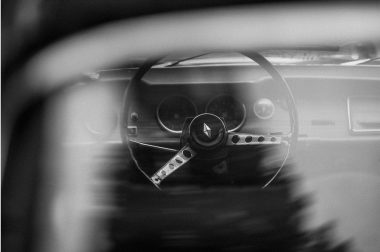
In automobile, di notte – Seamus Heaney

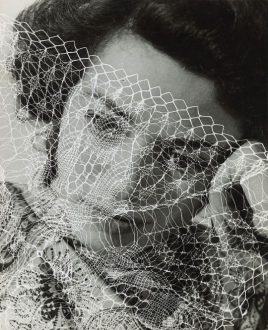
Gérard Laurenceau, dalla serie A Langueur De Rues


Gli odori delle cose comuni
erano nuovi nel viaggio notturno per la Francia:
pioggia e fieno e boschi nell’aria
creavano correnti calde nell’automobile.

I segnali imbiancavano senza tregua.
Montreuil, Abbéville, Beauvais
eran promesse, promesse, venivano e se ne andavano,
ogni luogo pieno compimento del nome.

Una mietitrebbia si lamentava per l’ora tarda,
emorragia di semi traverso il fanale.
Un bosco bruciava in un incendio senza fiamma.
Ad uno ad uno chiudevano i caffè.

Ho pensato a te continuamente
a mille miglia a sud, dove l’Italia
si appoggiava alla Francia a globo spento.
Le cose comuni qui erano nuove.

Seamus Heaney

(Traduzione di Roberto Mussapi)

da “Una porta sul buio”, Guanda, Parma, 1996

∗∗∗

Night Drive

The smells of ordinariness
Were new on the night drive through France:
Rain and hay and woods on the air
Made warm draughts in the open car.

Signposts whitened relentlessly.
Montreuil, Abbéville, Beauvais
Were promised, promised, came and went,
Each place granting its name’s fulfilment.

A combine groaning its way late
Bled seeds across its work-light.
A forest fire smouldered out.
One by one small cafés shut.

I thought of you continuously
A thousand miles south where Italy
Laid its loin to France on the darkened sphere.
Your ordinariness was renewed there.

Seamus Heaney

da “Door into the Dark”, Faber and Faber Limited, London, 1969

Sogni infranti – William Butler Yeats

Lore Krüger, Porträt, 1938


Fra i tuoi capelli è qualche filo bianco.
E i giovani ormai più quando tu passi
d’improvviso non soffoca il respiro.
Ma qualche vecchio forse mormorando
ti benedice, ché una tua preghiera
l’ha scampato sul letto della morte.
Per te che sai del cuore ogni tormento
e ogni tormento hai inflitto all’altrui cuore,
di gracile fanciulla germogliando
la tua bellezza grave – per te sola
il cielo ha cancellato la sentenza,
tanta parte gli serbi in quella pace,
se cammini soltanto in una stanza.

La tua bellezza può tra noi lasciare
solo ricordi, pallidi ricordi.
E un giorno a un vecchio un giovane dirà:
“Diteci dunque di quella signora
che un poeta ostinato ci esaltava
quando l’età gli ebbe gelato il cuore.”

Vaghi ricordi, pallidi ricordi
che nella tomba tutti rivivranno.
La certezza che un giorno la signora
vedrò giacere o ritta o camminare
nella bellezza sua prima di donna
col fervore degli occhi giovanili
m’ha fatto come folle delirare.

E tu sei bella più d’ogni altra donna,
ma una macchia offuscava il tuo bel corpo:
non erano le tue piccole mani
belle, e temo che tu forse non corra
e remi fino al polso in quell’arcano
lago sempre ricolmo dove quelli
che hanno adempito alle divine leggi
remano e sono ormai perfetti. Lascia
immutate le mani ch’io baciavo
per amore di un’amicizia antica.

L’ultimo tocco della mezzanotte
muore; l’intero giorno ho allineato
di sogno in sogno e poi di verso in verso
divagando con un fantasma d’aria:
solo ricordi, pallidi ricordi.

William Butler Yeats

(Traduzione di Leone Traverso)

da “Poesie”, Vallecchi, Firenze, 1973

***

Broken Dreams

There is grey in your hair.
Young men no longer suddenly catch their breath
when you are passing;
but maybe some old gaffer mutters a blessing
because it was your prayer
recovered him upon the bed of death.
For your sole sake – that all heart’s ache have known,
and given to others all heart’s ache,
from meagre girlhood’s putting on
burdensome beauty — for your sole sake
heaven has put away the stroke of her doom,
so great her portion in that peace you make
by merely walking in a room.

Your beauty can but leave among us
vague memories, nothing but memories.
A young man when the old men are done talking
will say to an old man, “Tell me of that lady
the poet stubborn with his passion sang us
When age might well have chilled his blood.”

Vague memories, nothing but memories,
but in the grave all, all, shall be renewed.
The certainty that I shall see that lady
leaning or standing or walking
in the first loveliness of womanhood,
and with the fervour of my youthful eyes,
has set me muttering like a fool.

You are more beautiful than any one,
and yet your body had a flaw:
your small hands were not beautiful,
and I am afraid that you will run
and paddle to the wrist
in that mysterious, always brimming lake
where those that have obeyed the holy law
paddle and are perfect. Leave unchanged
the hands that I have kissed,
for old sakes’ sake.

The last stroke of midnight dies.
All day in the one chair
from dream to dream and rhyme to rhyme I have ranged
in rambling talk with an image of air:
vague memories, nothing but memories.

William Butler Yeats

da “The Wild Swans At Coole”, Macmillan Publishers, 1919

Una piuma di pavone – Seamus Heaney

Édouard Boubat, Portrait of Anne- Marie Edvina, 1961

per Daisy Garnett

Sei giorni or sono si è versata l’acqua
Per battezzarti, per operare l’incantesimo
E farti monda la fedina, speriamo, per sempre.
Ma ora la tua vita è sonno e nutrimento
Che, con il tocco dell’amore, è sufficiente
Per te, Daisy, Daisy, nipotina inglese.

Gloucestershire: si stendono le sue prospettive
Boschive e velate di foschia al mio occhio
Il cui paesaggio, come quello di tua madre era,
È cosa diversa da questa dolcezza
D’arte topiaria, distese erbose e mattoni,
Proprietà, inviolate, cintate, nostalgiche.

Io vengo da un disordine di fattorie e pantani,
Vecchi appezzamenti che il colpo e la scossa
Della storia hanno lasciato scompigliati.
Ma qui, per amor tuo, ho adattato
La mia voce da carrettiera a toni da giardino,
Con pietra di Cotswold ho lastricato l’acquitrino.

Fili intricati di famiglie intrecciano una rete
Di nodi d’amore di due menti, una carne.
Il futuro non è nostro. Noi intessiamo
Un labirinto di parentele, scambiamo cenni e saluti
Con fiducia ma con poca intimità –
Così questo è un billet-doux per dire

Che in un caldo luglio tu eri qui
Battezzata e sorridente a Bradley
Mentre io, ospite nella tua verde corte,
A una finestra a occidente sedevo e scrivevo
Conscio nell’oscurità che si addensava.
E avrei potuto anche essere a Coole Park.

Così prima che io parta dalla tua casa ordinata,
Preghiamo. Possano terra coltivata e argilla,
Annerite da sangue di Celti e Sassoni,
Nutrire al loro seno amore in te per casa e bosco –
Dove per te lascio cadere questo, mentre passo,
Come una piuma di pavone sull’erba.

Seamus Heaney

1972

(Traduzione di Francesca Romana Paci)

da “La lanterna di biancospino”, Guanda, Parma, 1999

∗∗∗

A Peacock’s Feather

for Daisy Garnett

Six days ago the water fell
To christen you, to work its spell
And wipe your slate, we hope, for good.
But now your life is sleep and food
Which, with the touch of love, suffice
You, Daisy, Daisy, English niece.

Gloucestershire: its prospects lie
Wooded and misty to my eye
Whose landscape, as your mother’s was,
Is other than this mellowness
Of topiary, lawn and brick,
Possessed, untrespassed, walled, nostalgic.

I come from scraggy farm and moss,
Old patchworks that the pitch and toss
Of history have left dishevelled.
But here, for your sake, I have levelled
My cart-track voice to garden tones,
Cobbled the bog with Cotswold stones.

Ravelling strands of families mesh
In love-knots of two minds, one flesh.
The future’s not our own. We’ll weave
An in-law maze, we’ll nod and wave
With trust but little intimacy –
So this is a billet-doux to say

That in a warm July you lay
Christened and smiling in Bradley
While I, a guest in your green court,
At a west window sat and wrote
Self-consciously in gathering dark.
I might as well be in Coole Park.

So before I leave your ordered home,
Let us pray. May tilth and loam,
Darkened with Celts’ and Saxons’ blood,
Breastfeed your love of house and wood –
Where I drop this for you, as I pass,
Like the peacock’s feather on the grass.

Seamus Heaney

da “The Haw Lantern”, Faber and Faber Limited, London, 1987
Un sorso d’acqua – Seamus Heaney

Foto di André Kertész


Veniva ogni mattina ad attingere acqua
come un vecchio pipistrello percorrendo barcolloni il campo:
la tosse convulsa della pompa, lo strepito del secchio

e il lento diminuendo nel riempirsi

annunciavano il suo arrivo. Ricordo
il suo grembiule grigio, lo smalto bianco butterato
del secchio colmo e il cigolio

acuto della sua voce come il manico della pompa.
Notti in cui una luna piena saliva oltre il suo tetto
per ricadere dentro la sua finestra e posarsi
sull’acqua apparecchiata.
A cui ho attinto per bere ancora, per essere
fedele all’ammonimento sull’orlo della sua tazza,
Ricordati del donatore, quasi del tutto sbiadito.

Seamus Heaney

(Traduzione di Marco Sonzogni)

da “Lavoro sul campo”, 1979, in “Seamus Heaney, Poesie”, I Meridiani Mondadori, 2016

∗∗∗

A Drink of Water

She came every morning to draw water
Like an old bat staggering up the field:
The pump’s whooping cough, the bucket’s clatter
And slow diminuendo as it filled,
Announced her. I recall
Her grey apron, the pocked white enamel
Of the brimming bucket, and the treble
Creak of her voice like the pump’s handle.
Nights when a full moon lifted past her gable
It fell back through her window and would lie
Into the water set out on the table.
Where I have dipped to drink again, to be
Faithful to the admonishment on her cup,
Remember the Giver, fading off the lip.

Seamus Heaney

da “Field Work”, Faber and Faber, 1979

Quarantena – Derek Mahon

Derek Mahon


Fugge la pestilenza urbana la felice
brigata del Decamerone e inganna le giornate
raccontando mondane e lubriche novelle —
un diletto a noi non concesso
da che contro il temuto virus è in vigore
questa virtuale quarantena. Così, qui si resta,
ognuno in clausura, a scriver versi,
rassegnati a un’indefinita aspettazione.

Da che cosa è partito, un qualche aberrante batterio
indignato per il nostro istinto genetico-vegetativo?
Un qualche abborracciato esperimento o intento
di una speciale prodigiosa squadra di bio-intervento?
E qui l’infezione polmonare, cui si deve tener testa,
ma non c’è bisogno di lasciare ogni speranza,
ché magari è presagio di un’altra era,
a conflitti e furie finanziarie avversa.

La cosa buona è che la minaccia
vaga della peste dei turisti ora recede
e il luogo nuovamente che sonnecchia
nella sua narcotica caligine piovigginosa,
con commerci e congiuntura bassi
e una volta tanto un po’ di pace.
Dall’estero, però, brutte notizie: così tanti
i colpiti, sepolture e cerimonie magre

come in tempi premoderni, come ne La peste.
Morbo sepolto che prorompe dal passato:
“Per anni addormentato nei mobili e nella biancheria”
manda i suoi ratti a morte all’aria aperta.
Un qualche agente umano? La natura che fa i conti
con l’azione umana? Corrono la strada
alti lamenti di ambulanza, mentre stoico
un avventore emerge in quel silenzio strano.

Confinati negli alloggi poiché da starnuti e tossi
e anche in spazi condivisi si propaga l’infezione,
ci volgiamo all’Esodo e II settimo sigillo,
a Nashe e il libro sesto di Lucrezio:
“Germi maligni invadono l’aria
e inalando inaliamo il male”.
Sopra le case fischia e stride il vento,
mugghia e soffia lezzo di salmastro il flutto.

Derek Mahon

(Traduzione di Alessandro Gentili)

dalla rivista “Poesia”, Nuova serie, Anno II, N.6, Marzo / Aprile 2021, Crocetti Editore

∗∗∗

Quarantine

The privileged crowd in the Decameron,
avoiding plague in town, beguiled the days
recounting stories scurrilous and profane;
but we can’t amuse ourselves like these
since virtual quarantine is in force
against the dreaded virus. Here we sit,
each of us in seclusion, writing verse
and reconciled to an indefinite wait.

What started it, some rogue bacterium
indignant at our plant-genetic drive?
Some botched experiment, some initiative
dreamt up by a special bio-ops dream team?
Pneumonic flu is here and we have to cope
but there’s no need to abandon hope
for this presages, maybe, a new age
averse to conflict and financial rage.

It’s silver-lining time now that the vague
threat represented by the tourist plague
recedes and the place is dozing once again
in its narcotic haze of drizzling rain
with much-reduced commerce and circumstance
and even a bit of peace for once.
Bad news, though, from abroad: so many
stricken, and buried with scant ceremony

as in pre-modem times, as in La Peste.
Buried disease irrupts out of the past:
‘Dormant for years in linen and furniture’,
it sends its rats to die in the open air.
Some human agent? Nature getting back
at human agency? An ambulance
goes wailing up the road as a stoic
shopper emerges into the eerie silence.

Confined to quarters because coughs, sneezes
and even shared spaces spread diseases,
we turn to Exodus and The Seventh Seal,
to Nashe and book six of Lucretius:
‘Bad germs invade the atmosphere
so we pick up infection as we inhale.’
A shrill wind whisdes above the houses;
a briny stench blows from the roaring shore.

Derek Mahon

da “Washing Up”, The Gallery Press, 2020