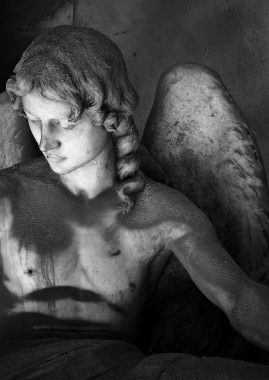
F.Sclavi, Tomba Figari, 1891 by Marco Maraccolo
Anche una volta a voi, allori, e anche una volta
a voi, oscuri mirti con le sempre verdi edere
sono venuto e la mia mano coglie,
prima che l’anno maturi,
le vostre bacche aspre acerbe e vi straziano
dita crudeli le foglie.
Obbligo amaro, evento triste e caro
vuole da me che alteri la debita stagione
perché Lícida è morto, morto prima del fiore,
Lícida cosí giovane! né lasciò chi lo valga.
Chi negherà il suo canto a Lícida? Sapeva
anch’egli il canto e costruire il verso eletto.
Non dovrà navigare nella sua bara d’acqua
nudo di pianto e rotolare nell’acredine del vento
senza qualche armoniosa eco di gemiti.
E dunque incominciate,
sorelle della fonte sacrosanta
che sgorga dal celeste altare; incominciate
e forte un ritmo urti le corde.
Inutile negarsi per scusa o per modestia.
Cosí una qualche Musa
cortese all’urna che mi attende in sorte
per il mio sudario nero preghi pace.
Ché noi siamo cresciuti sulla stessa collina
e un medesimo gregge
abbiamo pascolato
per sorgenti ombre acque.
Insieme noi, prima che gli alti prati illumini
le sue palpebre lente aprendo l’alba,
si imprendeva il cammino; insieme noi
il ronzio si ascoltava
afoso, a mezzo il giorno, dei tafàni,
pascendo il gregge per la guazza della notte
sino a quando la stella che a sera sale splendida
declinava lungo i cieli di occidente.
Si intonavano allora
le voci contadine.
Sui motivi dei flauti
era il ballo dei satiri, dei fauni
dal piè di capra, avidi, vinti
dai ritmi allegri. Anche il vecchio Damèta
godeva di quei canti.
Come tutto è mutato. Andato via tu sei,
andato via e non ritornerai.
Te lamentano i pastori, le foreste, gli spechi
deserti, di timo selvaggio e di vite vagante
gravi, con tutti gli echi loro.
Alla gentile tua elegia non piú vedremo
dei salici e dei verdi noccioleti
gaie oscillare le foglie.
Mortale come l’àcaro alla rosa
o l’elminto agli agnelli
o il gelo ai fiori di vividi lembi
quando spunta per prima l’albaspina,
tale all’udito dei pastori è giunta,
Lícida, la tua fine.
Dove eravate voi, ninfe, quando spietata si chiuse
la marea sulle tempie del nostro amato Lícida?
Vaghe no sulle rupi dove i bardi
vostri antichi, i famosi Druidi, riposano
né sulle vette ardue delle alture
di Mona o dove al mare
si apre la favolosa onda di Deva.
Ma sto sognando. Ah, se anche presenti,
che mai avreste potuto? E che mai
la Musa, la madre di Orfeo, la Musa stessa
per il suo figlio, per l’incantatore
che lamentò universa la natura
quando l’atroce urlio dell’orda
lercio di sangue quel volto nei vortici scaraventò
dell’Ebro, verso le rive di Lesbo?
Ah ma che giova la pena tenace di apprendere
l’umile, la spregiata fatica del pastore
e strenuo meditare musa ingrata;
e non sarebbe meglio, come gli altri, giocare
con Amarillide il gioco tra l’ombre
o con i riccioli sventati di Neèra?
La gloria è sprone che un animo alto
– ultima debolezza di lucido intelletto –
punge a sdegnare i piaceri, a passare i suoi giorni
nel lavoro; ma se
creda di giungere al premio sperato
e nel trionfo abbagliare improvviso
ecco la Furia cieca, le cesoie
odiose ed è reciso
l’esile stame della vita. «Non l’onore»,
Febo mi replicava; e mi toccò,
che tremavo, l’orecchio. «Non è pianta
la gloria, che su questa terra cresca,
non è la lamina che brilla
per la vista del mondo o il grido vano,
ma vive e si dilata nella pura pupilla
dell’assoluto teste, Giove, che tutto giudica.
Quando egli l’ultima sentenza avrà scandita
la gloria ti aspetta, che meriti, in cielo».
O sorgente Aretusa e tu, luminosa corrente,
Mincio che scivoli teso e ti cingono canne canore,
eppure era accento piú alto
quello che ho inteso. E d’altro ancora è in cerca
questa mia melodia e ora ode l’araldo del mare
giunto a discolpa di Nettuno.
Egli chiedeva alle onde, chiedeva ai venti barbari:
che duro caso fu l’estremo al caro giovane?
E interrogò a una a una le raffiche, le rudi
ali dei promontorii aquilonari.
Ma sconosciuto era l’evento
e il savio Eolo rispose per loro:
non un alito in fuga dai suoi carceri,
senza moto l’aria e sul mare tutto calmo
ridevano Pànope tersa e le ninfe sorelle.
La nave fu, perfidia e destino! che costrutta
sotto lutto d’eclissi, che armata fra oscure bestemmie,
tanto a fondo ti ha travolta, testa sacra.
Allora, a passi lenti, il venerabile Chamus
venne, mantella d’alghe, cappello di giunchi
contesto agli orli di strani ricami
color del fiore dove il sangue scrisse un gemito.
«Chi mi rapiva», disse, «il mio pegno piú caro?»
Ultimo venne e ultimo scomparve
il barcaiolo del lago di Galilea. Due chiavi
portava, di grave metallo. (Con quella che è d’oro,
apre; serra forte con quella di ferro).
Scuote i riccioli mitrati. Aspro parla:
«Come per te non avrei pianto, giovane
custode, per chiunque non pensa che al ventre
e striscia e si insinua e si arrampica
nell’ovile né cura altra lo ingombra
che non sia sgomitare per un piatto alla festa
dei tosatori anzi spingerne fuori
chi meritò l’invito.
Bocche cieche! Neanche sanno reggere
la mazza del pastore e quasi tutta ignorano
l’arte di un fido custode di greggia.
Che fare di loro? Che gli manca? Sono sazi.
E se su marci zufoli sfiatati gli garba
stridere certe stolte arie melense,
il popolo, che ha fame, li guarda ma niente
lo può nutrire e si pasce di vento,
nebbia inala corrotta. Va il guasto
e rode. L’infamia dilaga e il contagio.
Astuzia e ferocia, la zampa del lupo
dirada la greggia. Ogni giorno
divora qualcuno. Nessuno ne parla.
Ma l’ordigno a due mani è alla soglia. Sarà
un colpo solo e poi non piú».
Alfeo, ritorna. La voce tremenda
che sospese il tuo corso, è passata. Ritorna,
Musa siciliana, parla ai pendii, domanda
qui colori di corolle innumerevoli.
Valli profonde, aliti di ombre
sottili, venti vagabondi, ambiti d’acque
vive che raro specchiano l’astro riarso di Sirio,
le pupille che bevono miti piogge dai cieli
lucide in mezzo al verde smalto si aprano,
esalti tutta primavera i campi:
precoce qui la primula che muore solitaria
nasca e folto il giacinto, esangue il gelsomino;
sia il garofano bianco, di nero fregio impressa
ardente la viola,
selvatica la rosa, il caprifoglio adorno,
la dimessa campanula assorta a testa china
e ogni fiore che mesta trae un’insegna. Fate
che l’amaranto brilli di sue bellezze e lacrime
stillino lungo i calici i narcisi
al carro irto di lauri dove Lícida giace.
Immagini d’errore vi illudano cosí
di qualche tregua, fragili pensieri!
Ah che le grida delle rive e le maree
diluviano remote sulle tue ossa stronche
dove al di là degli uragani delle Ebridi
forse sotto il potere delle correnti tu
visiti i fondi del mondo mostruoso
o, alle lacrime nostre negato, dormi forse
prossimo alla leggenda di Bellèro
dove l’alta visione della Montagna Armata
guarda verso Namancos e i forti di Bayona.
Guarda ora a noi, Arcangelo, sciolga pietà il tuo pianto.
E voi recatelo, delfini, l’infelice.
Non piú, pastori tristi, non piú lacrime.
Lícida che piangete non è morto
pur se sparí sotto la soglia delle acque.
Spare l’astro del giorno nel letto d’oceano cosí,
che già il capo reclino rianima,
ravviva i raggi e di lucido oro
avvampa in fronte al cielo del mattino.
Sparí in profondo Lícida; ma in alto risalí
per la dolce potenza di Chi camminò sulle onde
dove lungo altri boschi e altre riviere
scioglie dal fango i capelli nel nettare puro
e ode i nuziali indicibili cori
dei reami beati di allegrezza e di amore.
Tutti lassú gli si faranno incontro i santi
in augusti cortei, cerchie soavi
che cantano e cantando in loro gloria muovono
e dagli occhi le lacrime gli asciugano per sempre.
Ora i pastori, Lícida, non piangono piú. Da ora
tu sarai delle rive lo Spirito custode.
Largo è il tuo premio: e tu seconda
noi peregrini per questa onda perigliosa.
Cosí alle querce e alle acque l’ignoto pastore cantava
mentre calmo saliva il mattino di sandali grigi.
E su ineguali fori di gracili avene severo
un ardente pensiero modulava.
E ora il sole ha dilungati tutti i colli
e ora è spento in fondo al golfo d’occidente.
Si levò infine, strinse la sua mantella azzurra.
Domani altre foreste, pascoli nuovi.
John Milton
(Traduzione di Franco Fortini)
da “Il ladro di ciliege e altre versioni di poesia”, “I Supercoralli” Einaudi, 1982
In questa monodia l’Autore piange un suo colto amico che, navigando da Chester, per sventura annegò nei mari d’Irlanda, l’anno 1637. E coglie occasione per predire la rovina del nostro clero corrotto, allora al culmine della sua potenza.
∗∗∗
Yet once more, O ye laurels, and once more
Ye myrtles brown, with ivy never sere,
I come to pluck your berries harsh and crude,
And with forced fingers rude,
Shatter your leaves before the mellowing year.
Bitter constraint, and sad occasion dear,
Compels me to disturb your season due:
For Lycidas is dead, dead ere his prime,
Young Lycidas, and hath not left his peer:
Who would not sing for Lycidas? he knew
Himself to sing, and build the lofty rhyme.
He must not float upon his watery bier
Unwept, and welter to the parching wind,
Without the meed of some melodious tear.
Begin then, sisters of the sacred well,
That from beneath the seat of Jove doth spring,
Begin, and somewhat loudly sweep the string.
Hence with denial vain, and coy excuse,
So may some gentle muse
With lucky words favour my destined urn,
And as he passes turn,
And bid fair peace be to my sable shroud.
For we were nursed upon the self-same hill,
Fed the same flock; by fountain, shade, and rill.
Together both, ere the high lawns appeared
Under the opening eye-lids of the morn,
We drove a-field, and both together heard
What time the grey-fly winds her sultry horn,
Battening our flocks with the fresh dews of night,
Oft till the star that rose, at evening, bright,
Toward heaven’s descent had sloped his westering wheel.
Meanwhile the rural ditties were not mute,
Tempered to the oaten flute,
Rough satyrs danced, and fauns with cloven heel,
From the glad sound would not be absent long,
And old Damaetas loved to hear our song.
But O the heavy change, now thou art gone,
Now thou art gone, and never must return!
Thee shepherd, thee the woods, and desert caves,
With wild thyme and the gadding vine o’ergrown,
And all their echoes mourn.
The willows, and the hazel copses green,
Shall now no more be seen,
Fanning their joyous leaves to thy soft lays.
As killing as the canker to the rose,
Or taint-worm to the weanling herds that graze,
Or frost to flowers, that their gay wardrobe wear,
When first the white-thorn blows;
Such, Lycidas, thy loss to shepherd’s ear.
Where were ye nymphs when the remorseless deep
Closed o’er the head of your loved Lycidas?
For neither were ye playing on the steep,
Where your old bards, the famous Druids, lie,
Nor on the shaggy top of Mona high,
Nor yet where Deva spreads her wizard stream:
Ay me, I fondly dream!
Had ye been there… for what could that have done?
What could the muse herself that Orpheus bore,
The muse herself for her enchanting son
Whom universal nature did lament,
When by the rout that made the hideous roar,
His gory visage down the stream was sent,
Down the swift Hebrus to the Lesbian shore.
Alas! What boots it with uncessant care
To tend the homely slighted shepherd’s trade,
And strictly meditate the thankless muse,
Were it not better done as others use,
To sport with Amaryllis in the shade,
Or with the tangles of Neaera’s hair?
Fame is the spur that the clear spirit doth raise
(That last infirmity of noble mind)
To scorn delights, and live laborious days;
But the fair guerdon when we hope to find,
And think to burst out into sudden blaze,
Comes the blind Fury with th’ abhorred shears,
And slits the thin-spun life. But not the praise,
Phoebus replied, and touched may trembling ears;
Fame is no plant that grows on mortal soil,
Nor in the glistering foil
Set off to the world, nor in broad rumour lies,
But lives and spreads aloft by those pure eyes,
And perfect witness of all-judging Jove;
As he pronounces lastly on each deed,
Of so much fame in heaven expect thy meed.
O fountain Arethuse, and thou honoured flood,
Smooth-sliding Mincius, crowned with vocal reeds,
That strain I heard was of a higher mood:
But now my oat proceeds,
And listens to the herald of the sea
That came in Neptune’s plea,
He asked the waves, and asked the felon winds,
What hard mishap hath doomed this gentle swain?
And questioned every gust of rugged wings
That blows from off each beaked promontory;
They knew not of his story,
And sage Hippotades their answer brings,
That not a blast was from his dungeon strayed,
The air was calm, and on the level brine,
Sleek Panope with all her sisters played.
It was that fatal and perfidious bark
Built in the eclipse, and rigged with curses dark,
That sunk so low that sacred head of thine.
Next Camus, reverend sire, went footing slow,
His mantle hairy, and his bonnet sedge,
Inwrought with figures dim, and on the edge
Like to that sanguine flower inscribed with woe.
Ah; who hath reft (quoth he) my dearest pledge?
Last came, and last did go,
The pilot of the Galilean lake,
Two massy keys he bore of metals twain.
(The golden opes, the iron shuts amain)
He shook his mitred locks, and stern bespake,
How well could I have spared for thee, young swain,
Enow of such as for their bellies’ sake,
Creep and intrude, and climb into the fold?
Of other care they little reckoning make,
Than how to scramble at the shearers’ feast,
And shove away the worthy bidden guest;
Blind mouths! that scarce themselves know how to hold
A sheep-hook, or have learned aught else the least
That to the faithful herdman’s art belongs!
What recks it them? What need they? They are sped;
And when they list, their lean and flashy songs
Grate on their scrannel pipes of wretched straw,
The hungry sheep look up, and are not fed,
But swoll’n with wind, and the rank mist they draw,
Rot inwardly, and foul contagion spread:
Besides what the grim wolf with privy paw
Daily devours apace, and nothing said,
But that two-handed engine at the door,
Stands ready to smite once, and smite no more.
Return Alpheus, the dread voice is past,
That shrunk thy streams; return Sicilian muse,
And call the vales, and bid them hither cast
Their bells, and flowrets of a thousand hues.
Ye valleys low where the mild whispers use,
Of shades and wanton winds, and gushing brooks,
On whose fresh lap the swart star sparely looks,
Throw hither all your quaint enamelled eyes,
That on the green turf suck the honied showers,
And purple all the ground with vernal flowers.
Bring the rathe primrose that forsaken dies,
The tufted crow-toe, and pale jessamine,
The white pink, and the pansy freaked with jet,
The glowing violet
The musk-rose, and the well-attired woodbine,
With cowslips wan that hang the pensive head,
And every flower that sad embroidery wears:
Bid amaranthus all his beauty shed,
And daffadillies fill their cups with tears,
To strew the laureate hearse where Lycid lies.
For so to interpose a little ease,
Let our frail thoughts dally with false surmise.
Ay me! Whilst thee the shores, and sounding seas
Wash far away, where’er thy bones are hurled,
Whether beyond the stormy Hebrides
Where thou perhaps under the whelming tide
Visit’st the bottom of the monstrous world;
Or whether thou to our moist vows denied,
Sleep’st by the fable of Bellerus old,
Where the great vision of the guarded mount
Looks toward Namancos and Bayona’s hold;
Look homeward angel now, and melt with ruth.
And, O ye dolphins, waft the hapless youth.
Weep no more, woeful shepherds weep no more,
For Lycidas your sorrow is not dead,
Sunk though he be beneath the watery floor,
So sinks the day-star in the ocean bed,
And yet anon repairs his drooping head,
And tricks his beams, and with new spangled ore,
Flames in the forehead of the morning sky:
So Lycidas sunk low, but mounted high,
Through the dear might of him that walked the waves
Where other groves, and other streams along,
With nectar pure his oozy locks he laves,
And hears the unexpressive nuptial song,
In the blest kingdoms meek of joy and love.
There entertain him all the saints above,
In solemn troops, and sweet societies
That sing, and singing in their glory move,
And wipe the tears for ever from his eyes.
Now Lycidas the shepherds weep no more;
Henceforth thou art the genius of the shore,
In thy large recompense, and shalt be good
To all that wander in that perilous flood.
Thus sang the uncouth swain to the oaks and rills,
While the still morn went out with sandals grey,
He touched the tender stops of various quills,
With eager thought warbling his Doric lay:
And now the sun had stretched out all the hills,
And now was dropped into the western bay;
At last he rose, and twitched his mantle blue:
Tomorrow to fresh woods, and pastures new.
John Milton
da “The Poems of John Milton”, ed. John Carey and Alastair Fowler, Annotaded English Poets, Longmans 1968
In this monody the author bewails a learned friend, unfortunately drowned in his passage from Chester on the Irish Seas, 1637. And by occasion foretells the ruin of our corrupted clergy then in their height.





 Poesia in rete