Mappa del Nuovo Mondo – Derek Walcott

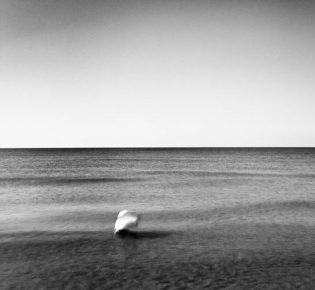
Foto di Chris Felver


                                             Arcipelaghi

Alla fine di questa frase, comincerà la pioggia.
All’orlo della pioggia, una vela.

Lenta la vela perderà di vista le isole;
in una foschia se ne andrà la fede nei porti
di un’intera razza.

La guerra dei dieci anni è finita.
La chioma di Elena, una nuvola grigia.
Troia, un bianco accumulo di cenere
vicino al gocciolar del mare.

Il gocciolio si tende come le corde di un’arpa.
Un uomo con occhi annuvolati raccoglie la pioggia
e pizzica il primo verso dell’Odissea.

Derek Walcott

(Traduzione di Barbara Bianchi)

da “Mappa del nuovo mondo”, Adelphi Edizioni, 1992

∗∗∗

Map of the New World

                  I. Archipelagoes

At the end of this sentence, rain will begin.
At the rain’s edge, a sail.

Slowly the sail will lose sight of islands;
into a mist will go the belief in harbors
of an entire race.

The ten-years war is finished.
Helen’s hair, a gray cloud.
Troy, a white ashpit
by the drizzling sea.

The drizzle tightens like the strings of a harp.
A man with clouded eyes picks up the rain
and plucks the first line of the Odyssey.

Derek Walcott

da “The Fortunate Traveller” (1982), in “Collected Poems”, 1948-1984, Farrar Straus & Giroux, 1987 

Una mappa d’Europa – Derek Walcott

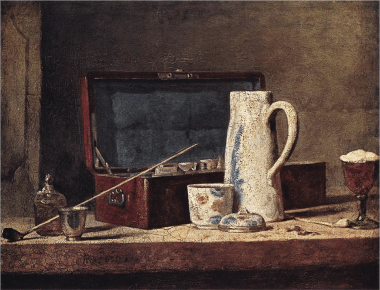
Dipinto di Jean-Baptiste-Siméon Chardin


Come l’idea di Leonardo
dove paesaggi s’aprono su gocce d’acqua
o i draghi s’accovacciano a macchie,
il mio scrostato muro nell’aria chiara
disegna di vena in vena una mappa d’Europa.

Sul davanzale dipinto
l’orlo dorato d’una lattina brilla come
lungo un lago di Canaletto la sera
o come quell’eremo di roccia
dove nella sua cella di luce Gerolamo prega
sparuto che il Suo regno giunga
alla lontana città.

La luce si fa quiete. Nel suo cerchio
tutto è. Una tazzina crepata,
un pane rotto, un’urna scalfita diventano
sé, come in Chardin,
o nel chiaro alcolico di Vermeer,
non oggetti della nostra pietà.

Non lacrimae rerum,
non arte. Nient’altro che il dono
di vedere le cose come sono, dimezzate dal buio
da cui non sanno staccarsi.

Derek Walcott

(Traduzione di Nicola Gardini)

dalla rivista “Poesia”, Anno IX, Novembre 1996, N. 100, Crocetti Editore 

∗∗∗

A Map of Europe

Like Leonardo’s idea
Where landscapes open on a waterdrop
Or dragons couch in stains,
My flaking wall, in the bright air,
Maps Europe with its veins.

On its limned window ledge
A beer can’s gilded rim gleams like
Evening along a Canaletto lake,
Or like that rocky hermitage
Where, in his cell of light, haggard Gerome
Prays that His kingdom come
To the far city.

The light creates its stillness. In its ring
Everything is. A cracked coffee cup,
A broken loaf, a dented urn become
Themselves, as in Chardin,
Or in beer-bright Vermeer,

Not objects of our pity.
In it is no lacrimae rerum,
No art. Only the gift
To see things as they are, halved by a darkness
From which they cannot shift.

Derek Walcott

da “Collected Poems 1948-1984”, London-Boston, Faber & Faber, 1992

Il pugno – Derek Walcott

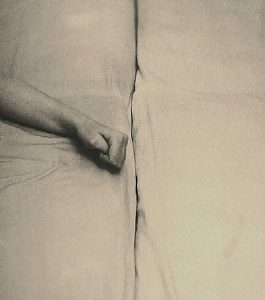
Rudolf Bonvie, Dialog, 1973


Il pugno stretto intorno al mio cuore
si allenta un poco, e io respiro ansioso
luce; ma già preme
di nuovo. Quando mai non ho amato
la pena d’amore? Ma questa si è spinta

oltre l’amore fino alla mania. Questa
ha la forte stretta del demente, questa
si aggrappa alla cornice della non-ragione, prima
di sprofondare urlando nell’abisso.

Tieni duro allora, cuore. Così almeno vivi.

Derek Walcott

(Traduzione di Gilberto Forti)

da “Mappa del nuovo mondo”, Adelphi, Milano, 1992

∗∗∗

The Fist

The fist clenched round my heart
loosens a little, and I gasp
brightness; but it tightens
again. When have I ever not loved
the pain of love? But this has moved

past love to mania. This has the strong
clench of the madman, this is
gripping the ledge of unreason, before
plunging howling into the abyss.

Hold hard then, heart. This way at least you live.

Derek Walcott

da “Sea Grapes”, London: Jonathan Cape Ltd; New York: Farrar, Straus & Giroux, 1976

Il mare è Storia – Derek Walcott

Foto di Mimmo Jodice


Dove sono i vostri monumenti, le vostre battaglie, màrtiri?
Dov’è la vostra memoria tribale? Signori,
in quella grigia volta. Il mare. Il mare
li rinchiude. Il mare è Storia.

All’inizio ribolliva l’olio,
pesante come il caos;
poi, come una luce in fondo a una galleria,

la lanterna d’una caravella,
e quella fu la Genesi.
Poi ci furono gli urli assordanti,
la merda, i lamenti:

l’Esodo.
Osso ad osso saldato dal corallo,
mosaici
avvolti dall’ombra benedicente dello squalo,

quella fu l’Arca della Testimonianza.
Poi vennero dai pizzicati fili
della luce sul fondo del mare
l’arpe dolenti della cattività babilonese,
quali le bianche cipree agglomerate come manette
sulle donne annegate,
e quelli furono gli eburnei bracciali
del Canto di Salomone,
ma il mare continuava a voltare pagine bianche

cercando la Storia.
Poi vennero gli uomini con occhi pesanti come ancore
che affondavano senza tombe,

briganti che grigliavano bestiame,
lasciando le loro costole carbonizzate come foglie di palma sul lido,
poi lo schiumoso, feroce gabbiano

della marea che ingoia Port Royal,
e quello fu Giona,
ma dov’è il vostro Rinascimento?

Signore, è chiuso in quelle sabbie
laggiù oltre il fiacco piano del frangente,
dove gli uomini di guerra scendevano;

metti gli occhiali subacquei, ti ci porterò io,
È tutto impalpabile e glauco
tra i colonnati di corallo,

oltre le finestre gotiche delle gorgonie
fin dove la crostosa cernia, occhivenata,
ammicca, carica dei suoi gioielli, come una calva regina;

e queste grotte lunettate con cirripedi
bucherellati come pietra
sono le nostre cattedrali,

e la fornace prima degli uragani:
Gomorra. Ossa tritate dai mulini a vento
in marna e crusca −

ecco le Lamentazioni −
nient’altro che Lamentazioni,
non Storia;

poi vennero, come schiuma sul labbro semiasciutto del fiume,
le brune canne dei villaggi
che spumeggiano e congelano in città,

e la sera, i cori dei moscerini,
e, sopra, le cuspidi
spinte nel fianco di Dio
mentre Suo figlio moriva, e quello fu il Nuovo Testamento.

Poi vennero le bianche sorelle che applaudivano
il progresso dell’onda,
ed ecco l’Emancipazione −
giubilo, giubilo −
presto svanito
mentre il pizzo del mare s’asciugava al sole,

ma non era la Storia,
non era che fede,
e poi ogni roccia divenne nazione a sé;

poi venne il sinodo delle mosche,
poi venne l’airone segretariale,
poi venne la rumorosa rana toro in cerca di voti,

lucciole con idee brillanti
e pipistrelli come ambasciatori volanti
e la mantide, come una poliziotta in cachi,

e i pelosi bruchi dei giudici
che esaminavano ogni caso da vicino,
e poi nelle scure orecchie delle felci

e nel gorgoglio salino delle rocce
con i loro stagni di mare ecco il suono
come un sussurro senza alcun’ eco

della Storia, che incomincia.

Derek Walcott

(Traduzione di Nicola Gardini)

dalla rivista “Poesia”, Anno XVIII, Dicembre 2005, N. 200, Crocetti Editore

∗∗∗

The sea is History

Where are your monuments, your battles, martyrs?
Where is your tribal memory? Sirs,
in that gray vault. The sea. The sea
has locked them up. The sea is History.

First, there was the heaving oil,
heavy as chaos;
then, like a light at the end of a tunnel,

the lantern of a caravel,
and that was Genesis.
Then there were the packed cries,
the shit, the moaning:

Exodus.
Bone soldered by coral to bone,
mosaics
mantled by the benediction of the shark’s shadow,

that was the Ark of the Covenant.
Then came from the plucked wires
of sunlight on the sea floor

the plangent harps of the Babylonian bondage,
as the white cowries clustered like manacles
on the drowned women,

and those were the ivory bracelets
of the Song of Solomon,
but the ocean kept turning blank pages

looking for History.
Then came the men with eyes heavy as anchors
who sank without tombs,

brigands who barbecued cattle,
leaving their charred ribs like palm leaves on the shore,
then the foaming, rabid maw

of the tidal wave swallowing Port Royal,
and that was Jonah,
but where is your Renaissance?

Sir, it is locked in them sea sands
out there past the reef’s moiling shelf,
where the men-o’-war floated down;

strop on these goggles, I’ll guide you there myself.
It’s all subtle and submarine,
through colonnades of coral,

past the gothic windows of sea fans
to where the crusty grouper, onyx-eyed,
blinks, weighted by its jewels, like a bald queen;

and these groined caves with barnacles
pitted like stone
are our cathedrals,

and the furnace before the hurricanes:
Gomorrah. Bones ground by windmills
into marl and cornmeal,

and that was Lamentations—
that was just Lamentations,
it was not History;

then came, like scum on the river’s drying lip,
the brown reeds of villages
mantling and congealing into towns,

and at evening, the midges’ choirs,
and above them, the spires
lancing the side of God

as His son set, and that was the New Testament.

Then came the white sisters clapping
to the waves’ progress,
and that was Emancipation—

jubilation, O jubilation—
vanishing swiftly
as the sea’s lace dries in the sun,

but that was not History,
that was only faith,
and then each rock broke into its own nation;

then came the synod of flies,
then came the secretarial heron,
then came the bullfrog bellowing for a vote,

fireflies with bright ideas
and bats like jetting ambassadors
and the mantis, like khaki police,

and the furred caterpillars of judges
examining each case closely,
and then in the dark ears of ferns

and in the salt chuckle of rocks
with their sea pools, there was the sound
like a rumor without any echo

of History, really beginning.

Derek Walcott

da “The Star-Apple Kingdom”, New York: Farrar, Straus & Giroux, 1979

Nel village – Derek Walcott

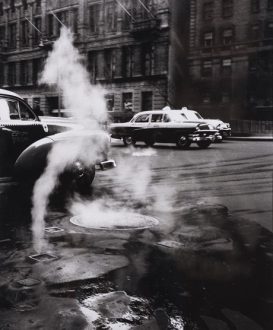
Mario de Biasi, New York, 1955

I

Stavo salendo dalla metro e c’erano delle persone
ferme sui gradini come se sapessero qualcosa
che io non sapevo. Erano gli anni della Guerra Fredda
e della pioggia radioattiva. Ho guardato e l’intera avenue
era vuota, letteralmente intendo, e ho pensato:
Gli uccelli hanno lasciato le città e la piaga
del silenzio si moltiplica nelle loro arterie, c’è stata
la guerra e l’hanno persa e non c’è niente di sottile o di vago
in questo vuoto terrificante che è New York. Ho còlto
il rumore di un altoparlante che avvisava ripetutamente
le ultime persone, forse amanti a passeggio,
che il mondo stava per finire quella mattina
sulla Sesta o la Settima senza gente che andava al lavoro
in quella prospettiva terrificante e non contraddetta.
Non era il modo di morire, ma neanche di vivere.
Be’, se fossimo bruciati, almeno eravamo a New York.

II

A New York vivono tutti in una sit-com.
Io, in un romanzo latinoamericano, uno
in cui un viejo dai capelli color egretta è scosso
da un dolore invisibile, un’oscena afflizione, 
e l’annota segretamente, finché non gliela leggi in faccia,
le rughe parentetiche che, con suo sommo imbarazzo,
confermano il racconto. Senti, è solo la vecchia
storia di un cuore che non vuole darsi per vinto,
anche senza speranze, donchisciottesco. È solo uno che
non spezzerà il cuore a nessuno, anche se il colonnello brizzolato
si rizzasse sul suo destriero alla carica, in una battaglia
che non gli varrà una statua. È il sortilegio
di un normale amore non corrisposto. Guarda queste egrette
che incedono sul prato in truppe scomposte, bianche insegne
che arrancano derelitte; sono i rimpianti scoloriti
delle memorie di un vecchio, le loro strofe mai scritte.
Pagine che svolazzano come ali sul prato, segreti svelati.

III

Chi mi ha tolto la macchina per scrivere dalla scrivania,
così che adesso sono un musicista senza piano
con il vuoto davanti, limpido e grottesco come un’altra
primavera? Le mie vene gemmano, sono così pieno
di poesie, un cestino colmo di fili neri.
Fuori le note sono visibili; i passeri punteggeranno
le antenne come pentagrammi, com’erano le primavere,
ma i tetti sono freddi e il grande fiume grigio
con una nave che passa, enorme come una collina in inverno,
si muove impercettibilmente come gli anni
che si accumulano. Non ho ragione di perdonarla
per ciò che mi sono fatto da solo. Ho vinto l’odio,
il desiderio dell’Italia dove le raffiche di neve
assolvono e imbiancano le montagne inginocchiate
fuori Milano. Dietro il vetro, aspetto che il richiamo
di un uccello scardini l’inizio della primavera,
ma le mie mani, il mio lavoro, mi sembrano strani
senza la musica arrugginita della mia macchina. Nessuna parola
per la nave artica che scende lungo l’Hudson, per la scabbia
della neve che si scrosta dai tetti. Nessuna poesia. Nessun uccello.

IV
IL SWEET LIFE CAFÉ

Se sprofondo in un silenzio brizzolato
a volte, sulla tovaglia a scacchi rossi
fuori dal Sweet Life Café, quando il rumore
del traffico domenicale nel Village è lieve come una falena
indaffarata in un ripostiglio, è per via dell’età,
cosa che di rado ammetto, o, onestamente, persino penso.
I miei furori sono intatti, anche se la mia rabbia domestica
è illogica, diabetica, senza alcuna diminuzione dell’amore
anche se la mia mano trema follemente, ma non su questa pagina.
La mia lussuria è in piena forma, ma, se anche
tutte le mie torri si sgretolassero come sabbia,
la gioia continuerà a piegare i canneti con l’esultanza
della mia penna sulla strada per Vieuxfort con la citronella
bianca nel sole e, come per il mare che si frange
nella baia a Praslin, anche loro si sommano alla grazia
che ho provato e che la morte porterà via
dalla mia mano su questa tovaglia a scacchi in questo bel posto.

Derek Walcott

(Traduzione di Matteo Campagnoli)

da “Egrette bianche”, Adelphi Edizioni, 2015

∗∗∗

In the Village

I

I came up out of the subway and there were
people standing on the steps as if they knew
something I didn’t. This was in the Cold War,
and nuclear fallout. I looked and the whole avenue
was empty, I mean utterly, and I thought,
The birds have abandoned our cities and the plague
of silence multiplies through their arteries, they fought
the war and they lost and there’s nothing subtle or vague
in this horrifying vacuum that is New York. I caught
the blare of a loudspeaker repeatedly warning
the last few people, maybe strolling lovers in their walk,
that the world was about to end that morning
on Sixth or Seventh Avenue with no people going to work
in that uncontradicted, horrifying perspective.
It was no way to die, but it’s also no way to live.
Well, if we burnt, it was at least New York.

II

Everybody in New York is in a sitcom.
I’m in a Latin American novel, one
in which an egret-haired viejo shakes with some
invisible sorrow, some obscene affliction,
and chronicles it secretly, till it shows in his face,
the parenthetical wrinkles confirming his fiction
to his deep embarrassment. Look, it’s
just the old story of a heart that won’t call it quits
whatever the odds, quixotic. It’s just one that’ll
break nobody’s heart, even if the grizzled colonel
pitches from his steed in a cavalry charge, in a battle
that won’t make him a statue. It is the hell
of ordinary, unrequited love. Watch those egrets
trudging the lawn in a dishevelled troop, white banners
trailing forlornly; they are the bleached regrets
of an old man’s memoirs, printed stanzas
showing their hinged wings like wide open secrets.

III

Who has removed the typewriter from my desk,
so that I am a musician without his piano
with emptiness ahead as clear and grotesque
as another spring? My veins bud, and I am so
full of poems, a wastebasket of black wire.
The notes outside are visible; sparrows will
line antennae like staves, the way springs were,
but the roofs are cold and the great grey river
where a liner glides, huge as a winter hill,
moves imperceptibly like the accumulating
years. I have no reason to forgive her
for what I brought on myself. I am past hating,
past the longing for Italy where blowing snow
absolves and whitens a kneeling mountain range
outside Milan. Through glass, I am waiting
for the sound of a bird to unhinge the beginning
of spring, but my hands, my work, feel strange
without the rusty music of my machine. No words
for the Arctic liner moving down the Hudson, for the mange
of old snow moulting from the roofs. No poems. No birds.

IV
THE SWEET LIFE CAFÉ

If I fall into a grizzled stillness
sometimes, over the red-chequered tablecloth
outdoors of the Sweet Life Café, when the noise
of Sunday traffic in the Village is soft as a moth
working in storage, it is because of age
which I rarely admit to, or, honestly, even think of.
I have kept the same furies, though my domestic rage
is illogical, diabetic, with no lessening of love
though my hand trembles wildly, but not over this page.
My lust is in great health, but, if it happens
that all my towers shrivel to dribbling sand,
joy will still bend the cane-reeds with my pen’s
elation on the road to Vieuxfort with fever-grass
white in the sun, and, as for the sea breaking
in the gap at Praslin, they add up to the grace
I have known and which death will be taking
from my hand on this chequered tablecloth in this good place.

Derek Walcott

da “White Egrets”, New York: Farrar, Straus & Giroux, 2010