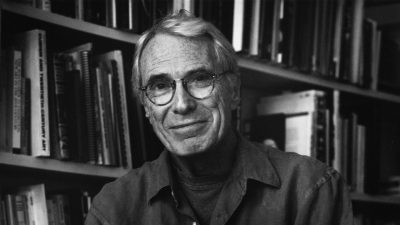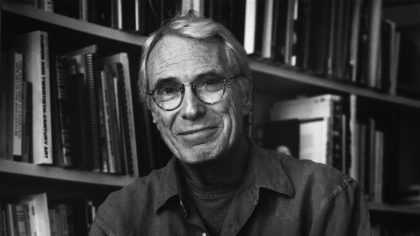
Tenere insieme le cose – Mark Strand


In un campo
io sono l’assenza
del campo.
È
sempre così.
Ovunque sia
io sono ciò che manca.

Quando cammino
divido l’aria
e sempre
l’aria rifluisce
a riempire gli spazi
in cui era stato il mio corpo.

Abbiamo tutti motivi
per muoverci.
Io mi muovo
per tenere insieme le cose.

Mark Strand

(Traduzione di Damiano Abeni con Moira Egan)

da “Motivi per muoversi”, 1968,  in “Mark Strand, Tutte le poesie”, Mondadori, 2019

∗∗∗

Keeping Things Whole

In a field
I am the absence
of field.
This is
always the case.
Wherever I am
I am what is missing.

When I walk
I part the air
and always
the air moves in
to fill the spaces
where my body’s been.

We all have reasons
for moving.
I move
to keep things whole.

Mark Strand

da “Reasons for Moving”, 1968, in “Collected Poems”, New York, Alfred A. Knopf/ Random House, 2014

La storia della poesia – Mark Strand

Foto di Chris Felver


I nostri maestri se ne sono andati e se tornassero
chi tra noi li sentirebbe, chi riconoscerebbe
il suono corporeo del paradiso o il paradisiaco
suono del corpo, infinito ed evanescente, che dava sintonia
ai nostri giorni prima che le stelle roteanti
venissero private di ogni potere? La risposta è
nessuno di noi qui. E cosa significa se vediamo
le montagne invetriate di luna e il paese con le porte
e i serbatoi piezometrici muti, e ci viene da alzare la voce
un poco, o a volte a fine autunno
quando la sera fiorisce un momento sui monti a occidente
e ci immaginiamo angeli che si precipitano lungo gli scalini freddi
dell’aria per augurarci il bene, se abbiamo perso ogni volontà
e non facciamo altro che poltrire, udendo e non udendo, i sospiri
di questa o quella brezza vagare senza meta sulle fattorie in malora
e i giardini sterili? Questi giorni quando ci svegliamo
ogni cosa risplende della stessa luce celeste
che colmava il nostro sonno qualche minuto prima,
così non facciamo altro se non contare alberi, nubi,
i pochi uccelli rimasti; poi decidiamo che non dovremmo
essere severi con noi stessi, che il passato non era meglio
di adesso, perché non è forse sempre esistito il nemico,
e la chiesa del mondo non era già in macerie?

Mark Strand

(Traduzione di Damiano Abeni con Moira Egan)

da “La vita ininterrotta”, 1990, in “Mark Strand, Tutte le poesie”, Mondadori, 2019

∗∗∗

The history of poetry

Our masters are gone and if they returned
Who among us would hear them, who would know
The bodily sound of heaven or the heavenly sound
Of the body, endless and vanishing, that tuned
Our days before the wheeling stars
Were stripped of power? The answer is
None of us here. And what does it mean if we see
The moon-glazed mountains and the town with its silent doors
And water towers, and feel like raising our voices
Just a little, or sometimes during late autumn
When the evening flowers a moment over the western range
And we imagine angels rushing down the air’s cold steps
To wish us well, if we have lost our will,
And do nothing but doze, half-hearing the sighs
Of this or that breeze drift aimlessly over the failed farms
And wasted gardens? These days when we waken,
Everything shines with the same blue light
That filled our sleep moments before,
So we do nothing but count the trees, the clouds,
The few birds left; then we decide that we shouldn’t
Be hard on ourselves, that the past was no better
Than now, for hasn’t the enemy always existed,
And wasn’t the church of the world already in ruins?

Mark Strand

da “The Continuous Life”, in “Collected Poems”, Alfred A. Knopf, 2014

La fine – Mark Strand

Mark Strand, photo di Chris Felver


Non ogni uomo sa cosa canterà alla fine,
guardando il molo mentre la nave salpa, o cosa sentirà
quando sarà preso dal rombo del mare, immobile, là alla fine,
o cosa spererà una volta capito che non tornerà più.

Quando è passato il tempo di potare la rosa, coccolare il gatto,
quando il tramonto che infiamma il prato e la luna piena che lo gela
non compariranno più, non ogni uomo sa cosa scoprirà al loro posto.
Quando il peso del passato non si appoggia a nulla, e il cielo

non è più che luce ricordata, e le storie di cirro
e cumulo giungono alla fine, e tutti gli uccelli stanno sospesi in volo,
non ogni uomo sa cosa lo attende, o cosa canterà
quando la nave su cui si trova scivola nel buio, là alla fine.

Mark Strand

(Traduzione di Damiano Abeni)

da “La vita ininterrotta”, 1990,  in “Mark Strand, Tutte le poesie”, Mondadori, 2019

***

The end

Not every man knows what he shall sing at the end,
Watching the pier as the ship sails away, or what it will seem like
When he’s held by the sea’s roar, motionless, there at the end,
Or what he shall hope for once it is clear that he’ll never go back.

When the time has passed to prune the rose or caress the cat,
When the sunset torching the lawn and the full moon icing it down
No longer appear, not every man knows what he’ll discover instead.
When the weight of the past leans against nothing, and the sky

Is no more than remembered light, and the stories of cirrus
And cumulus come to a close, and all the birds are suspended in flight,
Not every man knows what is waiting for him, or what he shall sing
When the ship he is on slips into darkness, there at the end.

Mark Strand

da “The continuous life”, Alfred A. Knopf, New York, 1990
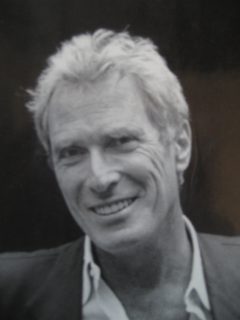
La collina – Mark Strand


Sono arrivato fin qui con le mie gambe,
perso l’autobus, persi i taxi,
sempre in salita. Un piede avanti all’altro,
è così che faccio.

Non mi inquieta, la collina di cui non vedo fine.
Erba sul ciglio della strada, un albero che fa risuonare
le foglie nere. E allora?
Più cammino, più mi allontano da tutto.

Un piede avanti all’altro. Passano le ore.
Un piede avanti all’altro. Passano gli anni.
I colori dell’arrivo sbiadiscono.
È così che faccio.

Mark Strand

(Traduzione di Damiano Abeni)

da “Il futuro non è più quello di una volta”, minimum fax, Roma, 2006

∗∗∗

The hill

I have come this far on my own legs,
missing the bus, missing taxis,
climbing always. One foot in front of the other,
that is the way I do it.

It does not bother me, the way the hill goes on.
Grass beside the road, a tree rattling
its black leaves. So what?
The longer I walk, the farther I am from everything.

One foot in front of the other. The hours pass.
One foot in front of the other. The years pass.
The colors of arrival fade.
That is the way I do it.

Mark Strand

da “Darker: poems”, Atheneum, 1970

Specchio – Mark Strand

Robert Hutinski, The Mirror


Un salone bianco nel vivo di una festa
e io stavo con amici
sotto un grande specchio dalla cornice dorata
leggermente inclinato in avanti
sopra al caminetto.
Bevevamo whisky
e alcuni tra noi, non provando dolore,
disquisivano
su quale fosse l’esatta sfumatura di giallo
che il sole cadente conferiva ai nostri bicchieri.
Chiusi gli occhi solo per un poco
poi alzai lo sguardo allo specchio:
una donna vestita di verde stava
appoggiata alla parete più lontana.
Pareva assente,
le dita di una mano
giocavano nervose con la collana,
e lei guardava fisso nello specchio
non me, ma oltre di me, uno spazio
che poteva essere colmato da qualcuno
che ancora doveva arrivare, che in quell’istante
forse iniziava il viaggio
che l’avrebbe condotto da lei.
Poi, d’improvviso, gli amici
dissero che era ora di muoversi.
Sono passati anni,
e anche se ho scordato
dove andammo e chi fossimo,
ricordo ancora l’istante in cui alzai lo sguardo
e vidi la donna guardare fisso oltre di me
un luogo che potevo solo immaginare
e ogni volta provo una pena acuta,
come se in quel momento uscissi
dalle profondità dello specchio
ed entrassi nel salone bianco, ansimante e ardente,
soltanto per scoprire troppo tardi
che lei lì non c’è.

Mark Strand

(Traduzione di Damiano Abeni)

da “Uomo e cammello”, “Lo Specchio” Mondadori, 2007

***

Mirror

A white room and a party going on
and I was standing with some friends
under a large gilt-framed mirror
that tilted slightly forward
over the fireplace.
We were drinking whiskey
and some of us, feeling no pain,
were trying to decide
what precise shade of yellow
the setting sun turned our drinks.
I closed my eyes briefly,
then looked up into the mirror:
a woman in a green dress leaned
against the far wall.
She seemed distracted,
the fingers of one hand
fidgeted with her necklace,
and she was staring into the mirror,
not at me, but past me, into a space
that might be filled by someone
yet to arrive, who at that moment
could be starting the journey
which would lead eventually to her.
Then, suddenly, my friends
said it was time to move on.
This was years ago,
and though I have forgotten
where we went and who we all were,
I still recall that moment of looking up
and seeing the woman stare past me
into a place I could only imagine,
and each time it is with a pang,
as if just then I were stepping
from the depths of the mirror
into that white room, breathless and eager,
only to discover too late
that she is not there.

Mark Strand

da “Man and Camel”, Alfred A. Knopf, 2006