Una forgia e una falce – Raymond Carver

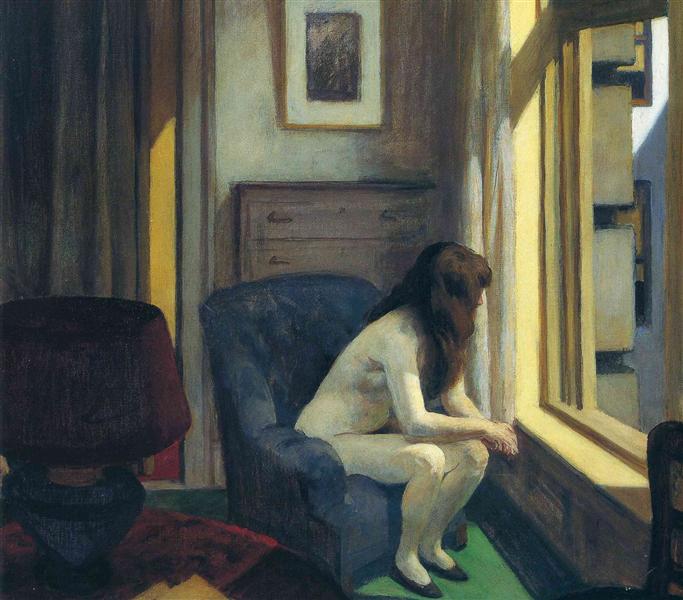
Edward Hopper, Eleven A.M., 1926


Un minuto fa avevo le finestre aperte
e c’era il sole. Tiepide brezze
attraversavano la stanza.
(L’ho scritto anche in una lettera.)
Poi, sotto i miei occhi, si è fatto buio.
Il mare ha cominciato a incresparsi
e le barche da diporto che erano a pesca
hanno virato e sono rientrate, una flottiglia.
Il tintinnabolo sotto al portico è caduto
di colpo sotto una raffica, le cime degli alberi
tremavano. Il tubo della stufa cigolava e sbatteva
trattenuto dai tiranti.
Ho detto: «Una forgia e una falce».
Certe volte parlo da solo, così.
Nomino certe cose:
argano, gomma limo, foglia, fornace.
Il tuo volto, la tua bocca, le tue spalle
ora sono per me inconcepibili!
Che fine hanno fatto? È come se
li avessi sognati. I sassi che abbiamo portato
a casa dalla spiaggia se ne stanno lì
sul davanzale a raffreddarsi.
Torna a casa. Mi senti?
I miei polmoni sono pieni del fumo
della tua assenza.

Raymond Carver

(Traduzione di Riccardo Duranti)

da “Racconti in forma di poesia”, Ed. Minimum Fax, 1999

∗∗∗

A forge, and a scythe

One minute I had the windows open
and the sun was out. Warm breezes
blew through the room.
(I remarked on this in a letter.)
Then, while I watched, it grew dark.
The water began whitecapping.
All the sport-fishing boats turned
and headed in, a little fleet.
Those wind-chimes on the porch
blew down. The tops of our trees shook.
The stove pipe squeaked and rattled
around in its moorings.
I said, “A forge, and a scythe.”
I talk to myself like this.
Saying the names of things —
capstan, hawser, loam, leaf, furnace.
Your face, your mouth, your shoulder
inconceivable to me now!
Where did they go? It’s like
I dreamed them.  The stones we brought
home from the beach lie face up
on the windowsill, cooling.
Come home. Do you hear?
My lungs are thick with the smoke
of your absence.  

Raymond Carver

da “All Of Us: The Collected Poems”, New York: Alfred A.Knopf, 1998

La foglia – John Williams

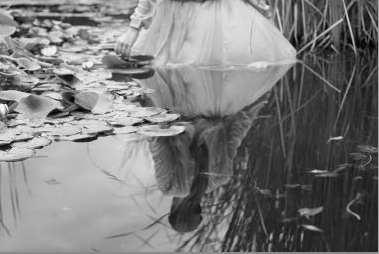
Foto di Cristina Robles


             La quiete del giorno
             le si scorge negli occhi
      dove lo stagno e l’immagine di quello
    si mescolano: grigia cade la foglia
            dall’albero marcito,
            inseguita dall’acqua.

           Ma l’acqua è immobile,
           e questo giorno quieto
     è la foglia più secca dell’autunno;
   lo stagno la contiene e lei galleggia,
           e tiene l’acqua
           tutta in basso,

            e tiene il cielo,
            e quella malinconica signora
         che in loro coglie – foglia,
      cielo e stagno – la sua intricata visione
            del quieto giorno.
            È diventata

             la figura più densa
             in serbo alla stagione.
     Così questa luce d’autunno
   s’è compiuta, fonte viva
           è percepita
           è penetrata.

            Era una dama
            nella più azzurra delle vesti
       del cielo, che mirava e rimirava
    l’albero e la foglia e il cielo nello stagno,
          che nessuno, o tutti,
          forse svaniranno.

John Williams

(Traduzione di Stefano Tummolini)

da “John Williams, Stoner e La necessaria menzogna (Poesie)”, Mondadori, 2020

∗∗∗

The Leaf

          How quiet the day is
          May be seen in her eyes
    Where the pool and the pool’s image
 Merge; the gray leaf falls
          From the ruined tree,
          Sought by the water.

          But the water is still,
          And this quiet day
      Is the driest leaf of Autumn;
  Contained by the pool and buoyed there,
          It holds the water
          All beneath,

          And holds the sky,
          And that blue lady
       Who perceives in them – leaf,
 Sky, and pool – her intricate vision
          Of the quiet day.
          It has become

         The densest figure
          In a season’s keep.
   So has this autumn light
 Become itself, the living source
          It is perceived
         And entered by.

          She was a lady
          In the bluest gown
   Of heaven, who looked and looked
 At tree and leaf and the pooled sky,
          That none or all
          Might disappear.

John Williams

da “John Williams, Necessary Lie”, Verb Publications, Denver, 1965

O dolce amore, dolce spina… – Edna St. Vincent Millay

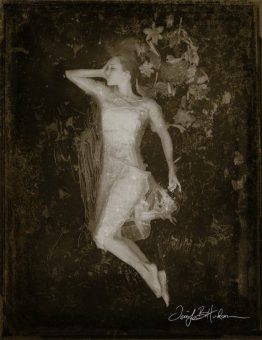
Foto di Jennifer Hudson


O dolce amore, dolce spina, quando
da te fui punta al cuore, piano, e uccisa,
per giacere nell’erba abbandonata,
povera cosa fradicia di lacrime
e di pioggia nel pianto della sera,
dalle notturne brume al grigio giorno
che disperde le nubi nella luce
fra il canto degli uccelli al nuovo sole –
se avessi, dolce amore, dolce spina,
pensato allora quale acuta angoscia,
anche se ti compensa il giuramento,
l’ora felice può lasciare in seno,
non sarei corsa cosí pronta al cenno
di chi in fondo m’amava cosí poco.

Edna St. Vincent Millay

(Traduzione di Silvio Raffo)

da “L’amore non è cieco”, Crocetti Editore, 1991

***

XVII

Sweet love, sweet thorn, when lightly to my heart
I took your thrust, whereby I since am slain,
And lie disheveled in the grass apart,
A sodden thing bedrenched by tears and rain,
While rainy evening drips to misty night,
And misty night to cloudy morning clears,
And clouds disperse across the gathering light,
And birds grow noisy, and the sun appears—
Had I bethought me then, sweet love, sweet thorn,
How sharp an anguish even at the best,
When all’s requited and the future sworn,
The happy hour can leave within the breast,
I had not so come running at the call
Of one who loves me little, if at all.

Edna St. Vincent Millay

da “Fatal Interview: Sonnets”, H. Hamilton, 1931

Epitalamio – John Williams

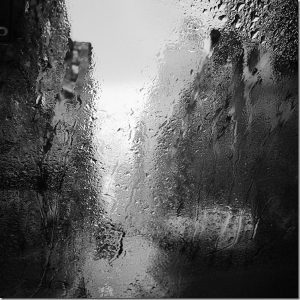
Foto di Hengki Koentjoro


Nel vento e nella pioggia fino all’alba
la casa ha sobbalzato ai tuoni;
ora sul davanzale soffia il vento
e un cumulo di rami neri, fradicio
è scampato alle folgori e ai lampi.
Come pensare a te, stanotte?
Ecco la mia pastorale: niente canzoni
che ti menino per verdi prati
tra pecorai danzanti fino a sera.
Intrappolata nel gelo e nella scia
di buio che abbiamo per sentiero,
di questo patto fai la sentinella
nella tua notte dalle mille stanze
che condividi per domare il tempo.
Perduti nello spazio che ci è dato,
tentiamo ogni via nell’imbrunire:
nel temporale al chiuso della stanza
ti stagli sull’oscurità di noi mortali.

Nel temporale ti penso questa notte,
nelle temperie di quest’età affannata –
due amanti che resistono allo sciame
del tempo che lenire ti è impossibile
che la tua povera, straziante carne
non innamora né trattiene a sé,
contro il deserto cui nessuno scampa.
Ora alla tua finestra il vento spinge
dei nuovi indizi della propria forma;
ora sulle grondaie senti il raschio
d’un nero ramo che ti guida
a un campo di là del tuo sentire
dove la mente e il cuore umano, spenti,
cadono morti in silenziosa attesa.
Prego che gli affannosi amori che ridesti
si mutino stanotte nel tuo grande amore,
anche se al chiuso di uno spazio, il cuore
non sa che di se stesso, e sa che è solo.

Che tu resista ai venti, duri la tua tresca
temprando l’amore contro il grido
delle presenze che vaghe e senza nome
s’aggirano in notti come questa.
E quella nera anima mai sazia
il cui presagio d’eterno conflitto
s’ostina a rapirti ai tuoi pensieri –
mantieni, al pari di te stessa, in vita.
Sei labbro e coscia che s’intrecciano,
stanotte in questo fortunale cieco,
ti afferri a ciò che non trattieni,
come una supplice dagli occhi cavi
che al tatto scopre nella neve
la multiforme geometria del freddo,
che esposta all’alito del senso
in quel tepore rinviene a sue spese.
Nel tuo bisogno hai confinato la tormenta;
ti prego, dalle forma nel pensiero!

John Williams

(Traduzione di Stefano Tummolini)

da “John Williams, Stoner e La necessaria menzogna (Poesie)”, Mondadori, 2020

∗∗∗

Prothalamion

All night my house in wind and rain
Has trembled to each thunder-blast;
Now on my whistling window-pane
Dark branches huddle, wetly massed,
By white electric blazings cast.
How may one think of you tonight?
This is my pastoral: no song
That leads you through a meadow bright
With shepherds who dance the daylong.
Enmeshed by weather and the long
Level of dark whereon we dwell,
You make this pact your sentinel
Before the chambered night you share
Against the time that you would quell.
Lost upon the space we bear,
We turn all ways in the darkening air:
This storm reveals you in your distant room,
Bright in the darkness that we all consume.

I think of you tonight in storm,
This weather of our cumbered age –
Two lovers who oppose the swarm
Of time that you may not assuage
Nor your poor touching flesh engage
Or keep in love against the cold
Dim barreness that none escape.
Now at your window must the wind hold
New intimations of its shape;
Now upon your eaves the scrape
Of some dark bough must lead you hence
Into a field beyond your sense
Where mind and human love, gone weak,
Downward die in mute suspense.
I pray the gestured loves you wreak
Become tonight the love you seek,
Though closed in space the individual heart
Know but itself, and know it is apart.

Against this storm may you persist,
Strengthening love against the howl
Of nameless presences that prowl
Such nights as these, and keep your tryst;
And all that dark insatiate soul
Whose boding of immortal strife
Endures to drift you out of mind –
Hold, as you are held, to life.
By meshing lip and thigh defined,
Tonight in this vast weather blind,
You cling to what you cannot hold,
Like eyeless supplicants who find
In touch the snowflake’s multifold
Pure geometric shape of cold,
Which naked to the warmth of sense
Is found in warmth at its own expense.
In your quick need you have this storm confined;
O give it shape within the human mind!

John Williams

da “John Williams, Necessary Lie”, Verb Publications, Denver, 1965

«Più luce! più luce!» – Anthony Hecht

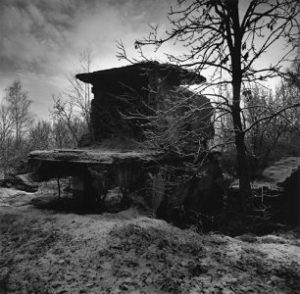
Michael Kenna, Building Remains, Buchenwald, Germany, 1995

per Heinrich Blücher e Hannah Arendt

Composti nella Torre prima della sua esecuzione
questi versi commoventi, condotto allora sul tragitto
penoso verso il rogo, sottomesso, dichiarò:
«Invoco il mio Dio a testimone, non ho commesso alcun delitto».

Né lo abbandonò il coraggio, ma la morte fu tremenda,
il sacco di polvere da sparo non si accendeva.
Le gambe, mentre lui implorava urlante la Luce Misericordiosa,
erano bastoni di vesciche su cui la linfa nera ribolliva ed esplodeva.

E quello non fu che uno, e niente affatto dei peggiori,
concessagli almeno la sua commiserevole dignità;
e gli astanti recitavano preghiere per la pace dell’anima sua,
nel nome di Cristo che ciascun uomo giudicherà.

Ci spostiamo adesso al limitare di un bosco tedesco.
Si ordina di scavare una fossa a tre uomini tenuti in scacco,
e in questa viene ordinato ai due ebrei di sdraiarsi
per essere sepolti vivi dal terzo, un polacco.

Non luce dal santuario a Weimar oltre la collina
né luce dal cielo apparve. Ma egli si rifiutò.
Una Lüger s’assestò nella fondina.
Scàmbiati di posto con gli ebrei, gli si ordinò.

Quella sovrabbondanza di morte insensata ne aveva prosciugato
l’anima. La terra spessa montava verso la faccia sconvolta.
Quando solo la testa restò esposta, arrivò l’ordine
di tirarlo fuori e di tornare dentro un’altra volta.

Nessuna luce, nessuna luce nel ceruleo occhio polacco.
Quando finì, uno stivale da cavallo pressò la terra forte.
La Lüger si librò leggera dalla fondina.
Colpito in pancia, in tre ore sanguinò a morte.

Non una preghiera, niente incenso, s’alzò in quelle ore
che divennero anni; e venivano ogni sera
muti spettri dai forni, filtrando nell’aria frizzante,
posandosi sui suoi occhi come fuliggine nera.

Anthony Hecht

(Traduzione di Damiano Abeni e Moira Egan)

da “Le ore dure”, Donzelli Poesia, 2018

«Più luce! Più luce!»
Hecht ha scritto in una lettera che il titolo riprende le parole attribuite a Goethe sul letto di morte. Le spoglie di Goethe si trovano nella Cripta dei Principi a Weimar, vicino al luogo in cui è sorto il campo di sterminio di Buchenwald. La prima parte della poesia è un collage di particolari che si riferiscono al supplizio di diversi martiri rinascimentali, tra cui Hugh Latimer e Nicholas Ridley. L’episodio finale, ambientato nel campo di sterminio, viene dal volume The Theory and Practice of Hell di Eugen Kogon.

∗∗∗

«More Light! More Light!»

for Heinrich Blücher and Hannah Arendt

Composed in the Tower before his execution
These moving verses, and being brought at that time
Painfully to the stake, submitted, declaring thus:
“I implore my God to witness that I have made no crime.”

Nor was he forsaken of courage, but the death was horrible,
The sack of gunpowder failing to ignite.
His legs were blistered sticks on which the black sap
Bubbled and burst as he howled for the Kindly Light.

And that was but one, and by no means one of the worst;
Permitted at least his pitiful dignity;
And such as were by made prayers in the name of Christ,
That shall judge all men, for his soul’s tranquillity.

We move now to outside a German wood.
Three men are there commanded to dig a hole
In which the two Jews are ordered to lie down
And be buried alive by the third, who is a Pole.

Not light from the shrine at Weimar beyond the hill
Nor light from heaven appeared. But he did refuse.
A Lüger settled back deeply in its glove.
He was ordered to change places with the Jews.

Much casual death had drained away their souls.
The thick dirt mounted toward the quivering chin.
When only the head was exposed the order came
To dig him out again and to get back in.

No light, no light in the blue Polish eye.
When he finished a riding boot packed down the earth.
The Lüger hovered lightly in its glove.
He was shot in the belly and in three hours bled to death.

No prayers or incense rose up in those hours
Which grew to be years, and every day came mute
Ghosts from the ovens, sifting through crisp air,
And settled upon his eyes in a black soot.

Anthony Hecht

da “The hard hours: poems”, Atheneum, 1967