Ego dominus tuus – William Butler Yeats

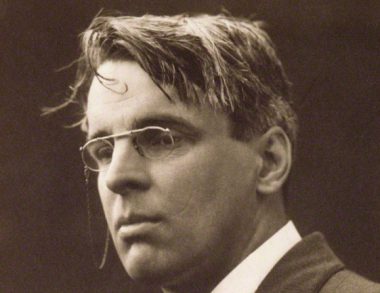
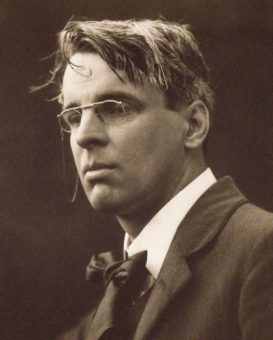
George Charles Beresford, William Butler Yeats, 1911

Hic

Sulla sabbia grigia, lungo il ruscello,
sotto la tua vecchia torre battuta dai venti
dove ancora arde un lume accanto al libro
che lasciò aperto Michael Robartes,
tu cammini sotto la luna e pure se i tuoi anni migliori
sono trascorsi, ancora cedi al fascino
di invincibili illusioni e tracci forme magiche.

Ille

Con l’aiuto di un’immagine
evoco il mio opposto, invoco tutto ciò
che meno ho guardato, ciò che meno ho curato.

Hic

Me stesso, non un’immagine io vorrei trovare.

Ille

È questa la speranza dei moderni, e alla sua luce
abbiam trovato la mente mite, sensibile
perdendo l’antica scioltezza della mano;
e non conta che usi scalpello, penna o pennello.
Siamo solo critici, creatori solo a metà,
timidi, confusi, vuoti e imbarazzati,
senza il sostegno dei nostri compagni.

Hic

Eppure Dante Alighieri, la mente
più immaginativa della Cristianità,
trovò se stesso, tanto che all’occhio della mente
il suo volto scavato è più espressivo
di ogni altro volto, tranne quello di Cristo.

Ille

Ma trovò se stesso,
o fu la bramosia a scavargli il volto,
il desiderio della mela che è sul ramo
più alto? E quell’immagine spettrale
fu l’uomo a Lapo e Guido amico?
Credo che lui l’abbia plasmata sul suo opposto,
forse l’immagine di un volto di pietra
che da una casa scavata nella roccia
fissa lo sguardo su un tetto beduino di crine di cavallo,
o è mezzo rovesciato fra sterco di cammello ed erba incolta.
Col suo scalpello lavorò alla pietra più dura.
Deriso da Guido per la sua vita lasciva,
beffardo e beffato, esiliato e costretto
a salir le scale altrui a mangiare pane amaro,
egli trovò una giustizia incorruttibile, e la più nobile
fra le donne che mai furono amate.

Hic

Eppure c’è di certo un’arte
che non nasce da tragici conflitti ma da uomini
amanti della vita, che si gettano a cercare la felicità
e cantano quando l’hanno trovata.

Ille

                                                               No, non cantano,
perché chi ama il mondo lo serve con l’azione,
diventa ricco, celebre, influente
e se scrive o dipinge sempre agisce:
la lotta della mosca nella marmellata.
Il retore vuole ingannare che gli è accanto,
il sentimentale se stesso; l’arte invece
non è che una visione del reale.
Qual è la parte nel mondo per l’artista
una volta desto dal sogno comune?
Solo disperazione e dispersione.

Hic

                                                             Eppure
nessuno nega che Keats amasse il mondo;
rammenta la sua deliberata felicità.

Ille

La sua arte è felice, ma chi può scrutargli la mente?
Io vedo uno scolaro quando penso a lui,
il viso e il naso schiacciati contro una vetrina
di dolciumi; di certo egli scese nel sepolcro
con il cuore e i sensi insoddisfatti
e compose − povero, afflitto e incolto,
escluso dalle ricchezze del mondo,
rude figlio di un custode di cavalli −
ricchi canti.

Hic

                        Perché lasci che il lume
arda da solo accanto al libro aperto
e tracci questi segni sulla sabbia?
Lo stile va cercato con un duro lavoro
sedentario e imitando i grandi del passato.

Ille

Perché è un’immagine che cerco, non un libro.
Gli uomini che nei loro scritti son più saggi
possiedono solo cuori ciechi, intorpiditi.
Evoco la creatura misteriosa che verrà lungo il ruscello
sulla sabbia umida; sarà simile a me,
poiché è il mio doppio,
e di tutte le cose immaginabili la più dissimile
si rivelerà, perché è il mio anti-sé;
eretto in mezzo a questi segni svelerà
ciò che io cerco. E lo sussurrerà,
come se timoroso che gli uccelli, prima dell’alba
lanciano in cielo i loro brevi gridi,
lo portino ai blasfemi.

William Butler Yeats

Dicembre 1915

 (Traduzione di Gino Scatasta)

da “Per amica silentia lunae”, Il cavaliere azzurro, Bologna, 1986 

Scritta nel 1915, questa poesia fu pubblicata nel 1917 sulla rivista «Poetry » e in seguito, nel 1919, nella raccolta The Wild Swans at Coole. Il titolo è tratto dalla Vita Nova dantesca. Per un esauriente commento alla poesia, si vedano le note di Anthony L. Johnson in W.B. Yeats, L’opera poetica, Mondadori, Milano 2008, pp. 1199-1205.
Michael Robartes compare per la prima volta nel racconto Rosa Alchemica, scritto nel 1897. È un occultista, fondatore di un ordine esoterico, e simboleggia per Yeats una personalità soggettiva, antitetica. Robartes riappare nelle poesie di The Wind among the Reeds (1899), in The Double Vision of Michael Robartes (1919) e nel titolo della raccolta di poesie del 1921 Michael Robartes and the Dancer. In A Vision (I ed. 1925, II ed. 1937), Robartes compare nella poesia introduttiva, The Phases of the Moon, dove insieme ad Aherne (altra maschera di Yeats, il sé oggettivo) passa sotto la torre del poeta e spiega all’amico le fasi della luna, le ventotto possibili personalità umane, che non potranno essere mai comprese dal poeta che studia libri e manoscritti alla luce di una lampada.
Sempre in A Vision, in Le storie di Michael Robartes e dei suoi amici, Michael Robartes riappare come un uomo «magro, bruno, muscoloso, perfettamente sbarbato, con lo sguardo vivo e ironico ». È a capo di una setta mistica, della quale fa parte anche il suo amico Aherne, che ha come scopo la rigenerazione del mondo. (Cfr. W.B. Yeats, Una visione, trad. it. di Adriana Motti, Adelphi, Milano 1973.)

∗∗∗

Ego dominus tuus

Hic

On the grey sand beside the shallow stream,
Under your old wind-beaten tower, where still
A lamp burns on above the open book
That Michael Robartes left, you walk in the moon,
And, though you have passed the best of life, still trace,
Enthralled by the unconquerable delusion,
Magical shapes.

Ille

                             By the help of an image
I call to my own opposite, summon all
That I have handled least, least looked upon.

Hic

And I would find myself and not an image.

Ille

That is our modern hope, and by its light
We have lit upon the gentle, sensitive mind
And lost the old nonchalance of the hand;
Whether we have chosen chisel, pen, or brush,
We are but critics, or but half create,
Timid, entangled, empty, and abashed,
Lacking the countenance of our friends.

Hic

                                                                       And yet,
The chief imagination of Christendom,
Dante Alighieri, so utterly found himself,
That he has made that hollow face of his
More plain to the mind’s eye than any face
But that of Christ.

Ille

                                  And did he find himself,
Or was the hunger that had made it hollow
A hunger for the apple on the bough
Most out of reach? And is that spectral image
The man that Lapo and that Guido knew?
I think he fashioned from his opposite
An image that might have been a stony face,
Staring upon a Beduin’s horse-hair roof,
From doored and windowed cliff, or half upturned
Among the coarse grass and the camel dung.
He set his chisel to the hardest stone;
Being mocked by Guido for his lecherous life,
Derided and deriding, driven out
To climb that stair and eat that bitter bread,
He found the unpersuadable justice, he found
The most exalted lady loved by a man.

Hic

Yet surely there are men who have made their art
Out of no tragic war; lovers of life,
Impulsive men, that look for happiness,
And sing when they have found it.

Ille

                                                               No, not sing,
For those that love the world serve it in action,
Grow rich, popular, and full of influence;
And should they paint or write still is it action,
The struggle of the fly in marmalade.
The rhetorician would deceive his neighbours,
The sentimentalist himself; while art
Is but a vision of reality.
What portion in the world can the artist have,
Who has awakened from the common dream,
But dissipation and despair?

Hic

                                                    And yet,
No one denies to Keats love of the world,
Remember his deliberate happiness.

Ille

His art is happy, but who knows his mind?
I see a schoolboy, when I think of him,
With face and nose pressed to a sweetshop window,
For certainly he sank into his grave,
His senses and his heart unsatisfied;
And made − being poor, ailing and ignorant,
Shut out from all the luxury of the world,
The ill-bred son of a livery stable keeper −
Luxuriant song.

Hic

                              Why should you leave the lamp
Burning alone beside an open book,
And trace these characters upon the sand?
A style is found by sedentary toil,
And by the imitation of great masters.

Ille

Because I seek an image, not a book;
Those men that in their writings are most wise
Own nothing but their blind, stupefied hearts.
I call to the mysterious one who yet
Shall walk the wet sand by the water’s edge,
And look most like me, being indeed my double,
And prove of all imaginable things
The most unlike, being my anti-self,
And, standing by these characters, disclose
All that I seek; and whisper it as though
He were afraid the birds, who cry aloud
Their momentary cries before it is dawn,
Would carry it away to blasphemous men.

William Butler Yeats

December 1915.

da “Per Amica Silentia Lunae”, Macmillan, 1918

Quando tu sarai vecchia – William Butler Yeats

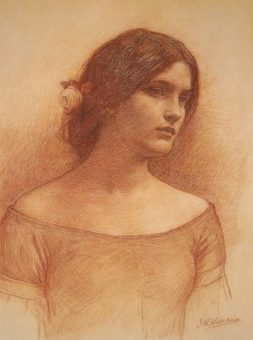
John William Waterhouse, Study for the Lady Clare, 1900


Quando tu sarai vecchia e grigia e sonnolenta,
Col capo tentennante accanto al fuoco, prenditi questo libro,
E lentamente leggilo, e sogna del tenero sguardo
Che gli occhi tuoi ebbero un tempo, e delle loro ombre

Profonde; quanti furono a amare i tuoi attimi
Di grazia felice, e quanti amarono, con falso o vero amore,
La tua bellezza; ma uno solo amò l’anima peregrina
Che era in te, e il dolore del tuo volto che muta.

Curva di fronte ai ceppi risplendenti mormora
Con lieve tristezza, come Amore fuggì, come percorse,
Passando, i monti che ci stanno alti sul capo,
E nascose il suo volto fra un nuvolo di stelle.

William Butler Yeats

(Traduzione di Roberto Sanesi)

da “W. B. Yeats, Poesie”, Mondadori, Milano, 1974

∗∗∗

When You Are Old

When you are old and grey and full of sleep,
And nodding by the fire, take down this book,
And slowly read, and dream of the soft look
Your eyes had once, and of their shadows deep;

How many loved your moments of glad grace,
And loved your beauty with love false or true,
But one man loved the pilgrim soul in you,
And loved the sorrows of your changing face;

And bending down beside the glowing bars,
Murmur, a little sadly, how Love fled
And paced upon the mountains overhead
And hid his face amid a crowd of stars.

William Butler Yeats

da “The Countess Kathleen and Various Legends and Lyrics”, London: Forgotten Books, 1893

Gli uccelli bianchi – William Butler Yeats

George Charles Beresford, William Butler Yeats, 1911


Fossimo noi bianchi uccelli, mia amata, sulla spuma del mare!
La fiamma della meteora ci stanca prima di appassire
e la fiamma dell’azzurra stella bassa nel cielo crepuscolare
ci ha ridesta, mia amata, nel cuore un’angoscia che non può morire.

Stanchezza esalano questi sognatori grevi di rugiade,
la rosa e il giglio; ah non sognare fiamma di meteora vagante,
né la fiamma dell’azzurra stella vizza mentre la rugiada cade:
ma ci muti la sorte in uccelli bianchi a galla sulla spuma errante!

Nostalgia d’isole innumerevoli mi tormenta e di danae prode,
dove ci dimentichi il Tempo e l’Affanno non osi calare;
lontani saremmo dal giglio e la rosa e la fiamma che rode,
fossimo noi bianchi uccelli, mia amata, sulla spuma del mare!

William Butler Yeats

(Traduzione di Leone Traverso)

da “William Butler Yeats, Poesie”, Vallecchi, Firenze, 1973

***

The White Birds

I would that we were, my beloved, white birds on the foam of the sea!
We tire of the flame of the meteor, before it can fade and flee;
And the flame of the blue star of twilight, hung low on the rim of the sky,
Has awakened in our hearts, my beloved, a sadness that may not die.

A weariness comes from those dreamers, dew-dabbled, the lily and rose;
Ah, dream not of them, my beloved, the flame of the meteor that goes,
Or the flame of the blue star that lingers hung low in the fall of the dew:
For I would we were changed to white birds on the wandering foam: I and you!

I am haunted by numberless islands, and many a Danaan shore,
Where Time would surely forget us, and Sorrow come near us no more;
Soon far from the rose and the lily, and fret of the flames would we be,
Were we only white birds, my beloved, buoyed out on the foam of the sea!

William Butler Yeats

da “The Countess Kathleen and Various Legends and Lyrics”, London: Forgotten Books, 1893

Spazi vuoti – Seamus Heaney

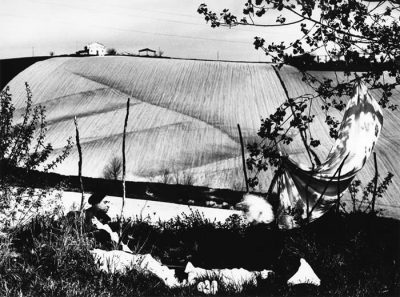
Foto di Mario Giacomelli

in memoriam M.K.H., 1911-1984
Lei mi insegnò quello che suo zio un tempo le insegnò:
Che il pezzo di carbone più grosso si rompe facilmente
Se trovi la venatura e martelli con l’angolo giusto.
Il suono di quel colpo rilassato e lusinghiero,
La sua cooptata e obliterata eco,
Mi hanno insegnato a colpire, insegnato a smettere,
Insegnato tra il martello e il pezzo di carbone
A far fronte alla musica. Mi insegni ora ad ascoltare,
A dare i colpi giusti dietro il nero lineare.
1

Un sasso lanciato cento anni or sono
Mi viene sempre in mente, la prima pietra
Lanciata in fronte a un’ava voltagabbana.
Il cavallo s’impenna ed è sommossa.
Lei è rannicchiata in fondo al calesse
E passa una corsia di oltraggi quella prima domenica
Galoppando in panico a messa giù per il pendio.
Lui frusta attraverso il paese tra grida di «Lundy!»

Chiamiamola «La Convertita». «La Sposa Esogama».
Comunque, è un pezzo d’epoca
Ereditato da parte di mia madre
Mio e ne dispongo ora che se n’è andata lei.
Al posto di argento o merletto vittoriano,
Quella pietra discolpata, che discolpa.

2

Là brillava linoleum lustro. Brillavano rubinetti d’ottone.
Le tazze di porcellana erano molto bianche e grandi –
Un servizio non sbreccato con bricco e zuccheriera.
Il bollitore fischiava. Tartine e paste da tè
C’erano e come si deve. Se no si scioglie,
Il burro si deve tenere via dal sole.
E non fare briciole. Non ballare con la sedia.
Non prendere. Non puntare il dito. Non far rumore quando giri.

È il numero 5, New Row, Terra dei Morti,
Dove il nonno ora si alza dal suo posto
Con gli occhiali indietro su una testa tutta pelata
Per accogliere una figlia sbigottita che torna a casa
Ancor prima che lei bussi. «Cosa c’è? Cosa c’è?»
E si siedono nella stanza tutta lustra insieme.

3

Quando tutti gli altri erano fuori a messa
Io ero tutto suo mentre pelavamo patate.
Rompevano il silenzio, lasciate cadere una a una
Come lacrime di stagno colanti dal saldatore:
Magre consolazioni poste fra noi, cose da condividere
Luccicanti in un secchio di acqua chiara.
E cadevano una dopo l’altra. Piccoli piacevoli tonfi
Del lavoro di entrambi ci facevano tornare in noi.

Così mentre il parroco al suo capezzale
Recitava vigorosamente le preghiere dei morenti
E qualcuno rispondeva e qualcuno piangeva
Io ricordavo la sua testa chinata verso la mia testa,
Il suo respiro nel mio, i nostri fluidi coltelli immersi –
Mai tanto vicini per tutto il resto della nostra vita.

4

La paura di ostentazione le faceva ostentare
Inadeguatezza ogni volta che le capitava
Di pronunciare parole «oltre la sua portata». Bertold Brek.
Riusciva a tirar fuori qualcosa di impacciato e storto
Ogni volta, come se potesse tradire
L’impacciato e l’inadeguato con un troppo
Ben appropriato vocabolario.
Con più sfida che orgoglio, mi diceva: «Tu
Le sai tutte quelle cose». Così governavo la mia lingua
Davanti a lei, un genuinamente ben
Appropriato adeguato tradimento
Di quel che ben sapevo. Dicevo naw e aye
Ed educatamente ricadevo in errori
Di grammatica che ci tenevano in stallo e alleati.

5

Il fresco che usciva dalle lenzuola appena giù dal filo
Mi faceva pensare che ci fosse ancora umido dentro
Ma quando prendevo i miei angoli del lenzuolo
E tiravo insieme a lei, prima dritto lungo l’orlo
E poi in diagonale, e poi si sbatteva e si scuoteva
Il tessuto come una vela contro vento,
Mandavano uno schiocco ondulante ben asciutto.
Così tirando e piegando si finiva mano contro mano
Per una frazione di secondo come se nulla fosse successo
Perché nulla era successo che non fosse sempre successo
Precedentemente, giorno per giorno, toccarsi e separarsi,
Ritornando ancora vicini tenendosi indietro
In mosse dove io ero la X e lei era la O
Iscritte in lenzuola che cuciva con sacchi da farina aperti.

6

Nel primo impeto delle festività pasquali
Le cerimonie durante la Settimana Santa
Erano il culmine della nostra fase Figli e amanti.
Il fuoco di mezzanotte. Il candelabro pasquale.
Gomito a gomito, contenti di essere in ginocchio
Accanto uno all’altra là davanti nelle prime file
Della chiesa piena, seguivamo il testo
E le letture per la benedizione del fonte.
Come anela una cerva alla fonte, così l’anima mia…
Abluzioni. Asciugature. L’alito sull’acqua.
L’acqua mescolata al crisma e all’olio.
Tintinno di ampolla. Cerimonia dell’incenso
E il grido del salmista ripreso con orgoglio:
Di giorno e di notte mi è stato pane il mio pianto.

7

Negli ultimi minuti lui le disse quasi
Più che in tutta la loro vita insieme.
«Tu sarai a New Row la notte di lunedì
E io verrò da te e tu sarai contenta
Quando entrerò dalla porta… Non è vero?»
La sua testa era china sulla testa sorretta.
Lei non poteva sentire ma noi esultavamo.
La chiamava brava e ragazza. Poi era morta,
La ricerca delle pulsazioni abbandonata
E noi tutti essendo là sapevamo una cosa.
Lo spazio attorno a cui stavamo si era svuotato
In noi da conservare, aveva penetrato
Vuoti che improvvisamente si erano aperti.
Abbattuti gli alti pianti venne un puro mutamento.

8

Pensavo di camminare girando e girando uno spazio
Assolutamente vuoto, assolutamente una sorgente
Dove il castagno adorno aveva perso il suo posto
Nella nostra siepe sul davanti sopra le violacciocche.
Schegge bianche saltavano e saltavano e schizzavano alte.
Sentivo il taglio accurato e differenziato
Dell’accetta, lo schianto, il sospiro
E il crollo di quello che era stato lussureggiante
Attraverso i percossi resti e frantumi di tutto quanto.
Piantato a fondo e da molto andato, mio coetaneo
Castagno da un vasetto di marmellata in un buco,
La sua massa e quiete diventate un lucente non luogo,
Un’anima ramificante e per sempre
Silenziosa, oltre ascoltato silenzio.

Seamus Heaney

1972

(Traduzione di Francesca Romana Paci)

da “La lanterna di biancospino”, Guanda, Parma, 1999

***

Clearances

in memoriam M.K.H., 1911-1984
She taught me what her uncle once taught her:
How easily the biggest coal block split
If you got the grain and hammer angled right.
The sound of that relaxed alluring blow,
Its co-opted and obliterated echo,
Taught me to hit, taught me to loosen,
Taught me between the hammer and the block
To face the music. Teach me now to listen,
To strike it rich behind the linear black.
1

A cobble thrown a hundred years ago
Keeps coming at me, the first stone
Aimed at a great-grandmother’s turncoat brow.
The pony jerks and the riot’s on.
She’s crouched low in the trap
Running the gauntlet that first Sunday
Down the brae to Mass at a panicked gallop.
He whips on through the town to cries of ‘Lundy!’

Call her ‘The Convert’. ‘The Exogamous Bride’.
Anyhow, it is a genre piece
Inherited on my mother’s side
And mine to dispose with now she’s gone.
Instead of silver and Victorian lace,
The exonerating, exonerated stone.

2

Polished linoleum shone there. Brass taps shone.
The china cups were very white and big –
An unchipped set with sugar bowl and jug.
The kettle whistled. Sandwich and teascone
Were present and correct. In case it run,
The butter must be kept out of the sun.
And don’t be dropping crumbs. Don’t tilt your chair.
Don’t reach. Don’t point. Don’t make noise when you stir.

It is Number 5, New Row, Land of the Dead,
Where grandfather is rising from his place
With spectacles pushed back on a clean bald head
To welcome a bewildered homing daughter
Before she even knocks. ‘What’s this? What’s this?’
And they sit down in the shining room together.

3

When all the others were away at Mass
I was all hers as we peeled potatoes.
They broke the silence, let fall one by one
Like solder weeping off the soldering iron:
Cold comforts set between us, things to share
Gleaming in a bucket of clean water.
And again let fall. Little pleasant splashes
From each other’s work would bring us to our senses.

So while the parish priest at her bedside
Went hammer and tongs at the prayers for the dying
And some were responding and some crying
I remembered her head bent towards my head,
Her breath in mine, our fluent dipping knives –
Never closer the whole rest of our lives.

4

Fear of affectation made her affect
Inadequacy whenever it came to
Pronouncing words «beyond her». Bertold Brek.
She’d manage something hampered and askew
Every time, as if she might betray
The hampered and inadequate by too
Well-adjusted a vocabulary.
With more challenge than pride, she’d tell me, ‘You
Know all them things.’ So I governed my tongue
In front of her, a genuinely well-
adjusted adequate betrayal
Of what I knew better. I’d naw and aye
And decently relapse into the wrong
Grammar which kept us allied and at bay.

5

The cool that came off sheets just off the line
Made me think the damp must still be in them
But when I took my corners of the linen
And pulled against her, first straight down the hem
And then diagonally, then flapped and shook
The fabric like a sail in a cross-wind,
They made a dried-out undulating thwack.
So we’d stretch and fold and end up hand to hand
For a split second as if nothing had happened
For nothing had that had not always happened
Beforehand, day by day, just touch and go,
Coming close again by holding back
In moves where I was X and she was O
Inscribed in sheets she’d sewn from ripped-out flour sacks.

6

In the first flush of the Easter holidays
The ceremonies during Holy Week
Were highpoints of our Sons and Lovers phase.
The midnight fire. The paschal candlestick.
Elbow to elbow, glad to be kneeling next
To each other up there near the front
Of the packed church, we would follow the text
And rubrics for the blessing of the font.
As the hind longs for the streams, so my soul…
Dippings. Towellings. The water breathed on.
The water mixed with chrism and with oil.
Cruet tinkle. Formal incensation
And the psalmist’s outcry taken up with pride:
Day and night my tears have been my bread.

7

In the last minutes he said more to her
Almost than in all their life together.
‘You’ll be in New Row on Monday night
And I’ll come up for you and you’ll be glad
When I walk in the door… Isn’t that right?’
His head was bent down to her propped-up head.
She could not hear but we were overjoyed.
He called her good and girl. Then she was dead,
The searching for a pulsebeat was abandoned
And we all knew one thing by being there.
The space we stood around had been emptied
Into us to keep, it penetrated
Clearances that suddenly stood open.
High cries were felled and a pure change happened.

8

I thought of walking round and round a space
Utterly empty, utterly a source
Where the decked chestnut tree had lost its place
In our front hedge above the wallflowers.
The white chips jumped and jumped and skited high.
I heard the hatchet’s differentiated
Accurate cut, the crack, the sigh
And collapse of what luxuriated
Through the shocked tips and wreckage of it all.
Deep planted and long gone, my coeval
Chestnut from a jam jar in a hole,
Its heft and hush become a bright nowhere,
A soul ramifying and forever
Silent, beyond silence listened for.

Seamus Heaney

da “The Haw Lantern”, Faber and Faber Limited, London, 1987

L’ospedale – Patrick Kavanagh

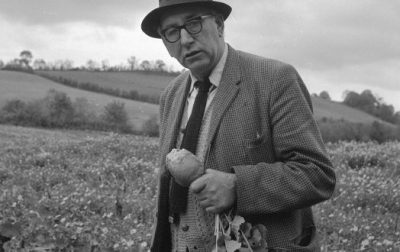
Patrick Kavanagh


Un anno fa mi innamorai del reparto
Di un ospedale: stanzette quadrate e allineate,
Semplice calcestruzzo, lavelli – un obbrobrio per un esteta,
Senza considerare il russare del vicino di letto.
Ma nulla di nulla è estraneo all’amore,
L’ordinario e il banale può conoscere il suo calore.
Il corridoio conduceva a una scala e sotto
C’era l’inesauribile avventura di un cortile di ghiaia.

Questo è ciò che l’amore fa alle cose: il ponte di Rialto,
Il cancello principale che fu incurvato da un pesante camion,
La sedia in fondo a un capannone che era un’esca per il sole.
Dar nome a queste cose è l’atto d’amore e la prova che esiste;
Perché dobbiamo registrare il mistero d’amore senza sproloqui,
Carpire al tempo l’intensità di ciò che passa.

Patrick Kavanagh

(Traduzione di Saverio Simonelli)

da “Andremo a rubare in cielo”, Ancora, 2009

∗∗∗

The Hospital

A year ago I fell in love with the functional ward
Of a chest hospital: square cubicles in a row
Plain concrete, wash basins – an art lover’s woe,
Not counting how the fellow in the next bed snored.
But nothing whatever is by love debarred,
The common and banal her heat can know.
The corridor led to a stairway and below
Was the inexhaustible adventure of a gravelled yard.

This is what love does to things: the Rialto Bridge,
The main gate that was bent by a heavy lorry,
The seat at the back of a shed that was a suntrap.
Naming these things is the love-act and its pledge;
For we must record love’s mystery without claptrap,
Snatch out of time the passionate transitory.

Patrick Kavanagh

da “Collected Poems”, W. W. Norton & Company, 1964